
Britain’s Problematic Challenger 3 Tank Program Faces New Delays: Defence Sector’s Capabilities in Serious Question
Military Watch Magazine Editorial Staff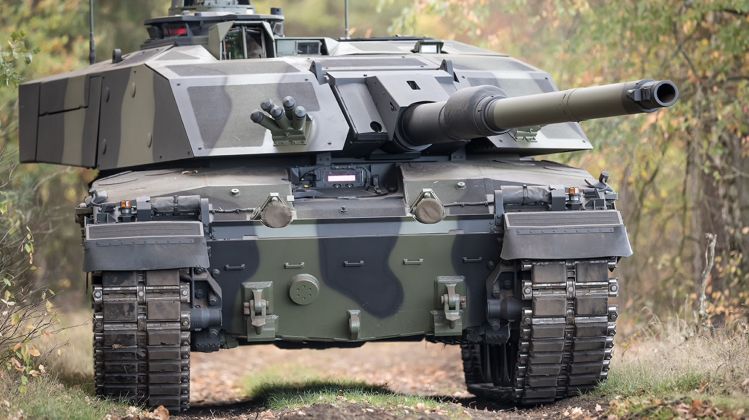
Challenger 3 Main Battle Tank
The United Kingdom Ministry of Defence has confirmed that manufacturing of the Challenger 3 main battle tank will not begin on a fixed timetable, instead proceeding only after performance trials are successfully completed, signalling a more risk averse approach to bringing the new vehicle into service. Defence Minister Luke Pollard said the program is “currently undergoing demonstration phase trials to prove the performance of the tanks,” and that manufacturing will start once performance is validated “rather than being tied to a specific deadline.” This contrasts to the concurrency approach seen in a number of major weapons 21st century weapons programs, most notably the F-35 fifth generation fighter, under which serial production would be initiated while a program is still in its early testing stages.
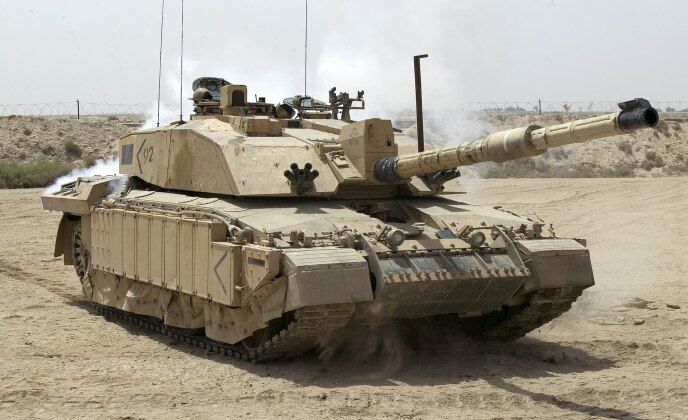
Where concurrency has caused major issues for a number of complex new clean sheet weapons systems, most notably the F-35, the relative simplicity of the Challenger 3 program, and the fact that it represents an upgrade package for existing Challenger 2 tanks that involves no new tank production, made such an approach appear to pose relatively few risks. With progress set to be be driven by trial outcomes rather than preset milestones, it is likely that the Challenger 3 will enter service in the 2030s, where previously all 148 tanks planned for delivery by the end of the 2020s. Minister Pollard elaborated that progress will continue to be reassessed, and that “the timeline [will be reviewed] regularly to ensure alignment with delivery milestones, operational needs, and emerging technical risks.”
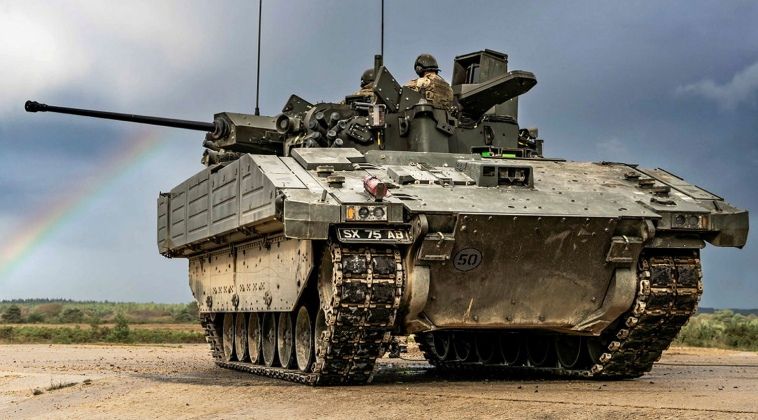
The Ministry of Defence’s decision to proceed with a more conservative approach follows significant issues faced across the United Kingdom’s major post-Cold War weapons programs, with multiple precedents indicating that the new tank program may be similarly problematic. The new Ajax armoured fighting vehicle, for example, despite its simplicity, suffered from over eight years of delays in entering service due to significant noise and vibration problems, and in late November saw its use suspended after unusual noises and vibrations in several vehicles caused over 30 casualties among personnel. In June 2023 a review of a troubled £5.5 billion ($7 billion) program concluded that there were “systemic, cultural and institutional problems” at the Ministry of Defence which had prevented development from proceeding smoothly.
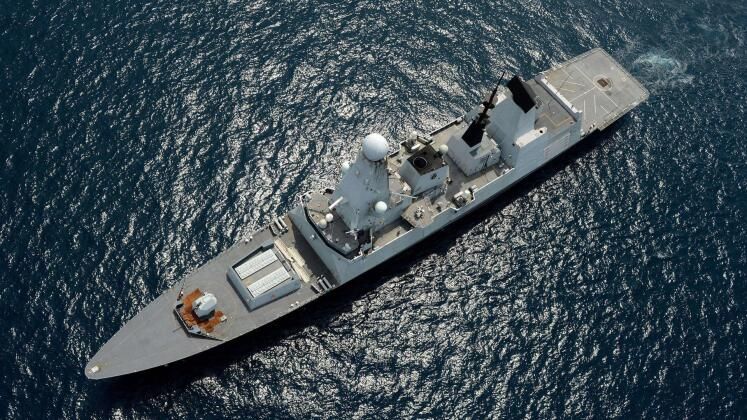
Major post-Cold War British weapons programs have consistently proven to be highly problematic, with the Type 45 class destroyer having become particularly notorious for its breakdowns, extremely low availability rates including in one case a 3000 day repair cycle, and very limited firepower and versatility compared to rival destroyer classes fielded abroad. The Queen Elizabeth class aircraft carrier program has proven to be similarly problematic, with parts cannibalisation, breakdowns and flooding having plagued its time in service. Even if development should proceed smoothly on the now postponed timeline, the viability of the Challenger 3 remains very much in question. Former British Army officer and prominent defence commentator Lieutenant Colonel Stuart Crawford in October observed that the tank was built around a “now obsolete design philosophy,” and that “current generation of Western main battle tanks, Leopard 2, M1A2 Abrams, and now CR3 [Challenger 3], are increasingly seen as too large, heavy, costly, and vulnerable to justify further development along traditional lines.” He highlighted that while the Challenger 2’s engines are already significantly underpowered, the Challenger 3’s power to weight ratio will be significantly poorer.
