
American Stealth Jets Train for Joint Strikes in the Pacific; B-2, F-22 and F-35 Have China and North Korea in their Crosshairs
Military Watch Magazine Editorial Staff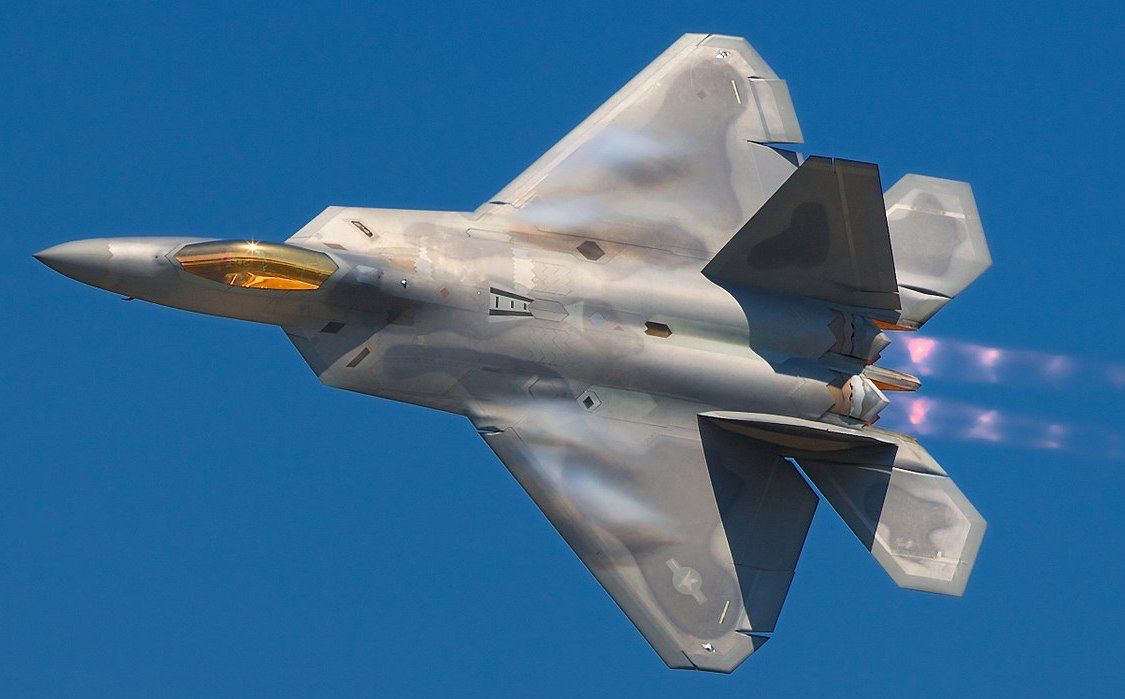
U.S. Air Force F-22 Raptor Stealth Fighter
The U.S. Navy and Air Force have recently conducted joint exercises in the Pacific Ocean in which the country’s three active stealth aircraft, the B-2 Spirit heavy bomber, F-22 Raptor heavy air superiority fighter and F-35 Lightning II light multirole fighter, all trained for the penetration of enemy airspace. The drills were carried out with the support of and largely coordinated from the USS Wasp - a 40,000 ton carrier itself capable of deploying F-35B fighters. With the United States’ two ‘great power adversaries’ in the Pacific, China and North Korea, both making strides in the modernisation of their aerial warfare and air defence systems, the United States has increasingly been forced to prioritise its most capable radar evading assets for deployment to the Pacific theatre to counter these two Asian powers.
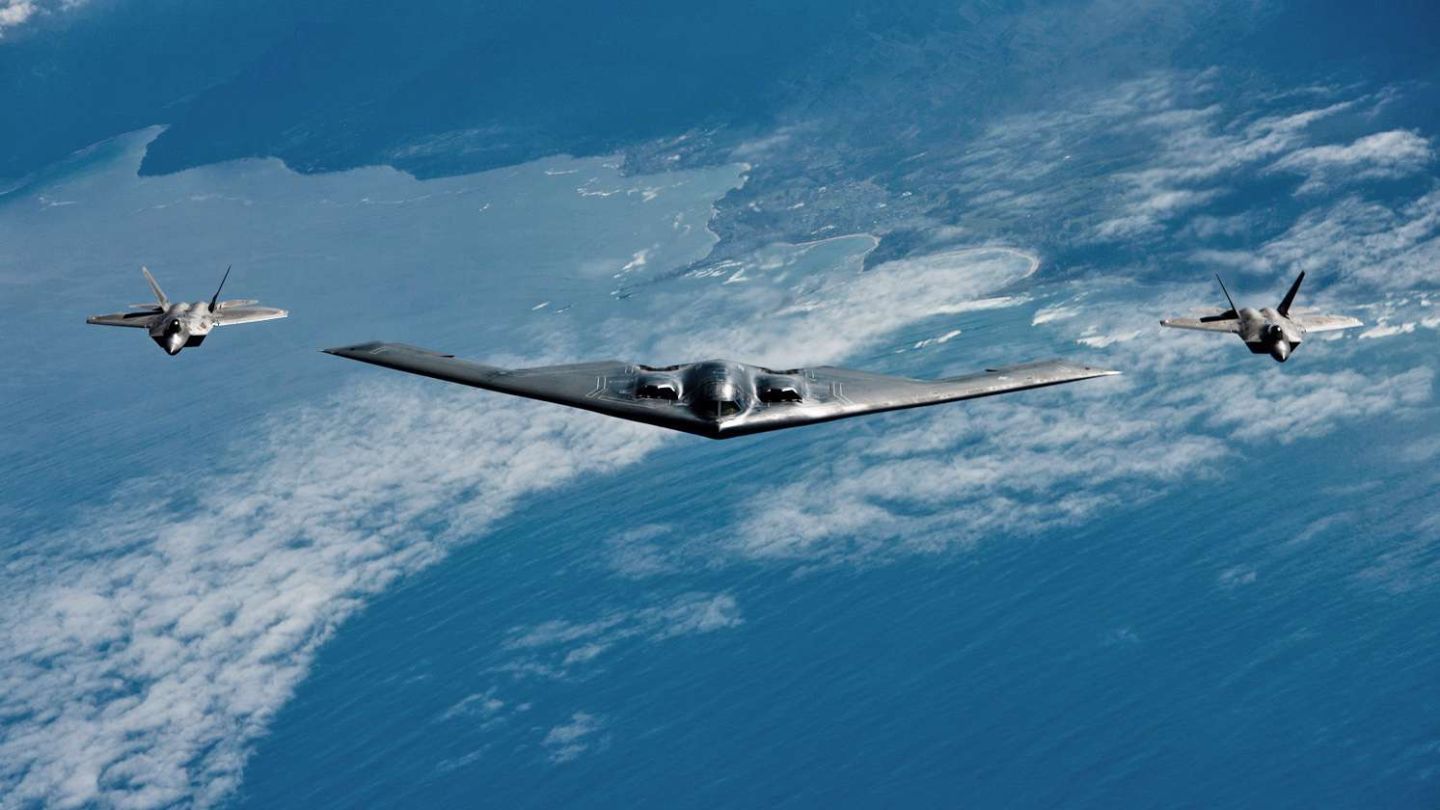
F-22 Raptors Escort B-2 Spirit Bomber
The U.S. military’s three stealth aircraft, in particular the B-2 and F-22 due to their more advanced stealth capabilities and superior survivability, are viewed as ‘door kickers’ under strategies such as ‘Air Sea Battle’ for war in the Pacific. This means that these platforms are relied on to deliver initial strikes prioritising the targeting of enemy air defence sites in the war’s early stages - such as radar installations and missile launchers. The airspace of these countries will then be made more accessible to other less survivable aircraft without high end stealth capabilities such as F-15E Strike Eagles and F-35 jets with externally mounted munitions. China’s People’s Liberation Army and North Korea’s Korean People’s Army field two of the densest air defence networks in the world, with both deploying sophisticated long range platforms including advanced variants of the Russian S-300PMU. North Korea further relies on batteries of the indigenous KN-06 - in service since 2017, while China’s HQ-9B and more modern Russian made S-400 batteries further enhance the PLA’s air defence capabilities.
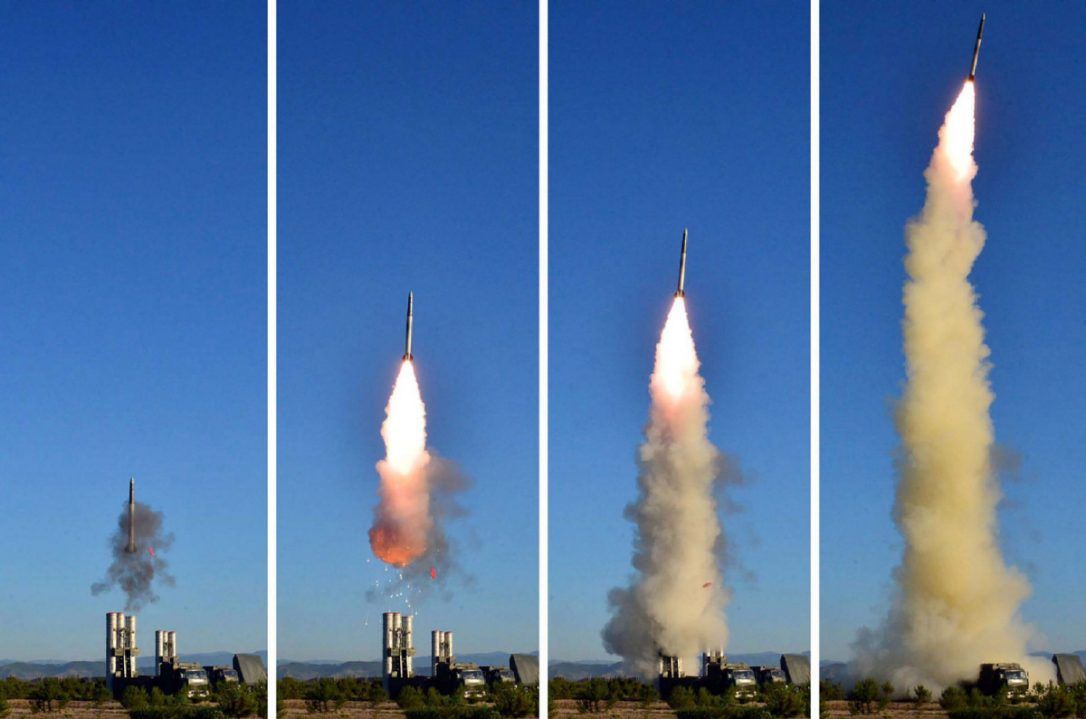
North Korean Military Tests Indigenous KN-06 Surface to Air Missile System
Against the advanced air defence networks of the two East Asian states, both of which are also capable of manufacturing modern combat jets and long range surface to air missiles domestically - in China’s case including high end stealth fighters of its own, the American Raptor, and to a lesser extent the B-2 and F-35, are the most suitable aircraft for the U.S. Air Force to employ for offensive operations in which less survivable legacy jets would suffer overwhelming losses. The presence of enemy fighters with modern air to air missiles further complicates prospects for an attack on such air defence networks which makes it extremely dangerous for non stealthy legacy platforms. While designed for a dedicated air superiority role, the cancellation of the FB-22 strike fighter program has increasingly forced the U.S. Air Force to rely on the F-22 for a strike role against high end air defences - although it cannot carry penetrative ordinance comparable to that of the F-35 or F-15E which is necessary to strike fortified air defence sites such as North Korean missile and radar installations. The ‘door kicker’ role is comparable to that played by the F-117, the Air Force’s first stealth fighter, during the 1991 Gulf War against Iraqi air defences - without which attacks on modern multi layered air defence networks would necessitate unacceptable costs. The American stealth fleet is set to be enhanced further in future to strengthen this capability with the addition of the B-21 bomber and sixth generation Air Dominance Fighter.
