
America’s B-1B Bombers Practice Taking Out Russia’s Black Sea Fleet
Military Watch Magazine Editorial Staff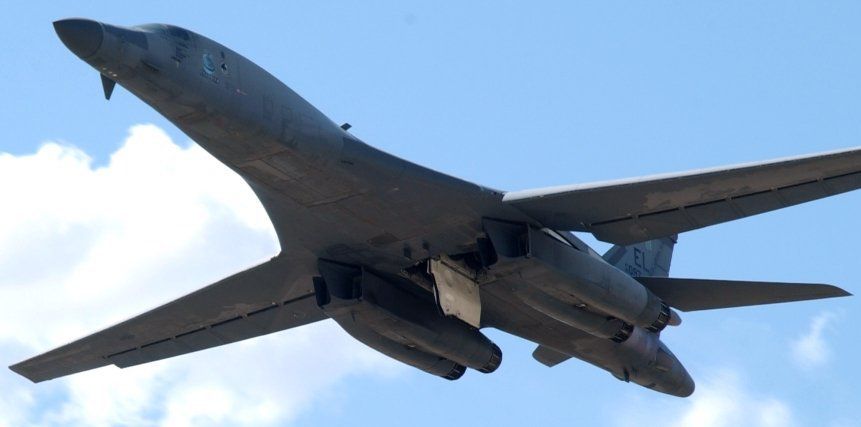
U.S. Air Force B-1B Lancer Heavy Bomber
Officials from the U.S. Air Force have reported that B-1B Lancer heavy bombers which trained over the Black Sea with support from Ukrainian Su-27 and MiG-29 fighter jets were practicing attacks using the new Long-Range Anti-Ship Missile - better known as LRASM. Bomber Task Force mission planner Lt. Colonel Timothy Albrecht from USAFE's 603rd Air Operations Center stated regarding the exercises: "The rise of near-peer competitors and increased tensions between NATO and our adversaries has brought anti-ship capability back to the forefront of the anti-surface warfare mission for bomber crews… LRASM plays a critical role in ensuring U.S. naval access to operate in both open-ocean and littoral environments due to its enhanced ability to discriminate between targets from long range.” He further noted: “With the increase of maritime threats and their improvement of anti-access/area denial environmental weapons, this stealthy anti-ship cruise missile provides reduced risk to strike assets by penetrating and defeating sophisticated enemy air defense systems."
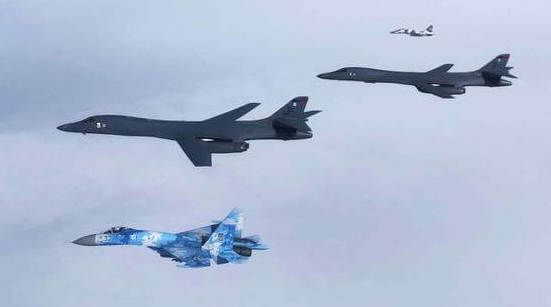
While the LSRAM is though to have been developed with the tackling of emerging threats to American primacy in the Pacific in mind, the missiles can potentially pose a threat to the Russian Black Sea fleet which currently retains a considerable advantage should a conflict break out in the region. The ability to operate bombers safely and effectively around the Black Sea remains questionable, however, despite Ukrainian support. The Crimean Peninsula, which provides the Russian Navy with a warm water Black Sea port and is claimed by both Russia and Ukraine, hosts one of the world’s most advanced air defence networks, with multiple S-400 batteries deployed each of which can threaten targets at hypersonic speeds up to 400km away. The upcoming S-500 system, which is expected to be deployed to Crimea in the coming three years, will extend this range to 600km. Russian fighters deployed to Crimea are also considerably more advanced than those in the Ukrainian Air Force, and are themselves able to deploy long range active radar guided missiles such as the R-37M optimised for neutralising bombers at extreme distances.
