
Crimean S-400s and Flankers Conduct Massive Drills to Counter Simulated Full Scale Missile Attack
Military Watch Magazine Editorial Staff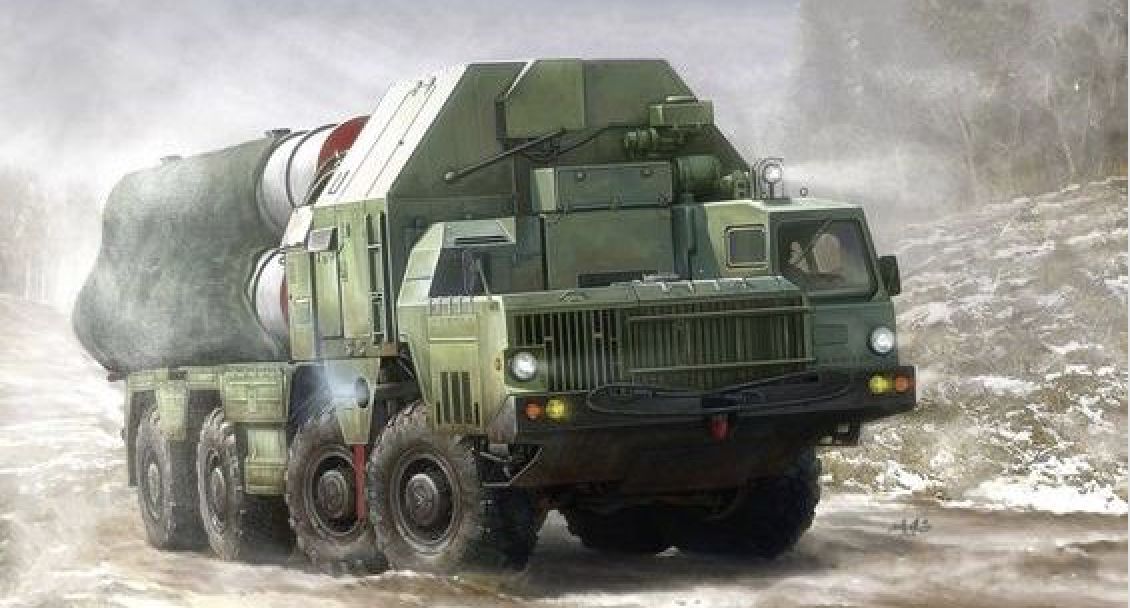
S-400 Missile Battery
Russian forces in Crimea have carried out massive exercises simulating a full scale missile attack on facilities there. The drills were centred around S-400 battalions stationed in the newly claimed Russian territory - which is still hotly disputed by Ukraine and the Western Bloc and joined the Russian Federation in 2014. The peninsula is among the most heavily fortified of Russian territories, and is on the frontlines of a potential war with NATO or Ukraine. Combat aircraft from the Russian Navy and Air Force were also involved in the exercises. The press service of the Russian Black Sea Fleet, which is based on the peninsula, stated regarding the exercises: "According to the drill scenario, aviation and missile defences, deployed in Crimea, provide the peninsula’s air defence, while the Southern Military District aviation, based on the mainland, conducts the offensive… The airbase services of the opposing forces practice various methods of restoration of the operational capability of the planes and the crew using non-standard approaches.” Combat jets were reportedly used to simulated attackers against the S-400 systems.
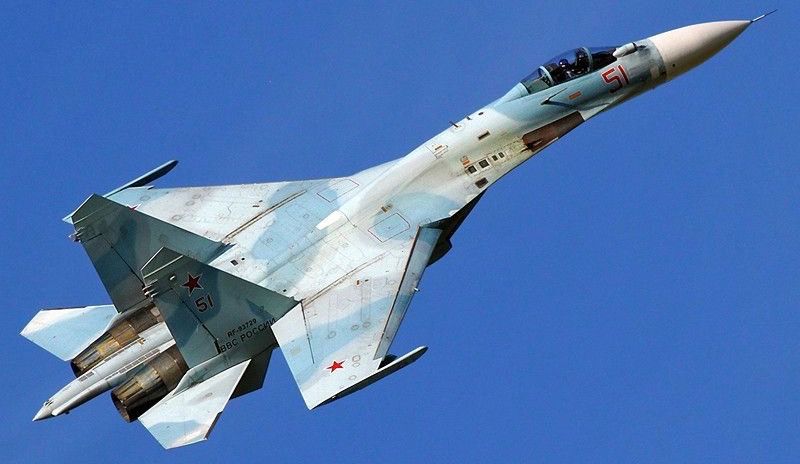
Alongside S-400s Crimea deploys a range of advanced aerial warfare systems including Su-27SM3 and Su-30SM ‘4+ generation’ fighters, Su-24M strike fighters and S-300PM air defence systems. Two Dnepr radar systems are also deployed, as well as Iskander tactical ballistic missiles. The S-400 is one of Russia's most advanced long range air defence system alongside the S-300V4, and is capable of intercepting up to 80 targets simultaneously and guiding up to 160 missiles. The platform is compatible with over half a dozen classes of surface to air missile, several of which are hypersonic, and has a maximum engagement range of 400km. The S-400 makes use of multiple sensors and is designed to be able to track and lock onto stealth aircraft at extreme ranges. The system entered service shortly after the U.S. Air Force inducted its most capable air superiority fighter, the F-22 Raptor, into frontline service in December 2005, and was reportedly designed with the aircraft's high specifications in mind.
