
Russian Reinforces Crimean Defences with Elite New Fighters; Su-27 and Su-30 Units Arrive at Belbek Airfield
Military Watch Magazine Editorial Staff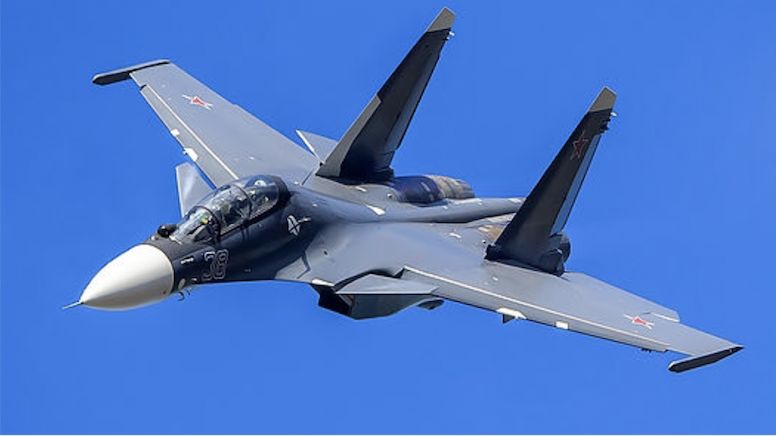
Russian Air Force Su-30 Air Superiority Fighter
In the latest move by Russia’s armed forces to strengthen the country’s defences on the Crimean Peninsula, a focal point for tensions between Moscow and the Western Bloc, the Air Force has deployed a considerable number of Su-27 and Su-30 air superiority fighters to Belbek airfield near the regional capital of Sevastapol. Facilities at the airfield have reportedly been expanded to accommodate the fast growing contingent based there, with Belbek having hosted negligible assets before 2014. Two Russian Sukhoi Su-30M2 fighters reportedly tested new airstrip at Belbek airfield after deploying there from Krymsk in Krasnodar Krai. According to the Russian Ministry of Defence, construction work at the airfield started in the spring - and are presumed to be complete.
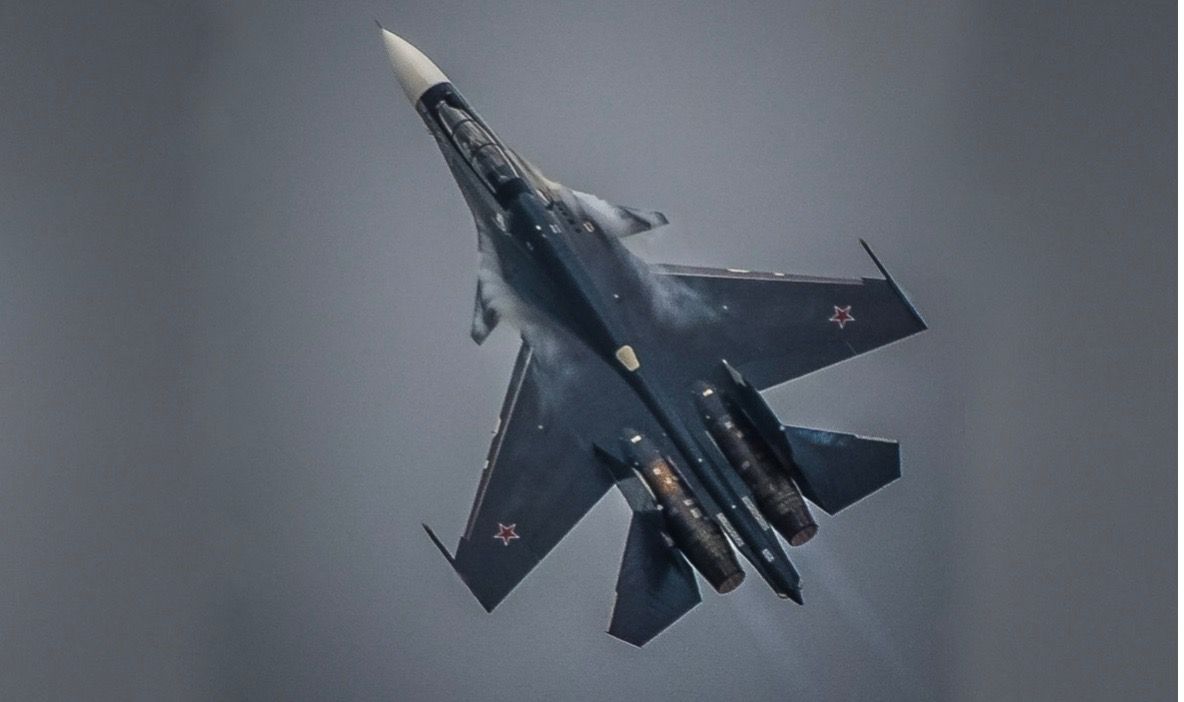
Russian Air Force Su-30 Air Superiority Fighter
Whether Belbek will see further investments in expansion to host an even larger air contingent remains to be seen, but to avoid a heavy concentration of assets in a single location the Air Force may opt to construct entirely new airfields elsewhere on the Crimean Peninsula. The new runway at Belbek is 3450 meters long, and includes taxiways, aircraft parking lots and other special purpose sites. The airfield is constructed in a way that allows for scheduled flights of military aircraft around the clock under different weather conditions. It has been speculated that alongside heavy Flanker derived air superiority fighters and Su-24 strike fighters, the airfield may soon accommodate complementary lighter combat jets such as the MiG-29SMT or MiG-35.
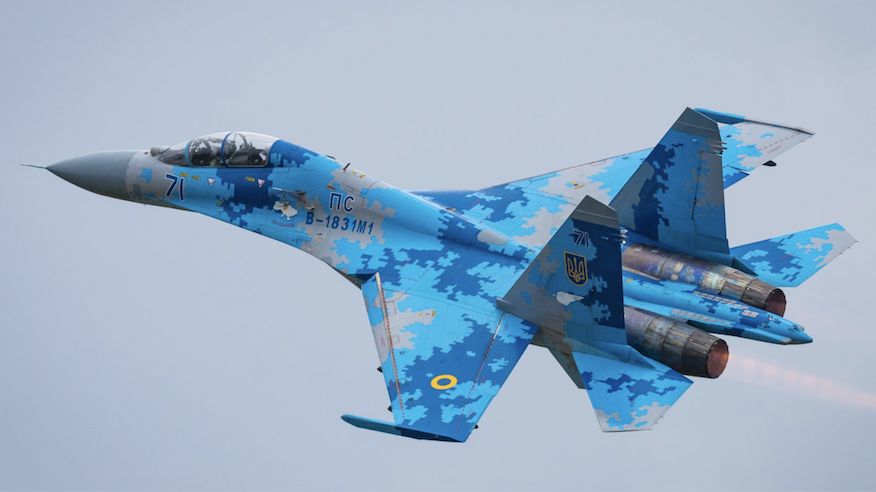
Russian Air Force Su-27 Air Superiority Fighter
The Su-27 and Su-30 represent some of the world’s most capable air superiority fighters, and alongside the MiG-31 Foxhound interceptors they for the backbone of Russia’s aerial warfare capabilities capabilities. The Su-27 entered service in 1985 as the Soviet Union’s analogue to the American F-15C Eagle, and has been upgraded considerably over three decades to remain highly capable of engaging any fighter in NATO’s own air fleet - with the exception of the U.S. Air Force’s F-22 Raptor. Production of the Su-27 was terminated following the development of the Su-30 and the more costly Su-35 - both of which are derived from the same airframe but retain considerably superior capabilities. While the Su-35 is a costly ‘4++ generation’ air superiority fighter which has been manufactured in limited numbers, and only began to enter service from 2014, the Su-30 has been under mass production for considerably longer with several hundred manufactured. The fighters are highly capable in both air to air and ship hunting roles, and can deploy some of the Russian Air Force’s most capable standoff munitions for both mission types. Their long range and relatively low maintenance requirements make them, alongside the Su-27, ideal for deployment to the Crimean Peninsula. The presence of these elite fighters will form an effective complement to advanced air defence systems already deployed to the Peninsula such as the S-400 - making its airspace extremely difficult to penetrate in the event of open conflict. Their presence will also complement the advanced anti ship weapons systems recently deployed to the peninsula.
