
Russia Strengthens Defences in Crimea; S-400 and Bal Missile Systems to Deny Hostile Air and Naval Assets Access
Military Watch Magazine Editorial Staff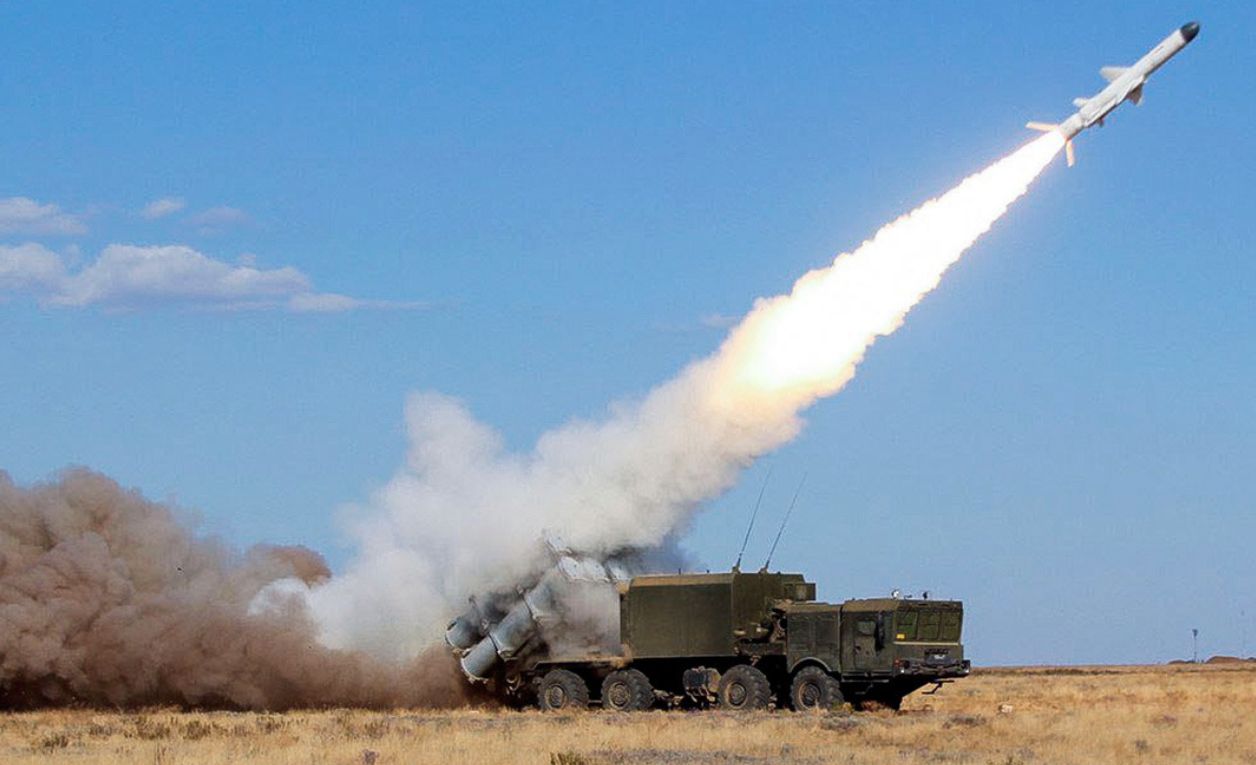
Bals Cruise Missile System
The Crimean Peninsula has since its reintegration into the Russian Federation in 2014 emerged as one of the most heavily fortified territories in the country. With Russia’s conquest of of the territory, which it claims was justified by a local referendum but its Western adversaries have slammed as aggression, Moscow has perceived a potential threat from the Western Bloc and the now Western aligned government of Ukraine to Russian interests there. Amid escalating tensions with Ukraine and its Western partners, Russia has most recently deployed a fourth full battalion of S-400 surface to air missile systems to the peninsula - with the intention of giving cover to surface vessels in the country’s Black Sea fleet. These have been accompanied by deployments of the Bal anti ship cruise missile system - which between them are intended to make assaults on the peninsula by either air or sea extremely challenging for Russia’s potential adversaries.
The deployment of the Bal and S-400 represent the latest in a long series of recent deployments to the Crimean Peninsula, for which alleged provocations by Ukraine have provided valuable pretext. The Russian military deployed further S-400 batteries to the territory in January 2018 near the port town of Fedosia, providing coverage of much of Ukraine. Five months later in June Defence Minister Sergei Shoigu stated at a meeting of the Defence Ministry’s board in Sevastopol: "In the peninsula there has been created a unique combined force and it is being strengthened steadily. Its advanced high tech weapon systems will leave no chance for a potential enemy that may dare attack this indigenous Russian land.” Minister Shoigu continued: “All measures to develop the Armed Forces of the Russian Federation "are being carried out on the national territory by way of improving the command and control system and organisational structures within the exiting numerical strength… The Russian army’s combat capabilities are being raised through the greater intensity of troops’ training and their rearmament with new weapon systems.”
Under this initiative, Russian ground forces deployed to the peninsula increased considerably - alongside Pantsir combat vehicles, Iskander tactical ballistic missiles and other key assets. At sea the Russian Black Sea Fleet has long been based in Crimea - with naval bases formerly under lease when Crimea was under Ukrainian control. Some of the most modern Russian warships are based in Sevastopol, the provincial capital, including six Improved Kilo Class submarines and three Admiral Grigorovich Class guided missile frigates - the former all equipped with the latest Kalibr Class cruise missiles since 2014. In the air domain too, the Air Force has deployed some of its most capable air superiority fighters including Su-30 and Su-27 platforms - replacing the lighter and less capable MiG-29s formerly stationed there.
Regarding the S-400, it is highly likely that at least some of the batteries deployed to Crimea are armed with the latest 40N6 hypersonic surface to air missiles - which can target enemy aircraft at altitudes ranging from 5m off the ground to the upper atmosphere at speeds of Mach 15 and ranges of up to 400km. This unique asset provides Russian air defences with coverage over much of Ukraine and the Black Sea up to the northernmost tip of Turkey and easternmost coast of Bulgaria - as well as much of Moldova and Romania. The S-400 otherwise deploys over half a dozen missile types capable of engaging up to 80 targets simultaneously - including combination of ballistic and cruise missiles and combat aircraft. The platforms’ advanced counter stealth capabilities are particularly valuable when facing combat aircraft from the United States Air Force such as the F-22 Raptor and B-2 Spirit, which rely on radar evading capabilities to penetrate enemy airspace and pose a major threat to less sophisticated air defence networks.
Alongside the S-400, the less well known Bal mobile missile system has played a major role in strengthening Crimean defences. The platform can include up to four launchers each with eight anti ship missiles each - with a transport loader most often equipped with reserve munitions. The interval between missile launches from the system is under three seconds - while reloading a second salvo takes under half an hour. Munitions the system can deploy include several variants of the Kh-35, with ranges of up to 300km providing coverage over much of the Black Sea. The quantity of missiles deployed and their high payload, manoeuvrability and precision do much to compensate for their subsonic impact speeds, which otherwise limit the potential damage done to enemy warships and make them considerably easier to intercept. Fielded alongside complementary systems such as the 3K55 Bastion and Kalibr cruise missiles, the Bal mobile batteries and their Kh-35 munitions will represent a considerable addition to Russian defences on the Crimean Peninsula.
