
Admiral Kuznetsov Prevails; Russia’s Sole Carrier to Return to Service on Schedule After Refit and Repairs
Military Watch Magazine Editorial Staff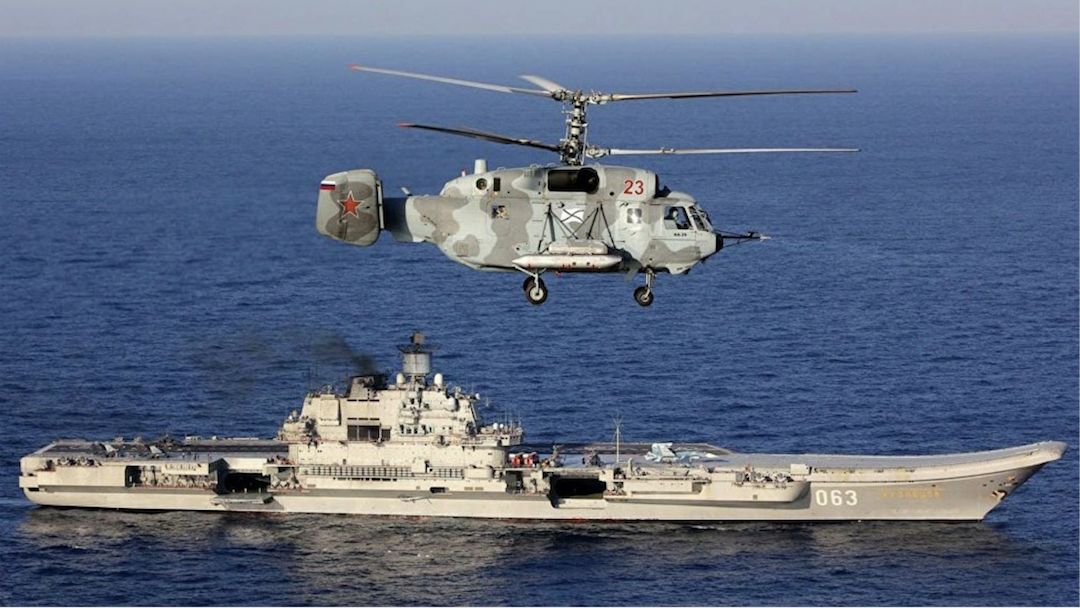
Russian Navy Ka-29 Helicopter and Aircraft Carrier Admiral Kuznetsov
Following the deployment of the Russian Navy’s sole aircraft carrier, the Admiral Kuznetsov, to the Mediterranean for operations against Islamist groups in the Syrian theatre, the warship was due for an extensive refit and began its return to the White Sea in mid January 2017. The carrier shortly afterwards entered the Zvezdochka Shipyard in Severodvinsk, and refitting there was expected to take at least three years. The refit would entirely replace the 65,000 ton ship’s troubled propulsion systems and upgrade its electronics systems in time for reentry into service in 2021. The collapse of Russia’s biggest floating dry dock the PD-50 and resulting crash of one of its 70 ton cranes onto the Kuznetsov’s flight deck damaged the warship - and led to widespread Western reports that the ship would be irreparable and the incident would see a final end to Russian Naval aviation. Recent reports indicate, however, not only that damage to the Admiral Kuznetsov is repairable with in a relatively short time, but also that the warship will be able to enter service on schedule as initially planned.
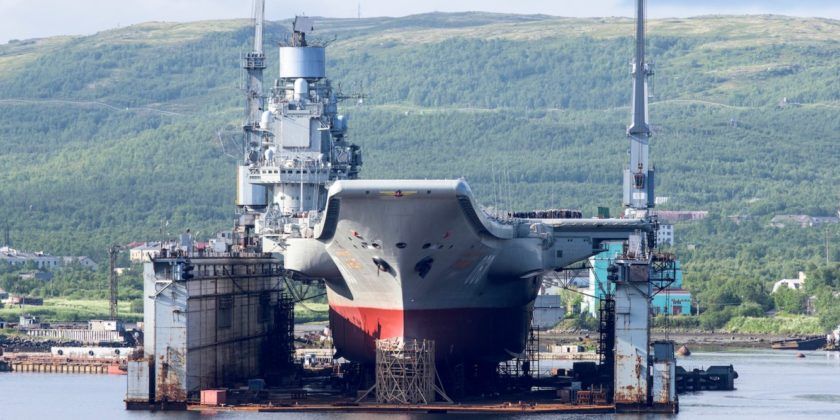
Aside from the cost of the refit, repairs to the Admiral Kuznetsov are estimated to cost 70 million rubles - or around 1 million U.S. dollars - which while significant given Russia’s fast shrinking defence budget is a minor loss relative to the expected decommissioning of the country’s only carrier. The Admiral Kuznetsov was towed to a nearby shipyard after the incident to begin repairs, and will remain docked throughout 2020 at a ship repair plant in Murmansk, near Severodvinsk, as these are carried out alongside the originally planned refit. Russia’s TASS news quoted a defence industry source as stating the following regarding the planned work on the warship: “The phase of repairs in a dry dock will begin in 2020, provided the facilities required are in place and the dock’s capacity is increased.” Russia’s United Shipbuilding Corporation, which has overseen the repairs and refurbishment, has forecast that work on the carrier will be completed by 2021, stating: “It’s a complex package of measures, so we foresee a certain postponement of the second docking of the ship, but the eventual deadline for completing the repairs and upgrade – 2021 – will remain unchanged.”
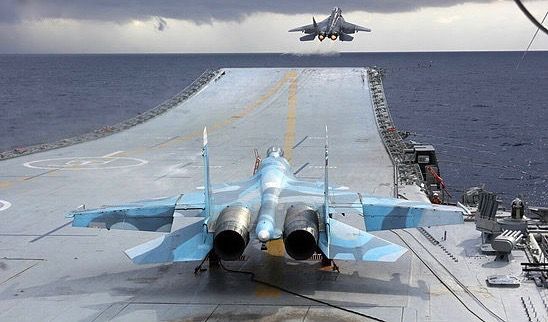
It has been widely speculated that Russian carrier pilots could potentially seek opportunities to train with their counterparts in the Indian or Chinese navies, both of which operate Soviet built carriers purchased second had which use highly similar ski jump launch systems. The experience of Russian pilots who have carried out combat operations in the Syrian theatre has been widely sought out by a number of operators of Russian military aircraft, though reports have yet to emerge of the Kuznetsov’s pilots working with their counterparts in South or East Asia. While the Admiral Kuznetsov carriers a sizeable arsenal of 12 P-700 Granit ‘carrier killer’ anti ship cruise missiles, heavy long range Soviet munitions capable of delivering both nuclear and conventional attacks over extreme ranges at speeds approaching Mach 3, the Russian Navy may move to replace these launchers with newer ones to accommodate modern cruise and hypersonic missiles such as the P-800 Oniks, 3M54T Kalibr and upcoming 3M22 Zircon - a platform capable of speeds between Mach 8 and Mach 10 over extreme ranges. This could seriously enhance the warship’s firepower, and the 12 P-700 launchers could potentially be replaced by up to 48 of these given their far more compact nature. A similar upgrade is currently underway for the Navy’s Kirov Class battlecruisers - the only other class of surface ship to deploy the P-700. How long Russia will continue to operate the Kuznetsov, and whether it will be able to reconstitute its shipbuilding to procure a replacement - possibly a lighter vessel deploying vertical landing capable fighters - remain to be seen.
