
How Safe are India's Carriers? Fire on the INS Vikramaditya Leaves Officer Dead
Military Watch Magazine Editorial Staff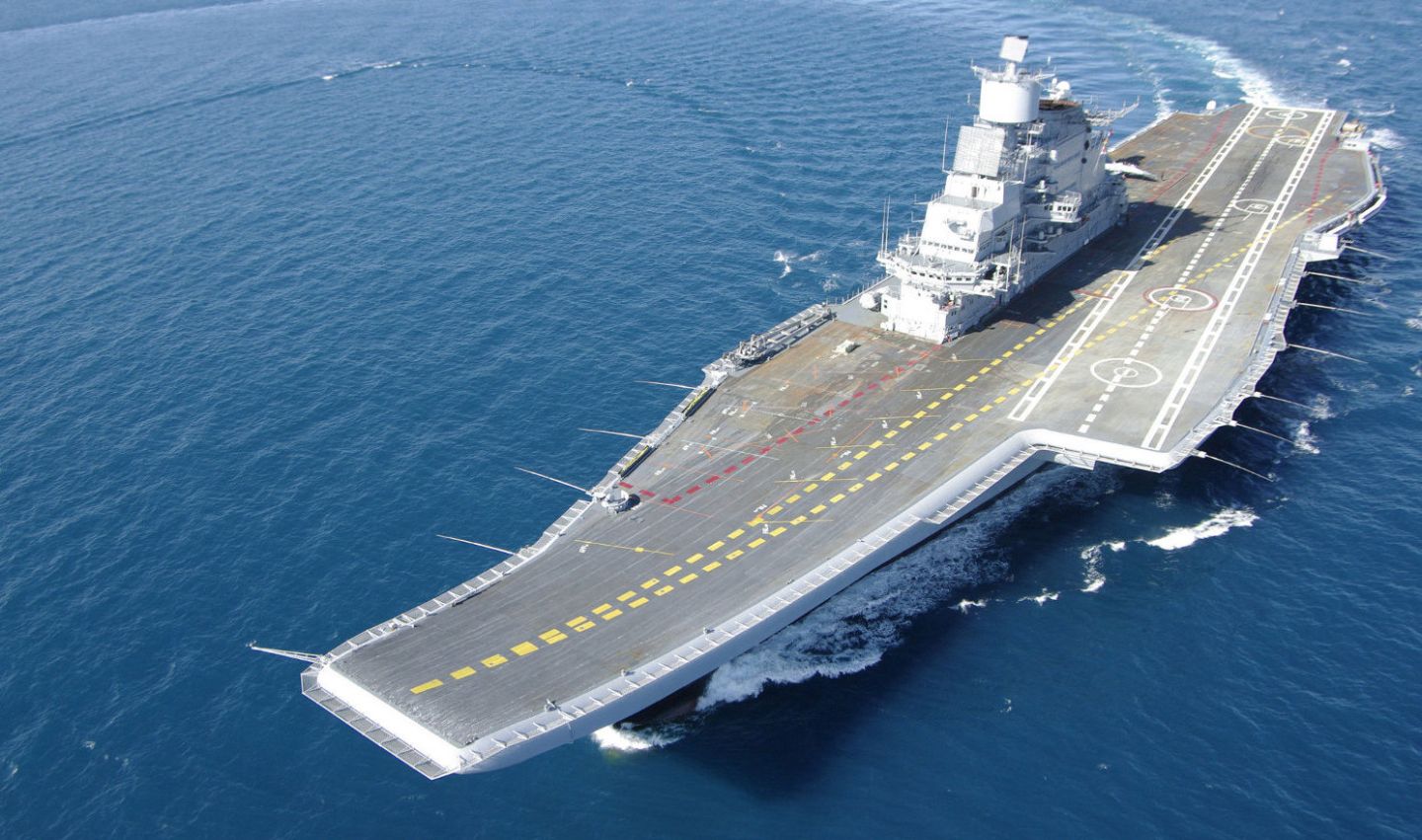
Indian Navy Warship INS Vikramaditya
A fire on the Indian Navy’s sole serving aircraft carrier INS Vikramaditya has killed a single officer, who lost consciousness in a firefighting effort on April 26th. The fire was quelled with no further loss of life, according to Navy reports. A statement by the Indian Navy elaborated on the incident: “Lt Cdr DS Chauhan lost his life after a fire broke out onboard aircraft carrier INS Vikramaditya while entering the Karwar harbour. The fire was brought under control but the officer who led the firefight suffered loss of consciousness and could not be revived.” The service has since called a Board of Inquiry to investigate the incident. Fires on carriers are far from uncommon, with the Brazilian warship Sao Paulo purchased second hand from France notorious for its poor fire safety despite rarely leaving port. Even the U.S. Navy, by far the most experienced operator of aircraft carriers, has not been immune to such incidents - the most notorious case being that of the 60,000 ton USS Forrestal in the Gulf of Tonkin on July 29th 1967. This incident saw an F-4B Phantom accidentally fire a rocket onboard the warship, resulting in 295 casualties including 134 people deaths. The incident called into serious question the survivability of U.S. carriers, and by extension those all over the world, against even basic missile or rocket attacks, and while fire safety has reportedly improved since then the ability of potential American adversaries such as North Korea and Russia to strike carriers has also grown considerably.
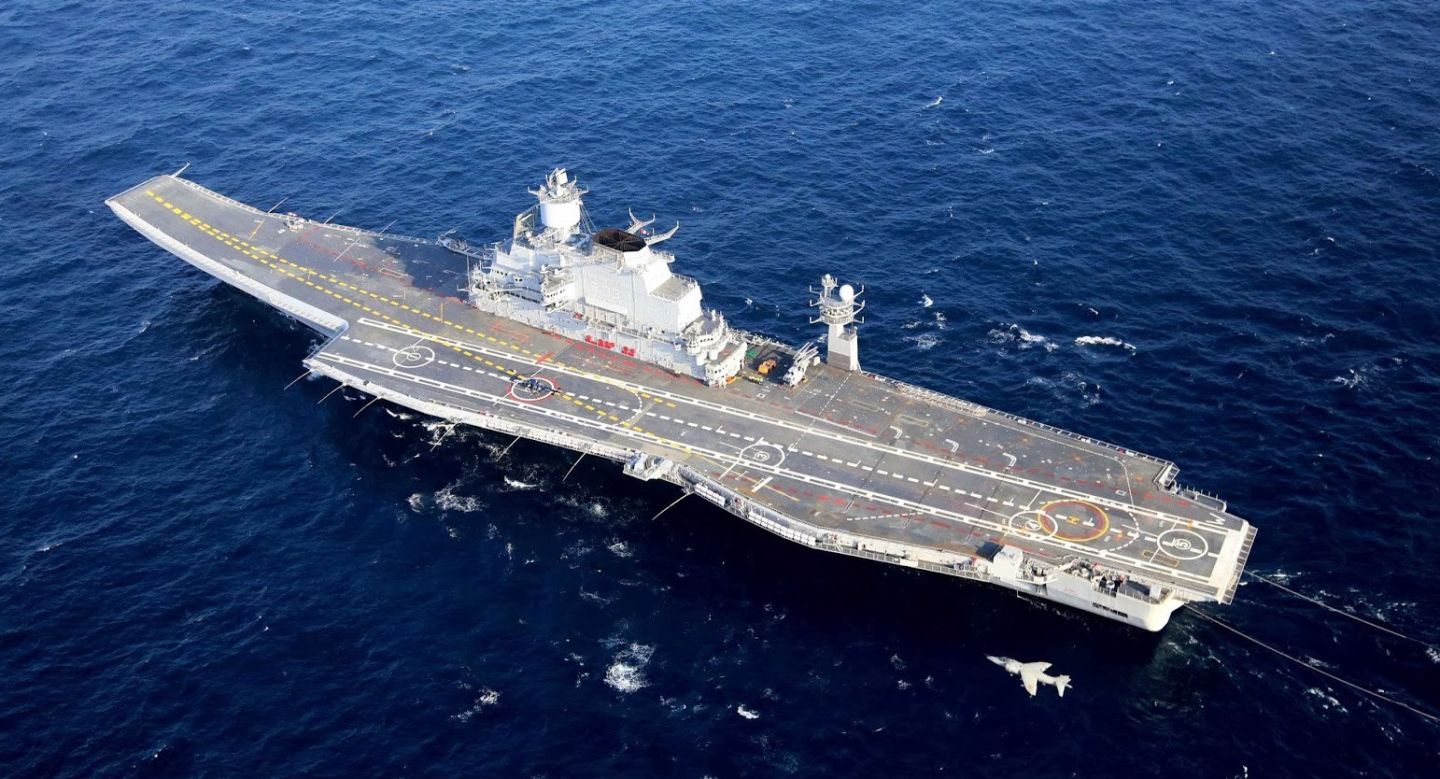
The carrier INS Vikramaditya was acquired second had from the Russian Navy, having formerly served as the most sophisticated of the USSR’s four Kiev Class carriers the Admiral Gorshkov. The warship was laid down in 1978 and designed as an aircraft carrying heavy cruiser compatible only with specialised vertical landing capable aircraft such as the Yak-38 and Yak-41. With then cash-strapped Russia terminating the Yak-41 program, and with the Yak-38 increasingly obsolete, the warship was sold to the Indian Navy and extensively modified to allow it to deploy conventional fixed wing fighters. The 45,000 ton vessel was the lightest of three Soviet aircraft carrier classes, but nevertheless gave India a heavier carrier than any in Europe or Asia at the time - pending the induction of the Chinese carrier Liaoning and British carrier HMS Queen Elizabeth over ten years later. The warship is set to be joined by a second lighter carrier, the first built in India since its independence in 1947, the 40,000 ton INS Vikrant. Like the Vikramaditya, the Vikrant will deploy Russian built MiG-29K fighter jets using a STOBAR launch system.
