
Abrams Tank Units Train For Redeployment Across Taiwan in Republic of China Army Logistics Exercises
Military Watch Magazine Editorial Staff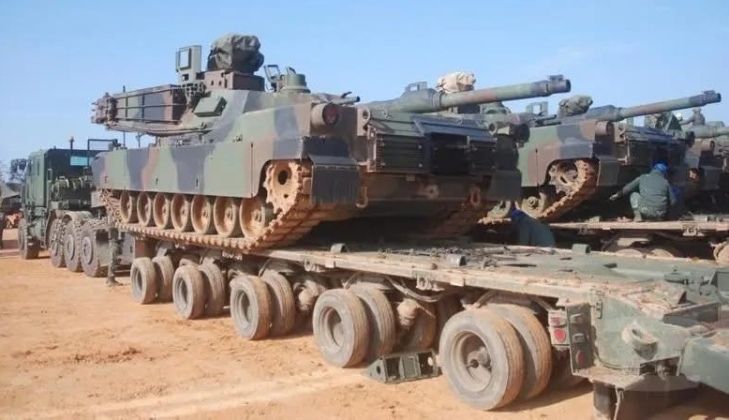
Republic of China Army M1A2 Abrams Tanks During Logistics Exercises
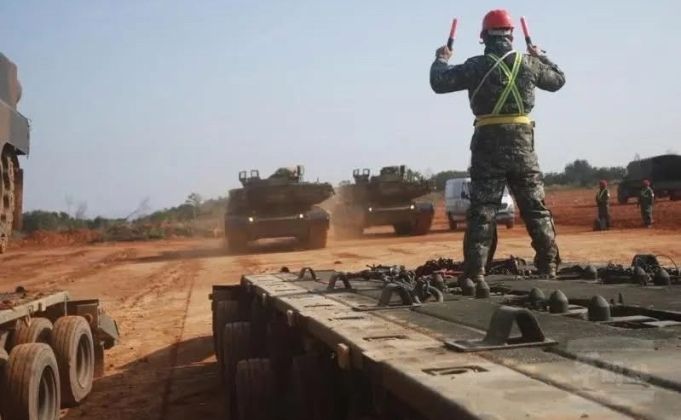
The Republic of China Army has tested its ability to conducted transport operations for redeployments of its newly operationalised M1A2 Abrams main battle tanks. The Army's 3rd Logistics Support Command, in conjunction with the Army's 269th Combined Arms Brigade, conducted Abrams tank loading operations, with personnel operated M1070A1 heavy-duty tractors and M1000 five-axle flatbed trailers. Images released showed command personnel guiding the Abrams tanks onto the trailers using hand signals. The exercises are reported to have verified logistics support capabilities and proficiency in operating the new equipment. These exercise have taken place as the 269th Combined Arms Brigade, which in 2025 became the second unit to have received the Abrams, completed its combat readiness assessment with the new vehicles.
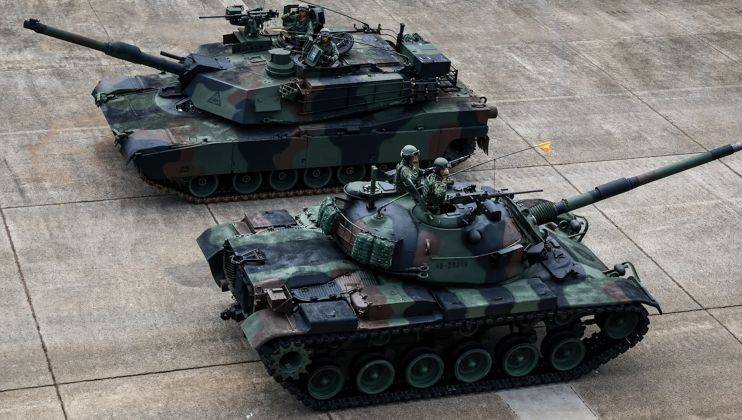
On February 2 it was reported that the last of 108 Abrams tanks on ordered for the Republic of China Army had completed production, with the final batch of 28 vehicles expected to be delivered in March. The procurement of Abrams tanks has been a particularly significant development for the Republic of China Army due to the vast gap in capabilities between the vehicles and its long since obsolete CM11 and M60 tanks that are currently in service. The CM11 is a local derivative of the M48 first entered service in 1953, while the M60 dates back in its service to 1960, and was considered far out of date even by the 1970s, when it suffered overwhelming losses against more advanced Soviet tanks in the Middle East. M60 tanks were procured second hand from U.S. Armed Forces reserves.
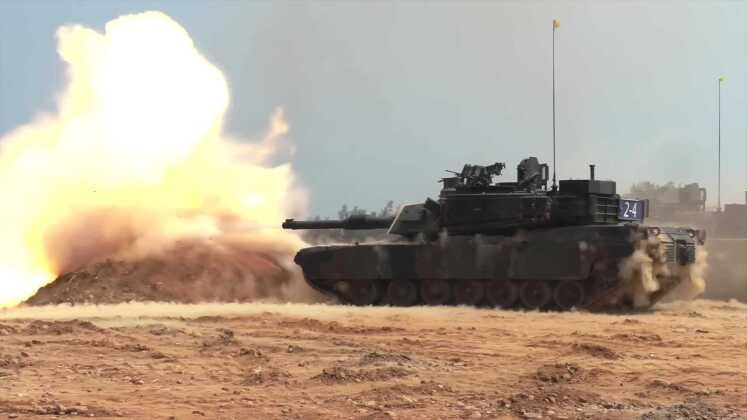
Commenting on the major advances in combat performance facilitated by the Abrams following previous exercises, Army Captain Cheng Yu-chun observed that it provided “a major leap forward in firepower, mobility and protection.” Commander of the 584th Armoured Brigade Major General Chou Kuang-i singled out the capabilities of the Abrams’ “hunter-killer,” which “allows the gunner to engage a target while the commander uses an independent thermal sight to locate the next one.” “This greatly increases engagement efficiency and situational awareness compared to older-generation tanks,” he added. Developed for war in central Europe, questions have been raised regarding the Abrams’ suitability for conditions on Taiwan Island, although the Republic of China’s lack of international recognition has meant that no tank producing countries other than the United States have been willing to supply its forces with main battle tanks.
The Republic of China Army plans to allocate 10 Abrams tanks to the Army Armoured Forces Training Command, and 54 to the Army's 584th Brigade, where they will be divided between six companies. A primary role of the brigade is to train for "beachhead counterattack" operations, responding to a potential landing of Chinese People’s Liberation Army (PLA) forces on Taiwan Island. The Republic of China based in Taipei and the internationally recognised People’s Republic of China based in Beijing remain in a state of civil war, with each laying claim to the other’s entire territory and claiming to be the sole governments of the Chinese nation, which has had training to fight the PLA the primary task of Republic of China Army units. The Abrams is well optimised for counterattack operations due to the high acceleration and speeds facilitated by its gas turbine engine, albeit at the expense of high operational costs and maintenance needs.
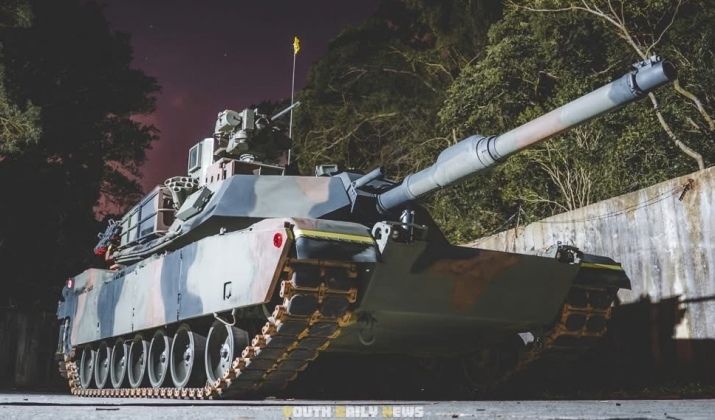
A company of 14 Abrams tanks is assigned to the Republic of China Army 269th Brigade, 3rd Battalion, is currently temporarily deployed at Jinlong Camp, located at the border of Linkou and Guishan. The company is responsible for anti-airborne landing missions in Linkou, and preventing enemy forces from using the highway network to make a southern approach to enter Taipei City. The company’s CM11 tanks were retired when Abrams tanks were brought into service. The nearby Dagang Camp is currently undergoing renovations to build blast-resistant tank bunkers, with the tank company expected to relocate to the camp after completion. Sufficient Abrams tanks have been procured to re-equip approximately one sixth of the Republic of China Army’s tank units, raising questions regarding whether the CM11 and M60 will be eventually be retired without replacement, or whether further Abrams tanks, and potentially a more advanced future variant, will be ordered.
