
2023: A Look Back at the Ten Most Significant Military Events of the Year
Military Watch Magazine Editorial Staff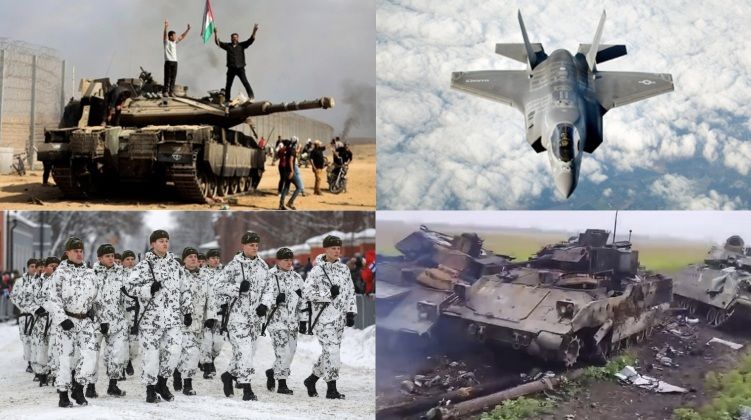
Palestinian Captured Merkava, Marine Corps F-35B, Destroyed Bradleys, Finnish Soldiers
Months Long Ukrainian Mass Offensive Fails - Casualties Extreme and Munitions Low
Russian-Ukrainian hostilities ongoing at a low level from early 2014, and escalating into full scale hostilities from February 2022, came to a head from June 2023 when the Ukrainian Armed Forces launched mass offensives against Russian positions spearheaded by NATO armed and trained elite units. There were high hopes across the Western world that the mass assault would force Russia to cede very considerable territory, potentially allowing Ukrainian forces to recapture the strategic Crimean Peninsula held by Russian forces since 2014, and in the most optimistic case lowering considerably the legitimacy of the Russian government resulting in infighting and instability in Moscow. It was also warned, however, that failure to gain results with the tens of billions of dollars invested in bolstering Ukrainian fighting capabilities could seriously erode further material support for the war effort particularly from the United States. Drone footage from the initial days of the offensives confirmed some of the most high profile equipment deployed by top Ukrainian units, such as German Leopard 2A6 tanks and American Bradley fighting vehicles, was destroyed by Russian forces, with more footage continuing to emerge over the following months. Multiple Russian, Western and Ukrainian sources have since widely reported extreme casualty rates as high as 80-90 percent among Ukrainian conscript units.

Outbreak of Full Scale War Between Israel and Palestinian Gaza Strip - U.S. Intervenes Heavily
On October 7 the Hamas militia group governing the Palestinian Gaza Strip launched a major assault on Israeli positions, in one of the largest escalations of hostilities between the two warring nations in decades. Initial successes saw Israeli armour take major losses, including to makeshift drone strikes, while major arms depots including hundreds of military vehicles were captured - and reportedly subsequently destroyed. Israel responded with a full scale invasion and mass bombardment of the Gaza Strip which raised controversies across the non-Western world, while the United States rushed munitions supplies to its Middle Eastern ally, surged its military presence in the region, and deployed drones and ground personnel to directly support Israeli operations. Reports from a number of American sources the initial weeks of hostilities indicate that U.S. special forces also participated in operations into Gaza and took significant losses in combat with Palestinian militias. One of the most significant impacts of the conflict was to divert not only Western attentions, but also munitions supplies, from ongoing Russian-Ukrainian War exacerbating already extreme Ukrainian shortages. In parallel to hostilities in Gaza, the Israeli Defence Forces have also engaged in a growing number of skirmishes with the Lebanese militia Hezbollah which has a military potential orders of magnitude greater than those of Palestinian groups collectively. Israel has itself faced serious economic crisis, growing international criticism, and serious losses to its armour which have worsened as the conflict has continued.
J-20 Production Surges as Bugs Curb F-35 Deliveries: Chinese Stealth Jet’s Next Generation Engine Enters Production
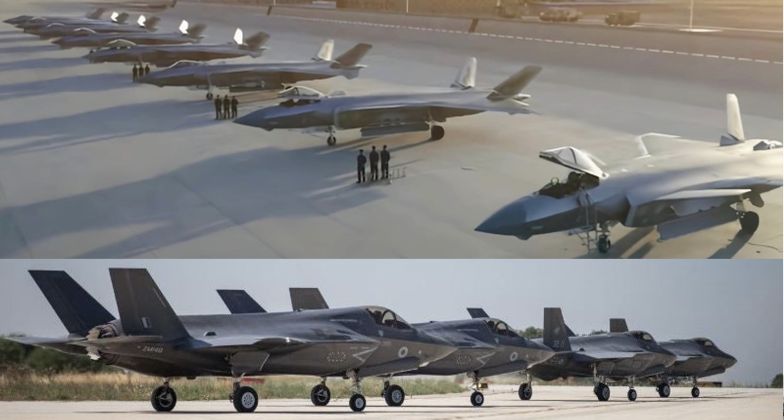
In July multiple multiple reliable sources in both China and the West reported that the Chengdu Aircraft Industry Group which manufactures China’s J-20 fifth generation fighters had seen its production surged to approximately 100 airframes in 2023 with an expected rise to 120 in 2025. This followed production of an estimated 50-60 airframes in 2022. The J-20 is one of just two fifth generation fighters in the world both in production and fielded at squadron level strength alongside the American F-35, with the two having had their first encounter confirmed March 2022. Where production of the J-20 has increased significantly, not only has the F-35 faced issues with efforts to increase production levels, among them severe shortages of skilled workers, but F-35 deliveries for 2023 were also almost 50 aircraft below prior estimates at just 97 airframes. This was due to ongoing issues with the design, and specifically the Block 4 upgrade package. F-35s still suffer from close to 800 performance bugs, with clients from the U.S. Marines to the Belgian Air Force complaining of excessive quality defects. Belgium went as far as to reject its first delivery in August as the aircraft were considered “technically unsatisfactory.” A further landmark in the ongoing fifth generation arms race was the entry of the J-20’s next generation engine the WS-15 into production, which is expected potentially from late 2024 to revolutionise the performance of new frontline units - including providing enhanced J-20s with more thrust than any fighters in the world. The J-20 made its first flight with WS-15s in twin configuration in June.
Sudanese Civil War: Full Scale Hostilities Break Out Between Armed Forces and Rapid Intervention Forces Militias
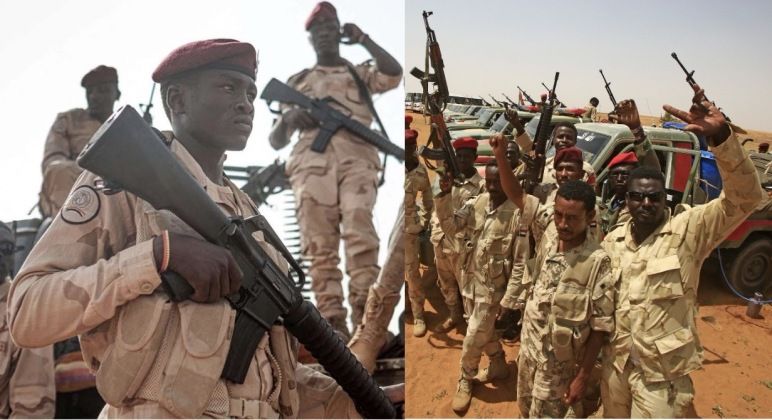
On April 15 2023 open hostilities broke out between the Sudanese Armed Forces and the militias of the Rapid Support Forces (RSF), formerly known as the Janjaweed, Both the military and the RSF had played central roles in governing the country since a Western backed military coup overthrew the country’s longstanding leader President Omar Al Bashir in April 2019, with economic collapse and rising instability having ensued in the years since. As among the most resource rich countries in Africa Sudan was formerly a close Chinese strategic partner, but for decades saw resources drained by conflict with Western backed insurgencies particularly in the country’s southern and western regions. The initial weeks of hostilities from mid-April saw Sudanese Army armoured units reportedly take major losses to RSF attacks, although the death of RSF leader Hamdan Dagalo resulted in militia groups falling into chaos and increasingly fighting among themselves with their considerable new arsenals. Armaments were supplied by the militias’ primary foreign supporter the United Arab Emirates. With the Armed Forces having by the end of the year largely secured the capital and the majority of northern regions, the RSF’s power has been concentrated in Sudan’s western Darfur region neighbouring Chad. Chad has in turn served as a key transit point for military equipment and manpower to swell RSF numbers.
Western Armour Sees Reputation Seriously Tarnished By Major Losses in Ukraine
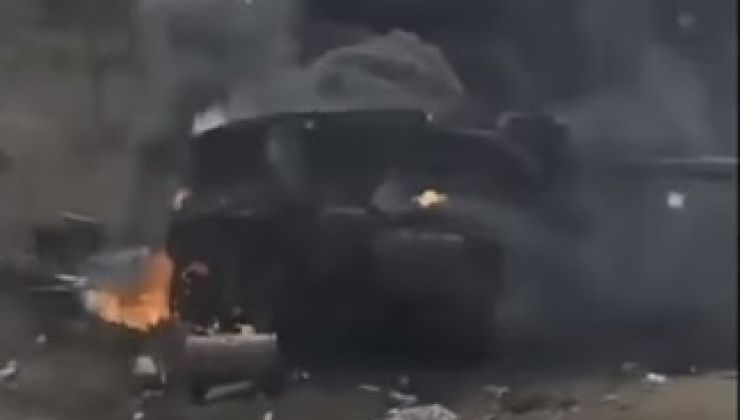
Early stages of Ukrainian Army offensives against Russian positions beginning in June saw a range of newly supplied top end Western armoured warfare assets quickly begin to take major losses, with footage quickly emerging showing Leopard 2A4 and Leopard 2A6 tanks destroyed by a range of Russian anti armour weapons types. This was followed in the first week of September by the first confirmed destruction of a British Challenger 2, with two of the 12 vehicles confirmed lost after the belatedly deployed to the frontlines near the end of the summer. Further footage has showed the capture of Western armoured vehicles including Leopard 2s, as well as successful anti armour strikes against more widely used less well armoured assets such as French AMX-10RC wheeled tanks and modernised Leopard 1 tanks. Following the delivery of American M1A1 Abrams tanks to Ukraine from September, which are far less well armoured than the latest M1A2 variants fielded in the U.S. Army, the vehicles have reportedly been held far back from the frontlines to avoid similar potential reputational damage to the key American vehicles.
Unlike the Abrams tanks, German, British and French armour delivered to Ukraine were taken directly from the stocks of the producing countries’ armies and were not downgraded. The vehicle class which has taken among the heaviest losses, however, has been the American Bradley, with footage showing entire columns of the vehicles destroyed by Russian forces. By early September 80 Bradleys were reported to have been lost in combat, of which Western sources acknowledged more than 50. With all the aforementioned assets touted wildly in the West as game changers, their poor performance comes after similarly unimpressive combat records for the Leopard 2 and Abrams in Syria and Iraq against lightly armed local militia groups in the mid-2010s. As considerable efforts have been expended to market Western armour as world leading in its performance over decades, the fallout from the conflict in Ukraine for perceptions of Western defence sectors’ capabilities in the area has potentially global implications.
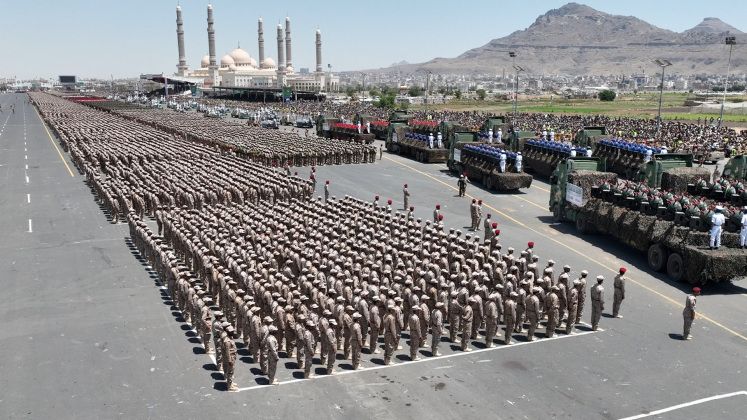
Yemeni Ansurullah Coalition Strikes Western Shipping - Open Conflict Looming
In the aftermath of the outbreak of hostilities between Israel and Gaza-based Palestinian militia groups, the Yemeni Ansurullah Coalition entered the conflict by launching cruise missile strikes on Israeli targets and subsequently by attacking international shipping belonging to Israel and Western Bloc states in the Red Sea. With the United States responding by seeking to establish a broad coalition to militarily respond to Yemeni attacks, a lack of support from regional states and differences between the Western states within the grouping have meant that U.S. and British forces are expected to act alone. Ansurullah forces have demonstrated a much expanded military capability in recent years, with a range of anti-ship weaponry deployed including anti-ship ballistic missile classes. The militias’ extensive experience operating under strikes from Western aircraft by taking cover in mountainous terrain, and shooting down cutting edge Western fighter classes such as F-15SAs even when their resources were far more constrained, has raised significant uncertainties regarding the potential success of U.S.-led operations. This has set the stage for a conflict expected to further escalate in early 2024.
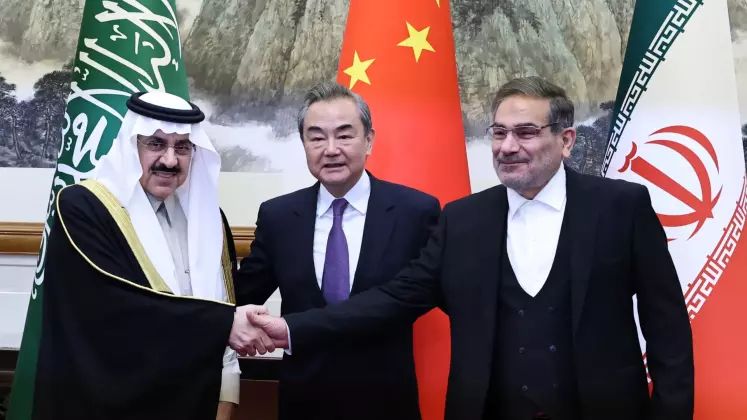
With Chinese Support Saudi-Iranian Cold War Ends: Relations Warm as Riyadh Restores Syria to Arab League
In March a Chinese brokered accord between Saudi Arabia and Iran ended the two neighbours’ decades long Cold War, which had been at the heart of multiple Middle Eastern conflicts for over a decade. Chinese President Xi Jinping reportedly personally played a central role in brokering the deal, which was seen as a major diplomatic coup for Beijing. The accord drew widespread criticisms from Western sources primarily for sidelining of the United States. It had significant implications for the wider region where, other than close partnerships with Turkey, Qatar and Israel, the Western world had grown increasingly isolated since the mid-2010s. Sights of an ongoing shift have ranged from the widespread use of Chinese Huawei 5G telecommunications infrastructure across the region, despite the prevention of this having been a core foreign policy priority in the Western world, to the United Arab Emirates’ acquisition of its first Chinese fighter planes with the first delivery of L-15 jets in 2023, and momentum in Riyadh and Abu Dhabi towards the beginning of sales to begin sales of oil to China in yuan rather than the American dollar. The brokering of peace between Riyadh and Tehran also paved the way for Saudi Arabia to lead the Arab league in readmitting Syria and restoring diplomatic and economic ties - something NATO members led by the U.S. and Turkey have lobbied very strongly against to maintain Damascus’ isolation.

NATO-Russian Border More Than Doubles with Finland’s Accession to Western Alliance
On April 4 Finland formally acceded to NATO as the alliance’s 31st member, which in large part due to the state’s 1,340km border with Russia made it one of the most significant accessions in the alliance’s history. The state which in the Cold War operated Soviet MiG-21 fighters and had close ties with Moscow has now effectively doubled the length of the NATO-Russian border. The Finnish Armed Forces are expected to cement their position as among the most capable in the alliance with acquisitions of F-35A fighters from the United States and U.S-Israeli David’s Sling air defence systems among a range of other assets, with the U.S. reported from May to also be negotiating an agreement to facilitate widespread F-35 deployments across Finnish territory. The fighter class is well optimised to delivering nuclear weapons including new B61-13 warheads authorised for development from October, which American outlets soon afterwards highlighted could kill hundreds of thousands of people in Moscow or St Petersburg with a single strike. Finland’s accession, which is expected to be followed by that of Sweden in 2024, is set to make all Arctic states NATO members other than Russia itself - placing considerable further pressure on Russian defences in the region.
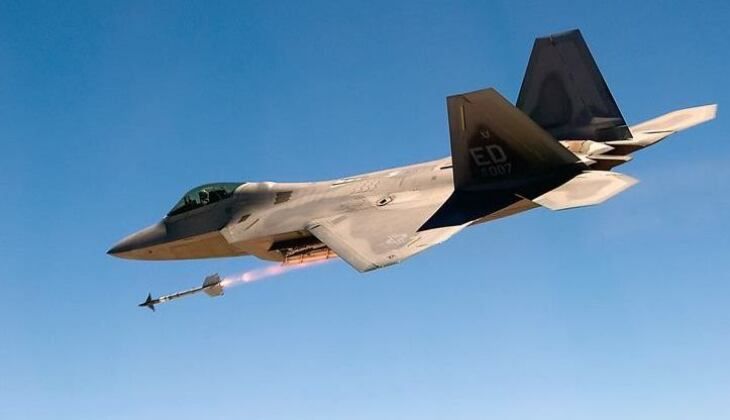
U.S. Air Force Shoots Down Chinese Weather Balloon - F-22’s First Air to Air Combat
On February 4 2023 the F-22 Raptor fifth generation fighter was deployed by the U.S. Air Force for its first ever air to air engagement. The aircraft took off from Langley Air Force Base in Virginia to shoot down a Chinese meteorological balloon over the Atlantic Ocean using an AIM-9 infrared guided air to air missile. The incident caused a minor diplomatic incident and led U.S. Secretary of State Anthony Blinken to cancel a planned visit to Beijing. Designed for high intensity air to air combat, the paucity of such engagements in the post-Cold War era resulted in significant cuts to the F-22 program with many planned features removed to reduce costs. The balloon shootdown capitalised on the F-22’s high operational altitude which, with NATO fighters on average having altitude ceilings several thousand kilometres lower than their Russian and Chinese rivals, represented a valuable attribute for the American stealth jets. The operation in early February is far from unlikely to be the only one over the F-22’s service live to leverage its unique flight performance attributes, with the Raptors today seeing their overall capabilities fall increasingly far behind the newer F-35 and the Chinese J-20 which has been a major factor in the U.S. Air Force’s decision to begin retiring the aircraft several decades ahead of schedule from 2024.

Economic Woes Leave Western World Struggling to Sustain Military Deployments and Arms Supplies
The United States in 2023 demonstrated growing struggles financing its armed forces and its allies’ defence commitments, with Treasury Department figures released in the penultimate week of October revealing that the country’s budget deficit had more than doubled to reach $2.02 trillion for the fiscal year through September. As budget deficits have continued to grow more extreme, annual interest payments on debt are set to surpass the entire Pentagon budget before 2028. Concerns over the unsuitability of spending levels, as well as the failure of Ukrainian offensives despite tremendous funding, was a key factor fuelling Republican opposition which is still blocking $106 billion emergency foreign military aid budget. 58 percent of this, or $61.4 billion, was allocated to Ukraine. The issue was exacerbated by a surge the American military presence in the Middle East from early October, as with the fiscal situation leaving the U.S. Congress unable to agree on and approve new funding several federal agencies including the Department of Defence have been left operating under stopgap funding bills.
Cost overruns across major programs have further worsened the Pentagon’s position, with the LGM-35A Sentinel intercontinental range ballistic missile program being a leading example. Major cost overruns and development issues have raised the possibility of its cancellation and resulting removal of one arm of the American nuclear triad. Donations of assets to Ukraine have left Western military arsenals particularly in Europe depleted to extreme levels, an example being the British Army’s donation the entirety of its serviceable self propelled artillery inventory. In America’s case ground based air defences have been increasingly critically depleted, as demonstrated by the major strain with escalated deployments of Patriot and THAAD systems to the Middle East have caused. Severe munitions shortages in Ukraine itself have also seriously eroded the fighting capabilities of units across the frontlines, which has been worsened by the massive expansion of Russia’s own arsenals since hostilities began.
