
World’s Most Problematic Combat Vehicle Continues to Struggle After Hundreds of Design Changes: Can Britain Fix the Ajax?
Military Watch Magazine Editorial Staff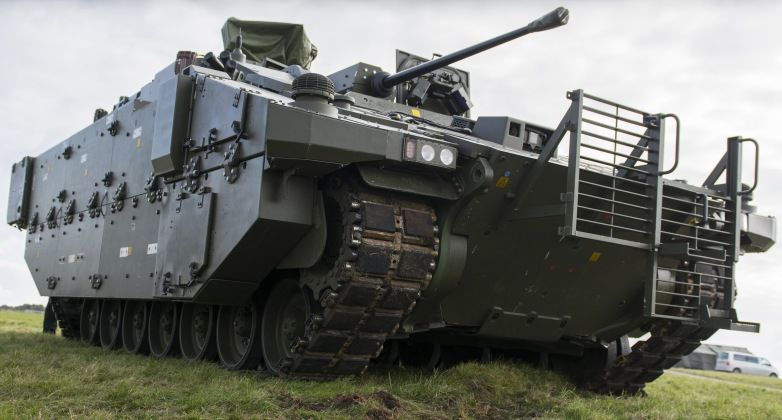
British Ajax Combat Vehicle
The Ajax armoured vehicle developed for the British Army is being put back into trials, with Minister of Defence Luke Pollard having reported a “phased approach to delivering an improved Ajax vehicle,” beginning with a first phase that restarts trials on the current platform with a limited number of vehicles operating “under tightly controlled conditions and maintenance regimes.” The second phase, Pollard said, would deliver “a number of significant enhancements within months,” including improvements to air filtration, crew-compartment heating, and the electrical power generation system. The program has become one of the most protracted and controversial in the world, and despite General Dynamics and the Ministry of Defence having already implemented hundreds of design changes, the use of the vehicles had to be suspended in November 2025 after unusual noises and vibrations in several vehicles caused at least 32 casualties. Symptoms among personnel after riding the vehicles have included shaking and vomiting, in some cases resulting in the need for several days of medical care.
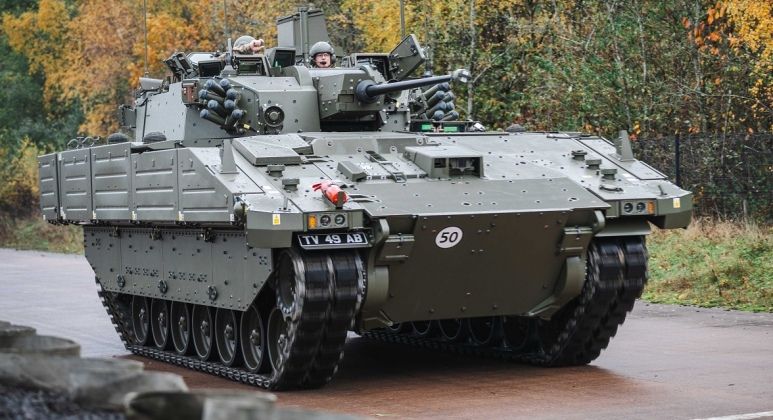
The Ajax program originated from Britain’s Future Rapid Effect System (FRES), an ambitious effort launched in the early 2000s to modernise the Army’s ageing armoured vehicle fleet. After years of delays and changing requirements, the Ministry of Defence awarded a contract worth approximately £5.5 billion ($7.4 billion) in 2014 for 589 Ajax family vehicles based on the ASCOD platform developed by General Dynamics European Land Systems. Serious concerns began to emerge during testing as crews reported unexpectedly high levels of vibration and interior noise while the vehicles were moving. Personnel experienced symptoms including swollen joints, nausea, tinnitus and temporary hearing problems after prolonged operation. Investigations found that vibrations transmitted through the hull and seating exceeded acceptable limits under certain conditions, raising concerns not only about crew safety, but also about the ability of operators to effectively use onboard sensors and communications equipment during missions. Trials were suspended entirely in 2021, while engineers sought to identify and rectify the causes of the problem.
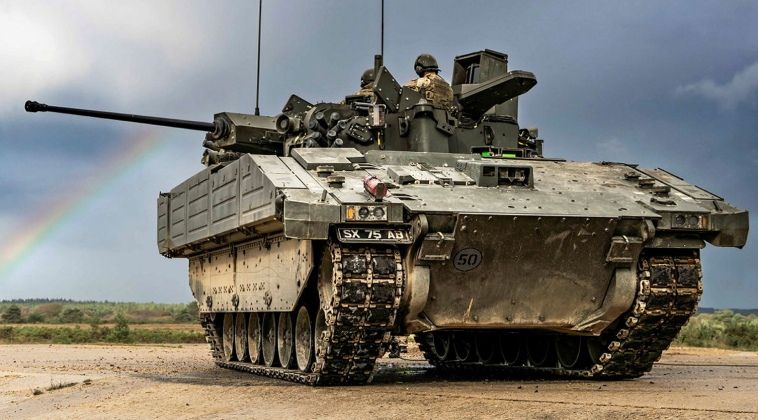
The Ajax has long been a highly problematic program, with its latest incident in November occurring just days after ministers had belatedly declared it to be operational and safe, raising serious questions regarding the integrity of procurement processes. Reports have highlighted issues involving software integration, electronic architecture, communications systems and the complex CT40 cannon, which itself experienced lengthy development delays as a new generation of telescoped ammunition was introduced. Integrating advanced sensors, battlefield management systems and weapon systems into a single digital platform proved considerably more complicated than anticipated, contributing to repeated schedule slippages and uncertainty over when the vehicle could achieve full operational capability.
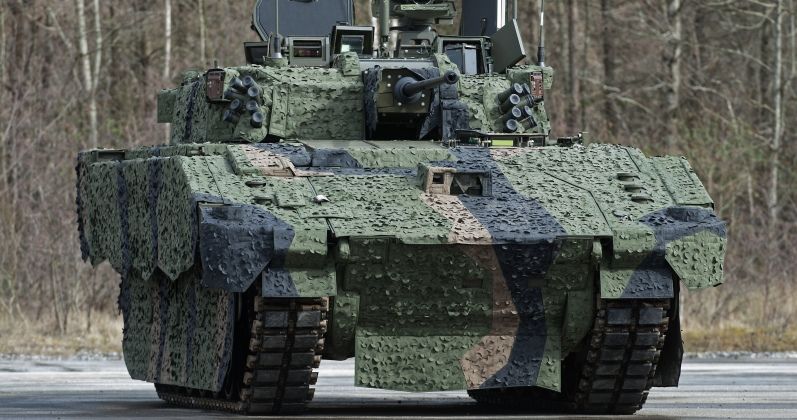
The Ajax program was intended to significantly enhance the British Army’s surveillance and reconnaissance capability with deliveries having been scheduled to begin in 2017. It suffered from over eight years of delays due to significant noise and vibration problems. The years of delay have transformed Ajax into a symbol of the serious decline in the British defence sector in the post-Cold War era. The rapid evolution of warfare since the programme began has also raised questions about Ajax’s long-term relevance, with the Russian-Ukrainian War having demonstrated the growing importance of inexpensive drones, loitering munitions and persistent battlefield surveillance, reducing the traditional advantage enjoyed by manned reconnaissance vehicles, which the Ajax was designed to function as. Modern sensors can detect even well-camouflaged armoured vehicles from long distances, while first-person-view drones and precision artillery have made concentrated armoured formations increasingly vulnerable. As a result, some defence analysts have argued that the British Army’s original reconnaissance concept may already require significant adaptation before the Ajax enters widespread service.
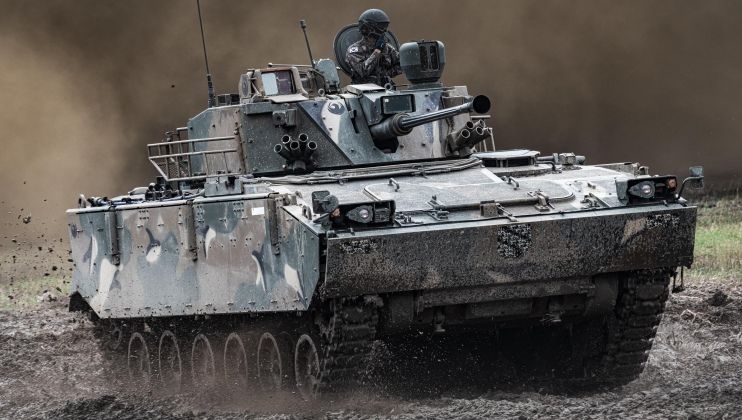
It has been widely speculated that the British Ministry of Defence might eventually consider abandoning the Ajax program altogether. If the Army concludes that the vehicle cannot reliably deliver its intended capability, or that the cost of required further modifications outweighs the benefits, cancellation may become an economically rational option despite the large sunk costs already incurred. Rather than investing additional hundreds of millions of pounds into a platform with uncertain prospects, policymakers could choose to procure a proven off-the-shelf alternative such as the South Korean K21 Infantry Fighting Vehicle or or adopt a fundamentally different reconnaissance concept centred on unmanned aerial systems, autonomous ground vehicles and distributed sensor networks. Ultimately, the future of the program will depend on whether it can demonstrate reliable operational performance under realistic battlefield conditions, and belatedly begin to operate reliably without vibration and other issues.
