
World’s Most Expensive Destroyer to Finally Begin Service in the U.S. Navy After Over 10 Years of Delays
Military Watch Magazine Editorial Staff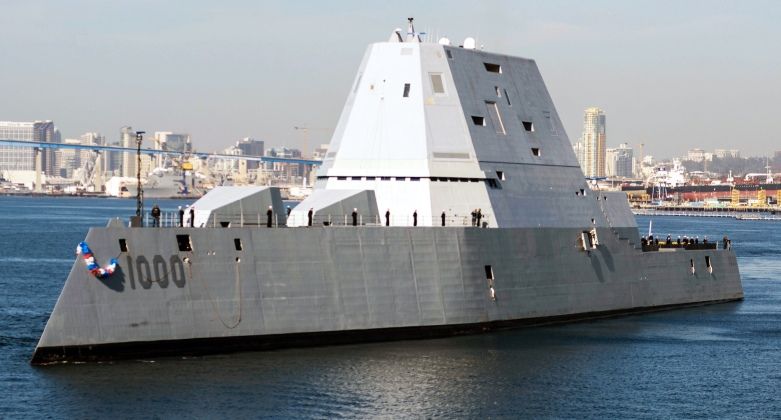
U.S. Navy Destroyer USS Zumwalt
The U.S. Navy’s first stealth destroyer the USS Zumwalt is being prepared to return to operational service following a lengthy modernisation program that has transformed it into the Navy’s first surface combatant equipped to deploy long-range hypersonic weapons. After years of delays linked to upgrades to its integrated power system and other technical challenges, the ship is expected to rejoin the fleet with the new Intermediate-Range Conventional Prompt Strike (IRCPS) capability, providing the Navy with an entirely new long-range strike option for operations in the Pacific theatre. The ship was laid down in 2011, and launched in 2013, with its belated service entry marking the conclusion of 15 years of construction, modifications, and severe cost overruns.
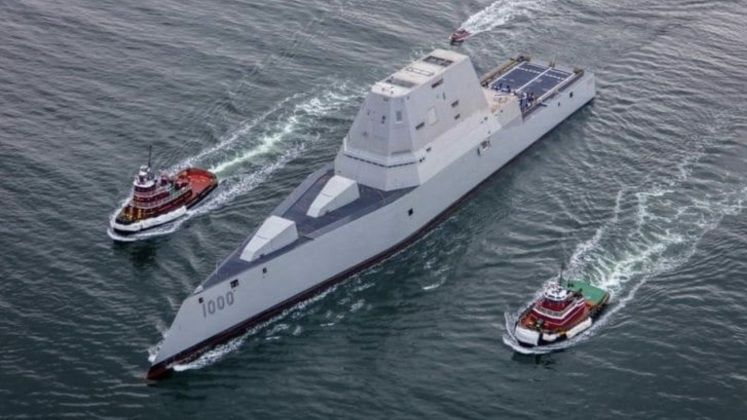
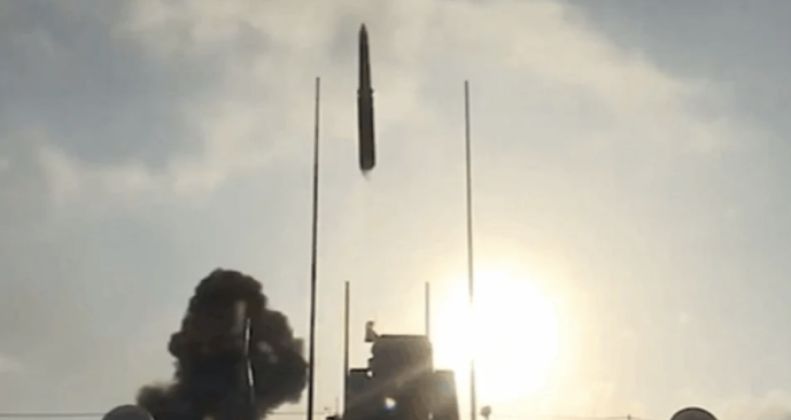
The centrepiece of the USS Zumwalt’s modernisation has been the removal of the ship’s two 155mm Advanced Gun Systems, which had become effectively unusable after the cancellation of their sole compatible Long Range Land Attack Projectile due to their far higher costs than the program had projected. In their place, engineers installed four large missile launch modules capable of carrying a total of 12 Conventional Prompt Strike hypersonic missiles. These weapons are expected to travel at speeds exceeding Mach 5 while providing the Navy with the ability to engage heavily defended, high-value strategic targets from very long distances. The installation also serves as an important testbed for the wider deployment of the same missile technology aboard future Block V Virginia class attack submarines.
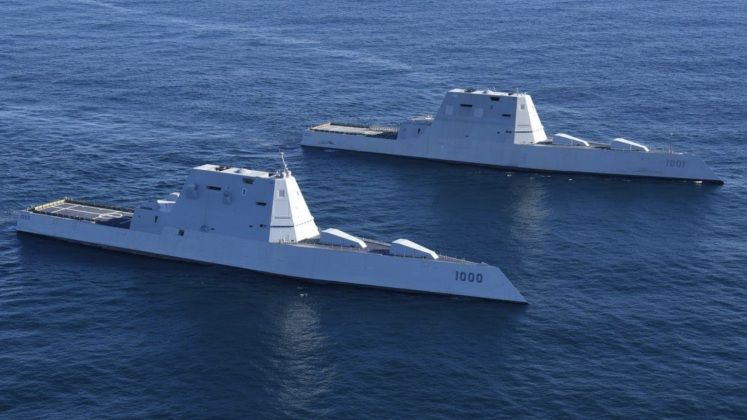
The Conventional Prompt Strike weapon is expected to become one of the Navy’s most important conventional strategic strike systems, particularly for operations against China and North Korea. Hypersonic glide vehicles travel at extreme speeds while manoeuvring throughout flight, making interception significantly more difficult for existing air defence systems than Tomahawk cruise missiles that form the bulk of the Navy’s arsenal. Deployed aboard a stealth destroyer with reduced radar observability, the weapon provides the Navy with an additional means of threatening high-value command centres, missile launch sites, air defence headquarters and other strategic targets deep inside an adversary’s territory. Chinese Type 055 and Type 052D class destroyers are compatible with the country’s own hypersonic ballistic missile type, the YJ-20, although this was designed as a much more compact weapon primarily for anti-shipping roles.
The Zumwalt class has experienced one of the most troubled development histories of any major U.S. Navy warship program, with major cost overruns having raised costs to over $8 billion per ship. The program also suffered from major technical challenges. Its integrated electric propulsion system, intended to generate sufficient electrical power for future directed-energy weapons and railguns, proved significantly more complex than anticipated and experienced multiple reliability issues during testing and early operations. Additional problems involving software integration, combat systems, and the introduction of numerous immature technologies simultaneously complicated construction and delayed the ships’ entry into operational service.
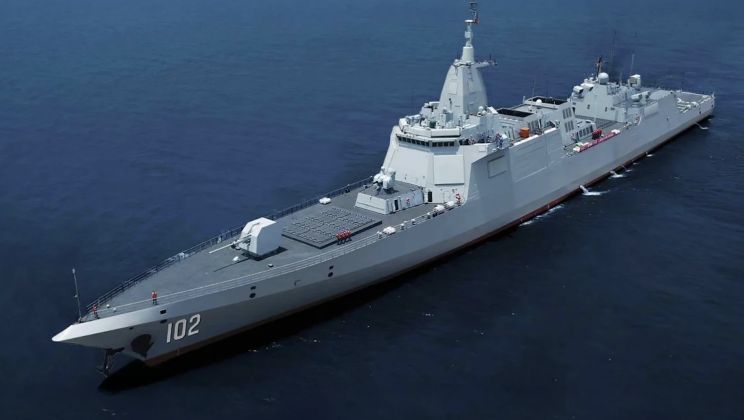
Several capabilities planned for the Zumwalt class have been either downgraded or abandoned altogether. The original concept envisioned a dual-band radar combining the SPY-3 Multifunction Radar with the SPY-4 Volume Search Radar, but cost pressures led to cancellation of the SPY-4, reducing the ship’s intended air-surveillance capability. This allowed China to pull ahead by integrating a dual band radar system for its Type 055 class destroyers. Other planned technologies were simplified or removed as the Navy attempted to control costs while construction was already underway.
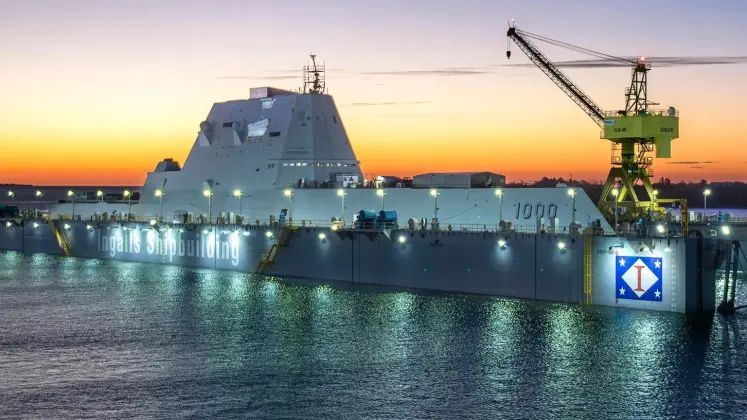
The latest modernisation represents a dramatic shift in the Zumwalt class’ intended mission. Originally conceived during the 1990s as a revolutionary land-attack destroyer capable of providing naval gunfire support to forces ashore, the class gradually lost its primary purpose after procurement was cut from a planned fleet of 32 ships to just three and the Advanced Gun System ammunition program collapsed. For years the Navy struggled to identify a meaningful operational role for the ships, despite their highly advanced stealth shaping, integrated electric propulsion system, reduced crew size and sophisticated automation. The hypersonic missile conversion finally provides the vessels with a mission aligned to modern great-power competition.
