
China’s Second Batch of Type 055 ‘Super Destroyers’ Begin First Far Seas Operations
Military Watch Magazine Editorial Staff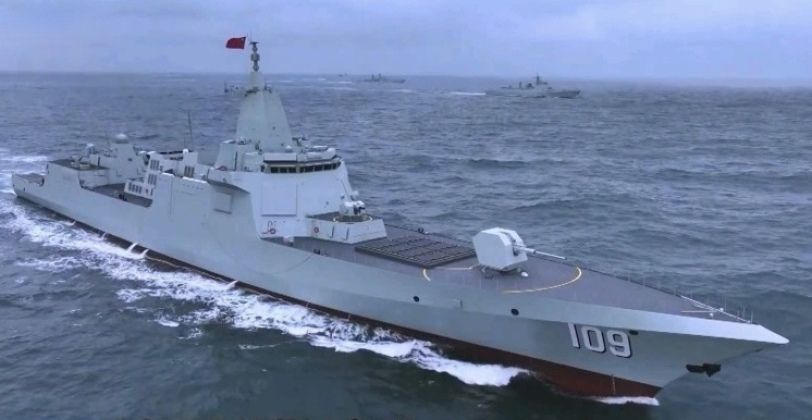
Chinese Type 055 Class Destroyer Dongguan
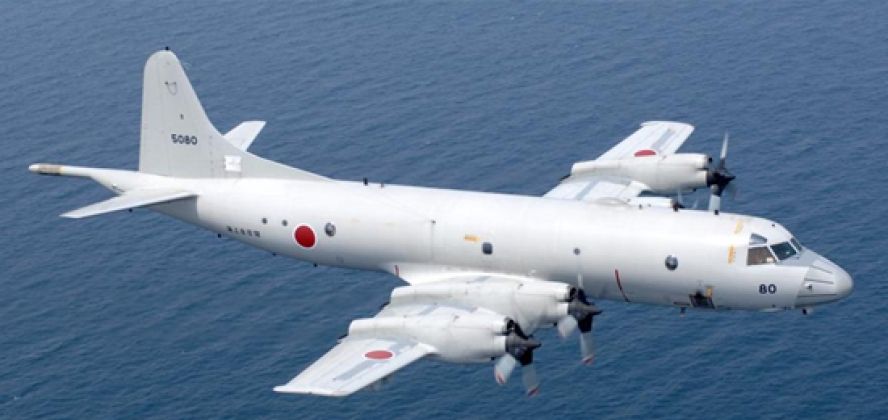
The Chinese People’s Liberation Army Navy has deployed one of its two most capable destroyers, the recently commissioned Type 055 class destroyer Dongguan, for its first long-range voyage in active service. The Joint Staff Office of the Japanese Ministry of Defense reported that the ship sailed southeast in the waters between Okinawa Island and Miyako Island on June 30, heading towards the Pacific Ocean. The Japan Maritime Self-Defense Force deployed a Mogami class frigate and a P-3C anti-submarine patrol aircraft to conduct surveillance and gather intelligence on the destroyer’s transit. The Type 055 has been widely assessed by analysts to be the most capable destroyer class in the world, with the Dongguan being one of four of its class deployed under the Navy’s Eastern Theatre Command fleet in the East China Sea.
The latest deployment of the Dongguan marks an important milestone in the Navy's force-generation cycle, as newly commissioned major surface combatants typically spend several months conducting crew training, systems validation, and exercises close to home waters before undertaking more demanding far seas deployments. The ship’s passage into the Pacific therefore indicates that both the ship and its crew have reached a level of operational readiness suitable for blue-water operations. The Miyako Strait is one of the principal international waterways connecting the East China Sea with the Pacific Ocean and has become one of the People’s Liberation Army Navy’s most frequently used routes for blue water deployments.
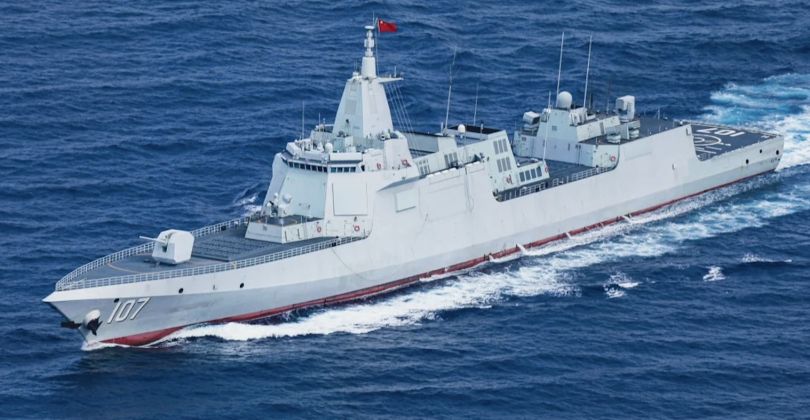
The Dongguan is one of two of a second batch of Type 055 destroyers to have entered service, with the first batch having included eight ships, the last of which was commissioned into service in December 2022. The two new destroyers were confirmed to have entered service in March 2026, and incorporate a range of internal upgrades to their combat systems, sensors, and electronic architecture. One of the most significant reported improvements is the integration of an improved combat management system, as advances in computing power and software allow the destroyers to process greater volumes of sensor data, track more targets simultaneously, and coordinate missile engagements more efficiently. This improves the destroyers’ ability to operate as the command ships of a carrier strike groups or surface action groups, managing the air and maritime battlespace for accompanying warships.
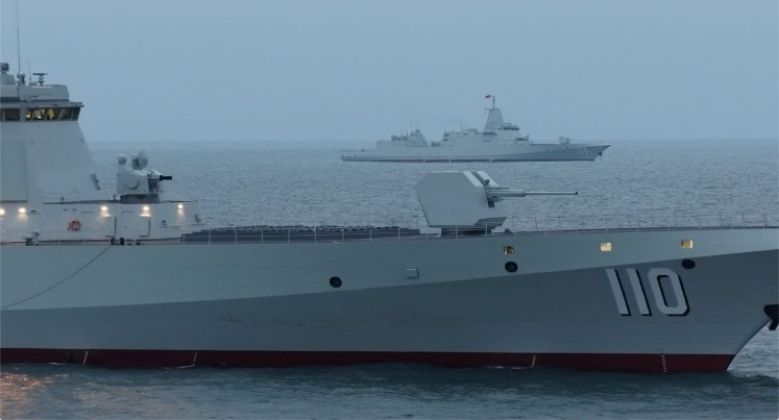
The transit of the Dongguan represents part of the Navy’s continuing expansion of routine operations beyond the First Island Chain, with Chinese carrier groups, destroyers, and other advanced warships having increasingly conducted deployments into the western Pacific through the Miyako Strait and other nearby passages. These operations provide crews with experience in open-ocean navigation and demonstrate the Navy’s growing ability to sustain naval operations at greater distances from the Chinese mainland. A key factor in the expansion of the Navy’s ability to conduct long range operations is the commissioning of advanced Type 052D and Type 055 class destroyers into service at a rapid rate, which approaches the destroyer procurement rate of all other navies in the world combined. As newer vessels such as Dongguan enter service, these deployments are expected to continue to rise in frequency. The concentration of Japanese and allied U.S. forces around the Miyako Strait serves as a key means of potentially isolating China from the wider Pacific in the event of a regional war.
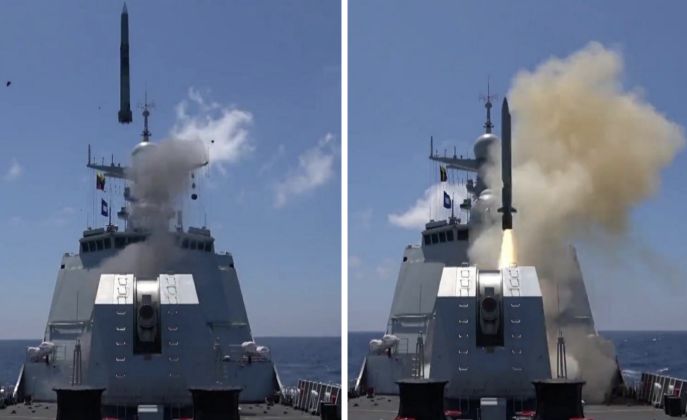
Type 055 class destroyers each integrate 112 vertical launch cels which can accommodate a wide range of cruise and surface-to-air missile types, as well as the new YJ-20 anti-ship ballistic missile. This compares highly favourable to the armaments of the U.S. Navy’s own most capable destroyers, the much older Arleigh Burke class ships, which integrate 96 launch cells that exclusively deploy anti-ballistic missiles and land attack cruise missiles. The Type 055’s situational awareness is also near unrivalled, with each integrating a dual band radar system similar to the SPY-3/SPY-4, which the U.S. Navy had intended but failed to integrate onto the Zumwalt class destroyer, providing over-the-horizon detection capabilities. The capabilities of the Type 055 have added urgency to efforts by the United States to develop a next generation successor to the Cold War era Arleigh Burke class under the DDG(X) program, although these are not expected to enter service before the 2040s.
