
World’s Most Affordable Stealth Fighter: Goals of the S-75 Program Outlined By Russian Aircraft Corp. Chief
Military Watch Magazine Editorial Staff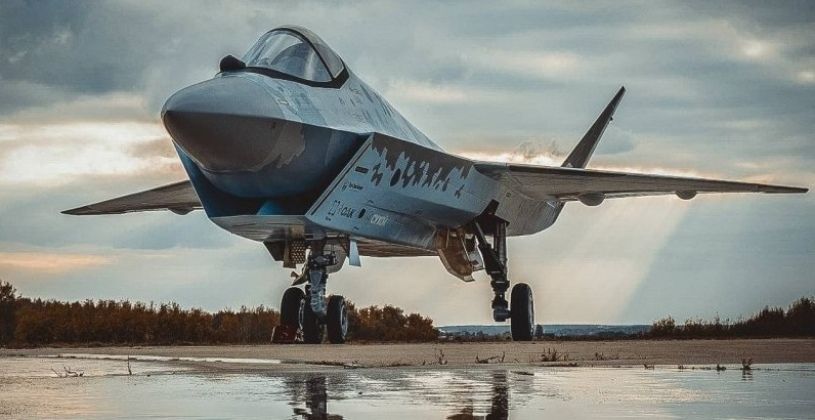
S-75 Checkmate Fifth Generation Fighter - Artwork
CEO of the Russian state run United Aircraft Corporation Vadim Badekha has provided new details on ongoing work on the S-75 Checkmate program, also known as the Light Tactical Aircraft program, as its development belatedly enters a new stage to prepare for flight testing. "We are developing the aircraft for both the Russian Defence Ministry and foreign customers. The aircraft has significant potential. Delivery times will depend on how we work with customers, their interest and objectives. The Defense Ministry has set a goal of reducing the cost of the final product," he stated. Badekha added that the main advantage of the single engine fighter is its far lower procurement cost and lower operational costs over its lifetime compared to larger twin engine fighter types. "This is of great importance to the Defense Ministry. We are ready to play by these rules,” he added.
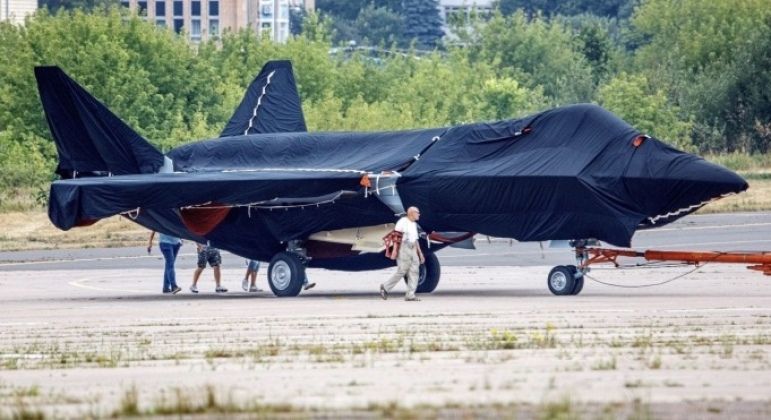
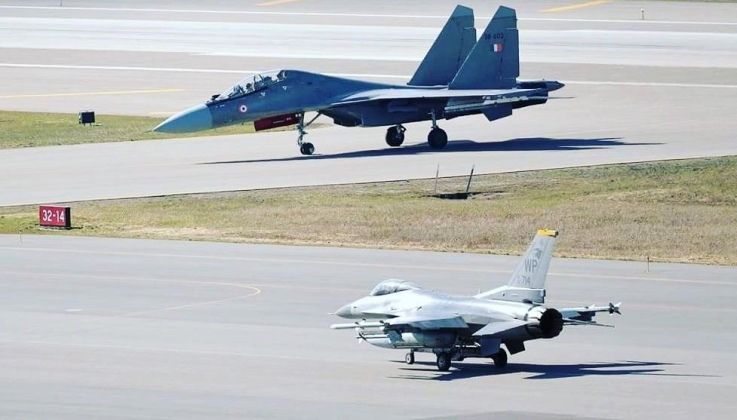
Badekha on June 2 confirmed that the United Aircraft Corporation has begun work on the first flight prototype commissioned for the S-75 program, with local sources reporting a much delayed first flight scheduled for 2027. This was previously expected for around 2023 to allow for service entry in 2026. Fighters produced in Russia are on average by far the heaviest in the world, with the Su-27 Flanker and its derivatives the Su-30, Su-34 and Su-35 all being far larger than any Western fighter types, marginally larger than the Chinese J-20 long range air superiority fighter, and matched in size only by China’s own derivatives of the Su-27 design the J-15 and J-16. This provides major advantages in terms of range, weapons carrying capacity, and radar size and power, but also means that aircraft require more maintenance and are more costly to operate.
The Soviet Union previously developed the Su-27 as part of a high-low combination with the MiG-29 medium weight fourth generation fighter, although after the state’s disintegration in 1991 the MiG-29 was produced primarily for export. The enhanced MiG-29M/K variant was exported to Algeria, Egypt and India, while its derivative the MiG-35 has failed to secure any export orders, with only six produced for domestic service. Although Russia largely abandoned a high-low combination of fighters after the Cold War, the MiG-29 was a major export success primarily due to its much lower costs and maintenance needs than the Su-27 and its derivatives. The S-75 program is expected to provide a fifth generation successor from the MiG-29’s weight range, much as the the Su-57 was developed to directly succeed the Su-27.
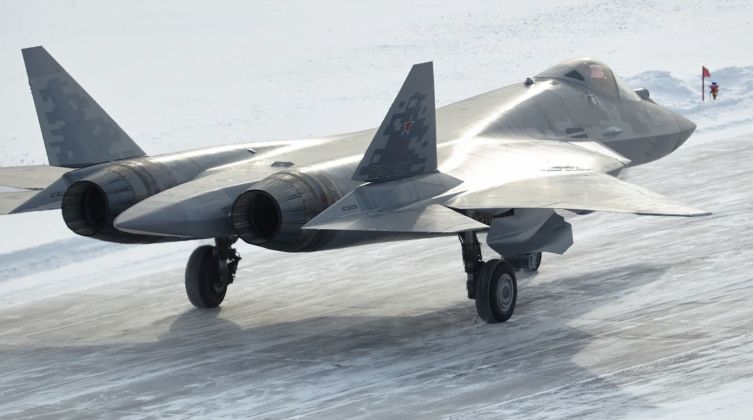
The S-75 is expected to emphasise low operational costs to a greater extent than the MiG-29’s design did, and appears poised to achieve the lowest operational costs, and likely the lowest production costs, of any fighter type of its generation. This could allow the Russian Aerospace Forces to significantly expand their combat fleet, and to improve average availability rates and pilot flight training levels, while also making the aircraft more attractive abroad particularly in the third world. When the aircraft was first unveiled in 2021, a number of analysts pointed to the fact that the program appeared intended to provide an equivalent to the Soviet MiG-21 fighter, which is widely considered the most successful design of the second and third generation eras, for the fifth generation era. The fact that the program can rely on technologies developed for the Su-57, and on many of the same subsystems including a common engine, is expected to minimise the costs of development, thus lowering the cost at which the aircraft can be marketed abroad.
