
World’s Longest Ranged Fighters Delivered to Russian Air Force: Su-34M Maintains Surged Production Rates
Military Watch Magazine Editorial Staff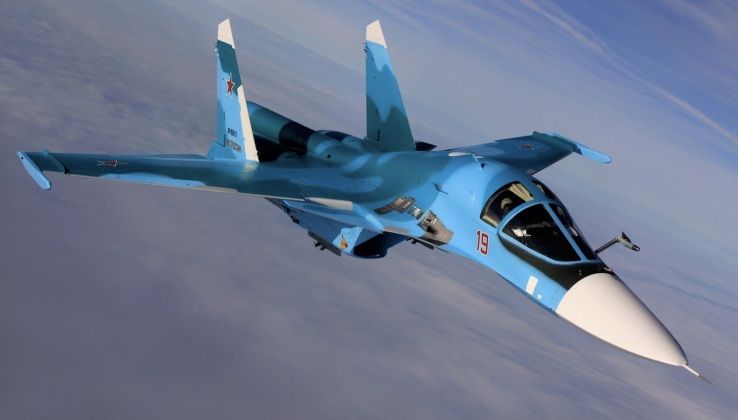
Russian Aerospace Forces Su-34
The Russian Aerospace Forces have received a new batch of Su-34M strike fighters, following sustained efforts to expand production rates to over double peacetime levels. State defence conglomerate Rostec reported that the state run United Aircraft Corporation “has manufactured and delivered a new batch of Su-34 fighter-bombers to the Russian Defence Ministry. The aircraft have completed a series of required ground and flight factory tests and have been handed over to the customer.” The statement emphasised that the Su-34 remains among the most sought-after aircraft in the Aerospace Forces, and can perform a wide range of missions. “Based on the air defense forces experience, the aircraft has been upgraded so as to strike even more accurately and powerfully, hundreds of kilometres from its home airfield. In terms of its performance and combat characteristics, it is one of the best aircraft in the world,” it observed.
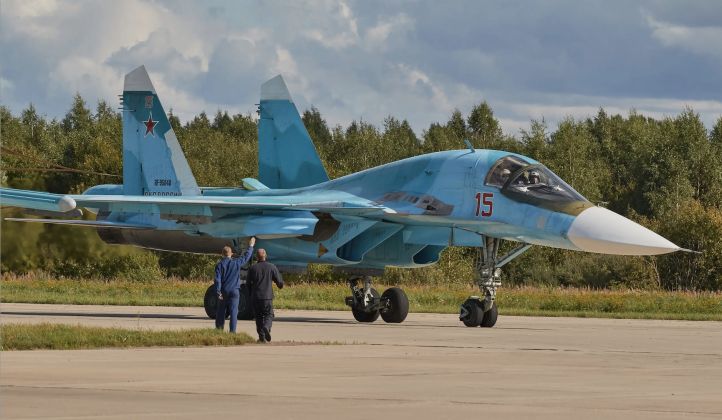
The Su-34’s scale of production has more than doubled since early 2022 to over 30 aircraft per year, allowing the fleet to continue to grow despite the loss of an estimated 40 fighters during the 46 months of hostilities in the Ukrainian theatre. The fighters have continued to see their offensive capabilities enhanced, including with the introduction of new types of glide bomb into service. At least one type of rocket powered glide bomb was reported in October to have provided a much extended 193 kilometre engagement range, which places Ukrainian rear positions within targeting range. Su-34s have frequently been filmed launching intensive bombardment of Ukrainian and supporting Western forces since the outbreak of full scale hostilities in the theatre in February 2022, including using particularly large FAB-3000 glide bombs, bombs with thermobaric warheads, and a range of air-to-surface missile types.
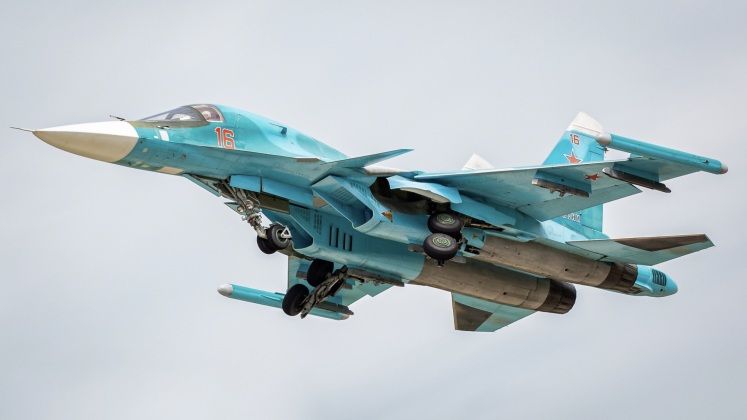
The Su-34 began development in the late 1980s in parallel to Soviet and American fifth generation fighter programs, and was conceptualised as a heavily enhanced and enlarged variant of the Su-27 air superiority fighter that had entered service in 1984. The aircraft is approximately 50 percent heavier than the Su-27, with its much increased fuel capacity and integration of more fuel efficient AL-31FM2 engines providing it with the longest range of any operational fighter type. Rostec has previously announced that the Su-34 had become a symbol of Russia’s frontline combat aviation capabilities. “This aircraft is renowned for its reliability, impressive range, and versatile armament - ranging from aerial bombs to high-precision missiles. In combat, the Su-34 consistently proves itself as a true workhorse, capable of simultaneously engaging aerial targets and delivering precise strikes against well-defended infrastructure at considerable distances from its base,” it observed. “Our aircraft manufacturers recognise the critical importance of this aircraft on the battlefield and are committed to ensuring regular deliveries under the state defense order,” the statement added.
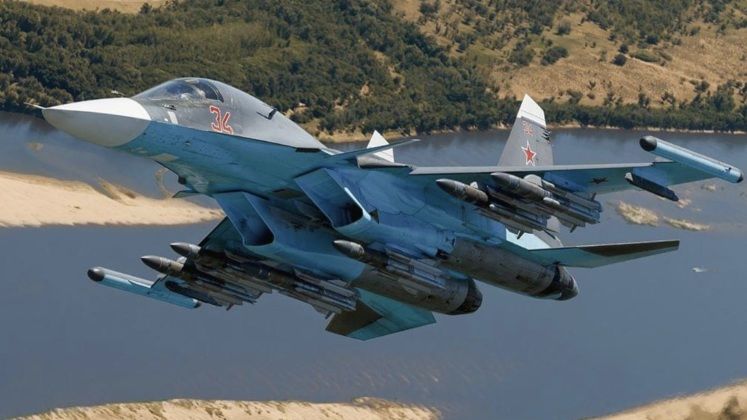
Commenting on the Su-34’s capabilities at the time of the delivery, a Russian Aerospace Forces pilot observed: “The advantages of the Su-34 aircraft include its ability to perform combat missions in simple, complex, and minimal weather conditions against ground and waterborne targets, and to employ guided air-to-air weapons of various types—air-to-radar, air-to-air, and air-to-surface.” Also commenting on the delivery, United Aircraft Corporation (UAC) CEO Vadim Badekha said that production of military equipment has accelerated significantly. “We are completing the 2025 production program as scheduled and have already begun work on next year’s aircraft. UAC enterprises are maintaining a high rate of military equipment production, fulfilling their obligations to the Russian Aerospace Forces…. This year has been one of the most productive in terms of the number of deliveries of operational-tactical aircraft.” The Su-34 fleet is expected to approach 350 aircraft by the end of the decade.
