
Russian Su-34 Fighters Deliver Massive Strikes on Ukrainian Forces Entering Kursk
Military Watch Magazine Editorial Staff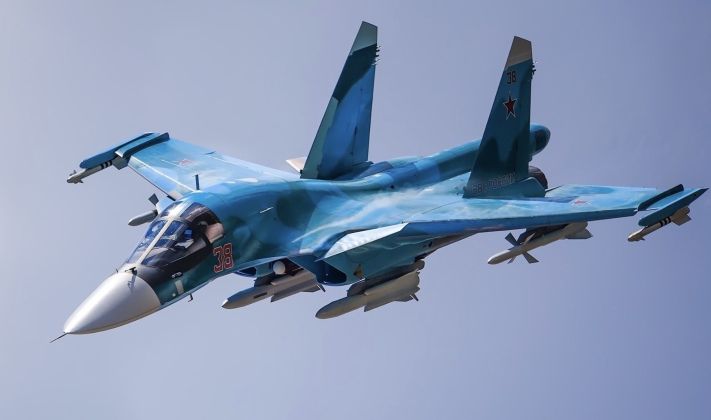
Su-34 Strike Fighter
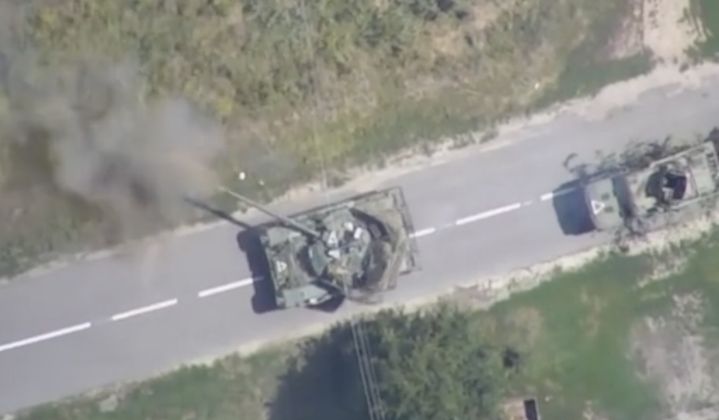
The Russian Air Force has continued to deploy Su-34 strike fighters to intensively bombard Ukrainian forces in the Kursk region, with reports indicating a particular focus on the border regions between the territory and lands which Ukraine formally considers to be its own. These strikes are reportedly intended to stem the tide of reinforcements into Kursk as Russian forces launch a counteroffensive. The Russian Defence Ministry on September 21 reported that a Su-34 had deployed precision guided glide bombs to destroy a concentration of Ukrainian ground forces in the area. The ministry issued the following statement: "The crew of a Su-34 multirole aircraft of the Aerospace Forces has delivered a strike at massed Ukrainian manpower and armour in the borderline Kursk Region.” This was the latest of multiple reports on Su-34 operations in the area, with the Defence Ministry on September 8 having issued a near identical report on one of the aircraft using glide bombs against a concentration of Ukrainian forces. "The crew of the Aerospace Forces’ Su-34 fighter jet struck an accumulation of Ukrainian manpower and military equipment in the border area of the Kursk Region. The strike was carried out on the reconnaissance targets by aviation bombs with universal planning and correction modules, which allows to carry out precise strikes from a safe distance from the line of contact," it stated.
The Russian Air Force has continued to receive new batches of Su-34s, which have been acquired in much larger numbers than any other fighter class since the disintegration of the Soviet Union. New deliveries were reported in April, in June, and in September, following the Defence Ministry’s issuing of directives in October 2023 to expand production of the aircraft. The aircraft is a derivative of the Su-27 Flanker, but is approximately 50 percent heavier, far longer ranged, and has a far higher weapons carrying capacity which optimises it for strike missions. Use of glide bombs has allowed the aircraft to deliver considerable firepower against Ukrainian and allied positions while minimising the risk of shootdowns, with the bombs able to be launched around 60-70 kilometres away from their targets. The new UMPB D-30SN glide bomb, which is thought to have begun deliveries in August, has extended this to around 85 kilometres.
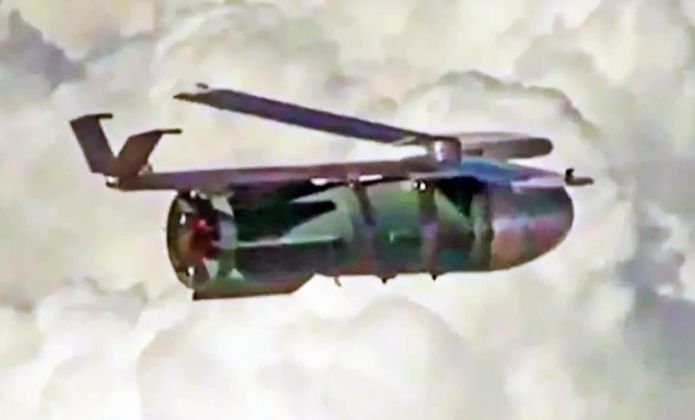
The Su-34’s carrying capacity notably allows it to deploy FAB-3000 glide bombs with massive 3000 kilogram warheads, which have been filmed being deployed against targets in Kursk multiple times from early August. Another notable weapon the fighter class can carry is the ODAB-500 500 kilogram glide bombs, which carries thermobaric warhead well optimised for neutralising well fortified enemy positions. Commenting on the use of glide bombs, multiple Ukrainian personnel in January 2024 informed the New York Times that new Russian strikes using them imposed “additional devastating power,” and with 500 kilograms of explosives could thus obliterate their underground bunkers. One serviceman compared the impact of Russian glide bomb strikes to “hell’s gates,” noting that the Russian Air Force “would send them two by two by two, eight in an hour… It sounds like a jet coming down on you.” Although Su-34 units took significant losses in the initial months of full scale Russian-Ukrainian hostilities in 2022, confirmed reports of losses have diminished significantly. A primary factor is the use of increasingly capable glide bombs, the production of which has been surged, while a secondary factor has been the erosion of Ukraine’s air defences.
