
World’s Longest Ranged Air-to-Air Missile: Will Russia and India Move Ahead with Development During Putin’s Visit?
Military Watch Magazine Editorial Staff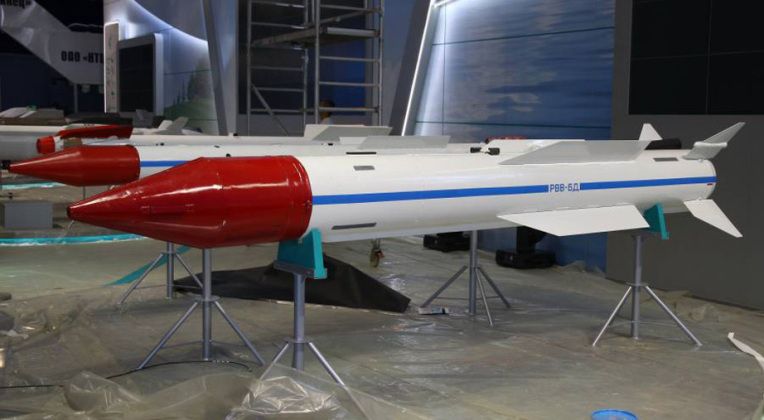
R-37M Air-to-Air Missiles
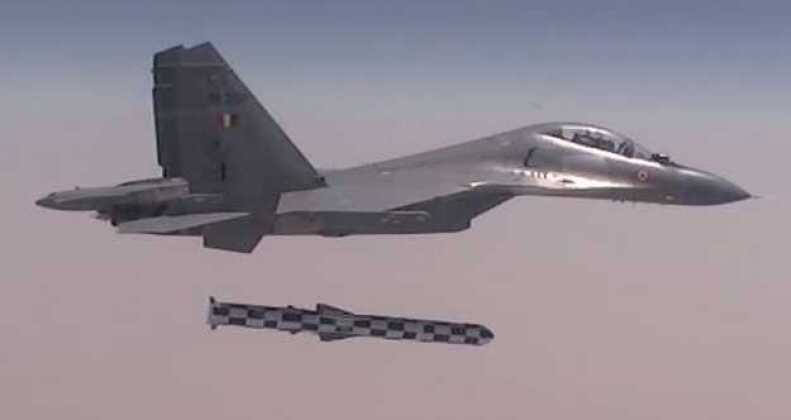
Following the arrival of Russian President Vladimir Putin in India for his first state visit since the outbreak of full scale war in Ukraine, it has been confirmed that talks will proceed for a number of major defence deals. These include further modernisation of the Su-30MKI fighter that forms the backbone of the Indian combat fleet, and the development of unspecified new types of air launched missiles. Confirmation of talks on these issues has fuelled speculation that a new missile type for the Su-30MKI, namely a very long ranged air-to-air missile with a particularly long 500 kilometre engagement range, may move ahead with development. The missile is expected to be developed by the joint firm BrahMos, which developed the BrahMos cruise missile, which has been deployed by the Indian Army, Navy and Air Force, and was recently combat tested during operations against Pakistan in May with favourable results.
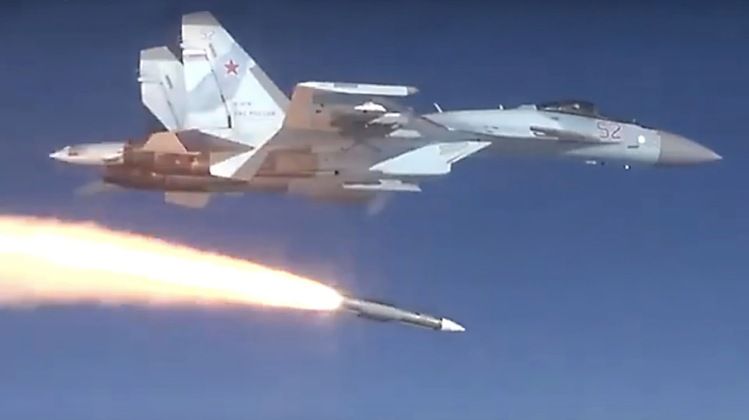
Russia has for decades led the world in the development of very long ranged air-to-air missile types, with the R-37M developed for the MiG-31BM interceptor having been integrated onto the country’s Su-35 and Su-57 fighters. A miniaturised derivative of the missile is currently under development under the izdeliye 810 program, and will fit in the Su-57’s main weapons bays. The R-37M is reported to have been widely used in combat against Ukrainian targets from 2022 to great effect, and boasts a 400 kilometre engagement range, well over double that of the 160 kilometre range AIM-120D that equips NATO’s most advanced fighter units, as well as a very large 60 kilogram warhead and particularly fast Mach 6 speed. Much as the BrahMos heavily leveraged technologies developed for the Soviet P-800 cruise missile, so too is a new air-to-air missile expected to be closely based on technologies developed for the R-37M and izdeliye 810.
Indian fighter units are currently very significantly outmatched in their air-to-air armaments, not only by the PL-15 radar guided missile deployed by Chinese and Pakistani fighter units, but also by the newer Chinese PL-16, and the much larger Chinese counterpart to the R-37M, the PL-17, which has an estimated 500 kilometre engagement range and is carried primarily by the J-16 fighter. India nevertheless obtained a very long range anti-aircraft capability with the procurement of the S-400 and its 40N6 surface-to-air missile, which was used to neutralise a high value Pakistani support aircraft over 300 kilometres away, deep inside the country’s airspace, during engagements in May. The Indian Defence Ministry has since moved to expand orders for the missile and for S-400 systems. Fielding a similarly long ranged missile from fighter aircraft, however, would provide a complementary long range engagement capability with greater flexibility that comes with air-launched weapons.
