
Why North Korea is Taking Action Against the South: Is the U.S. Fuelling Border Tensions at the Demilitarised Zone?
Military Watch Magazine Editorial Staff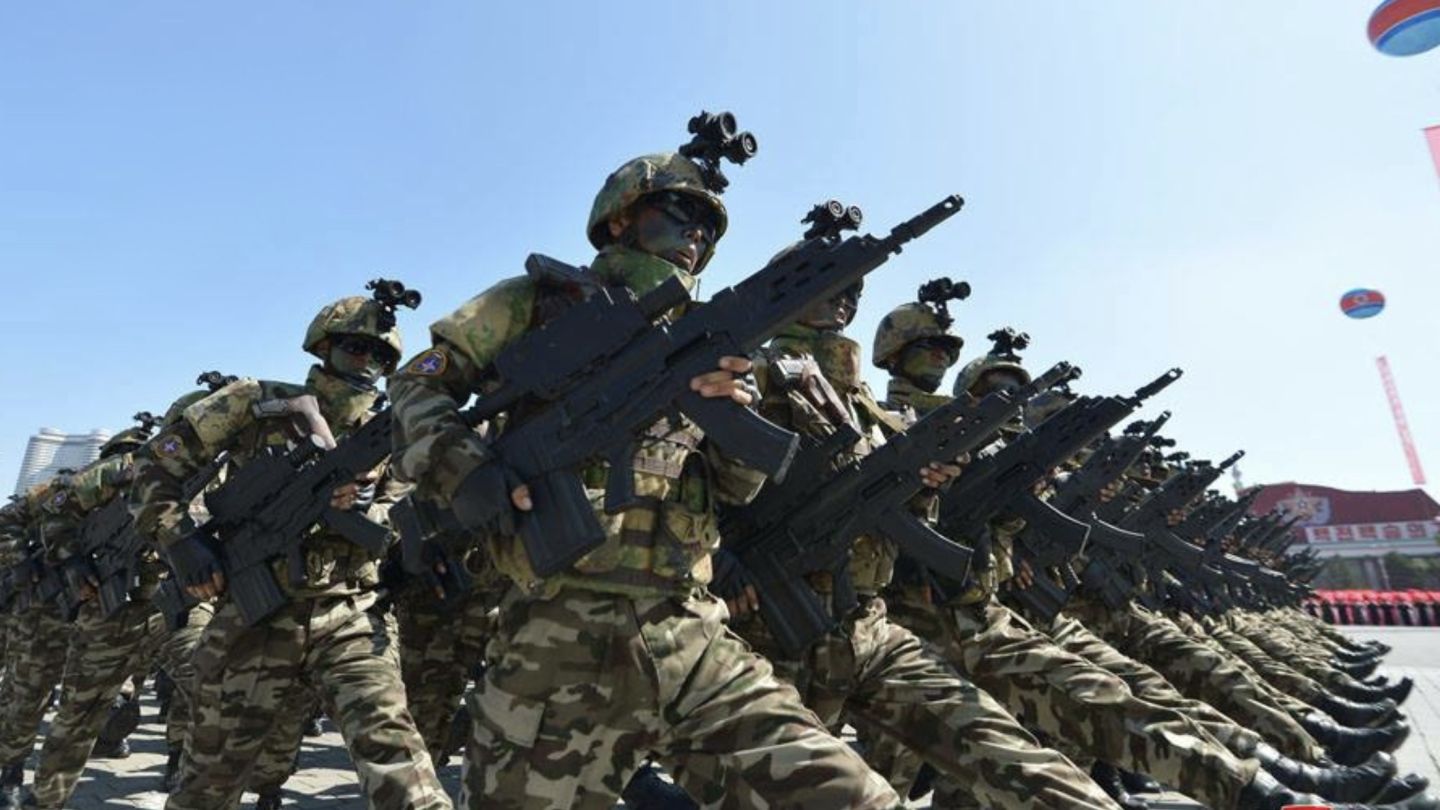
North Korean Special Forces
Relations between North and South Korea have taken a turn for the worse, despite having seen a notable improvement over the past two years, and the risk has increased of a potential escalation between them. Pyongyang has repeatedly protested the continuation of harsh economic sanctions against it despite considerable concessions on its part to reduce tensions and has perceived South Korea’s deployment of new F-35 stealth fighters, while Seoul and Washington simultaneously demanded the north’s disarmament, as a threat. It has more recently issued a harsh response to the sending of propaganda balloons into its territory by South Korean non government groups. The north has repeatedly requested that Seoul take action against such groups, with these balloon launches violating agreements between the two countries made in 2018. The North has responded by cutting the hotline between the two countries, destroying the inter-Korean liaison office and threatening military action to halt further balloon launches.
On the issues of sanctions and balloon launches, these perceived provocations appear to have much more behind them than initially apparent. The South Korean government has repeatedly sought to lift its own unilateral sanctions imposed on the country in 2010, but has consistently been met with opposition from the United States forcing Seoul to consistently back down. U.S. President Donald Trump, for one, stated that a lifting of sanctions by South Korea was impossible, and that “they won't do it without our approval. They do nothing without our approval” - an approval Washington was not willing to give. South Korean joint projects wit the North including joint railway projects have faced similar opposition. Pyongyang has repeatedly slammed Seoul’s inability to conduct diplomacy and pursue an improvement in relations without subordinating all of these processes to Washington.

Regarding the balloon launches, a leading organiser of the campaign, Hong Gang Cheol, elaborated in an interview with South Korean media on June 15th regarding both the nature of this campaign and the extensive funding it was receiving from the United States. “The studies I’ve read and online communities used by defectors themselves indicate that [defector groups] are paid about 1.5 million won (US$1,234) for launching a single balloon [used to carry propaganda leaflets]. But the actual cost for a balloon is between 80,000 and 120,000 won (US$65.81-98.21) These groups are getting credit for launching balloons that bring in 10 times their cost,” he stated. He noted that the groups were paid considerable sums to carry out the launches by sponsors in the United States. Regarding the considerable threat these launches posed to North Korea, he stated: “In one of the North Korean defector communities online, someone suggested filling the balloons bound for North Korea with dollar bills smeared with stuff that COVID-19 patients had breathed on. People in the defector community were actually talking about that. Sending over things smeared with infected droplets would only harm other Koreans. Basic human decency tells you that even an enemy shouldn’t be treated like that.”
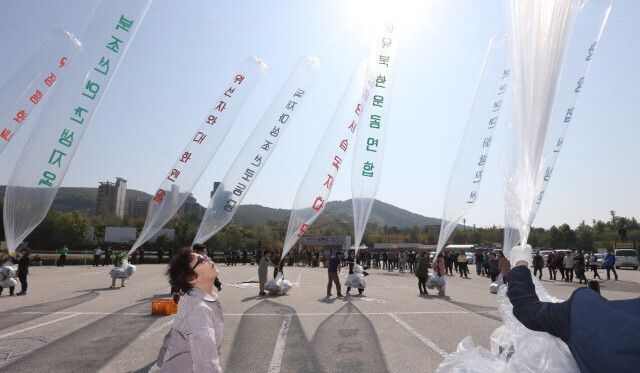
Cheol further noted that the propaganda contained in the balloons had been extremely offensive to North Koreans, stating: “The videos made by these defector groups show them sending pamphlets titled ‘Sol Ju’s Love’ [Ri Sol Ju is North Korean First Lady and a popular singer and national icon] with this photoshopped image of former [South Korean] president Roh Moo Yun reclining on her knee. It’s such a low blow. I guess North Korea decided they can’t just take this lying down…. It’s probably also because South and North Korea agreed not to send leaflets in the Panmunjom Declaration, but that promise hasn’t been kept.” North Korea has threatened to redeploy its forces to border regions after their withdrawal in 2018, and by placing additional pressure on Seoul, Pyongyang may be seeking to both demonstrate its zero-tolerance line against the balloon launches and place further pressure on the current Moon Jae In administration to pursue better relations independently of the United States.
