
Was America’s Nuclear Strike on Hiroshima a Large Scale Medical Experiment? City Marks 75 Years Since Atomic Attack
Military Watch Magazine Editorial Staff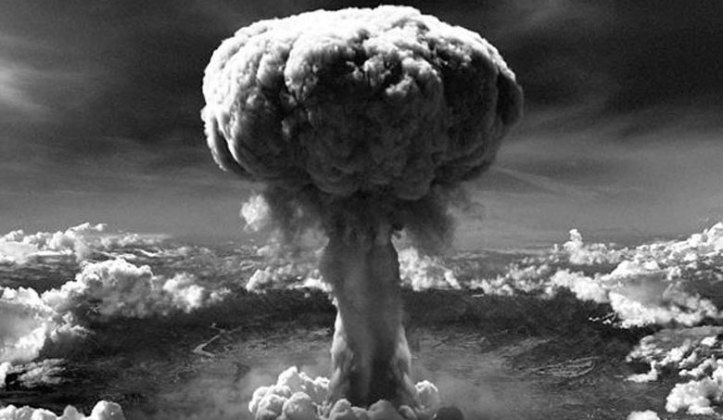
Atomic Attack on Hiroshima
August 6th 2020 marks 75 years since the United States launched the world's first ever nuclear attack, one of just two carried out in history so far, which targeted the Japanese city of Hiroshima and caused an estimated 100,000 to 146,000 deaths. Hiroshima was one of 69 Japanese population centres the U.S. Army Air Force levelled with firebombing and nuclear attacks during the Pacific War, which between them caused several million casualties and contributed to mass homelessness and starvation in the country. The attack was followed by a nuclear strike on the city of Nagasaki on August 9th, which caused similarly high casualties, with the first strike using the 15 kiloton 'Little Boy' bomb and the latter testing the heavier 21 kiloton 'Fat Man' bomb. The two Japanese cities were chosen as targets for the new American weapons because they were two of the few remaining population centres which had not already been destroyed by firebombing attacks, meaning they could be used to properly demonstrate the impact of the bombs. Preceding firebombing attacks were often similarly destructive, with the firebombing of Tokyo, the world’s most densely populated city, killing an estimated 120,000 to 500,000 residents in a single night when over 334 B-29 bombers dropped incendiaries such as napalm in a massed low altitude strike on the night of March 9th, 1945.
Nuclear strikes on Hiroshima and Nagasaki remain controversial today for a number of reasons. Japan had expressed its willingness to surrender for several months, and the attacks ultimately did not bring about any significant change to the terms of surrender meaning their impact on the course of the war was most likely minimal. The motive behind the attack has this been widely attributed by historians to a need to both demonstrate the power of the atomic bomb to the Soviet Union, and to collect data on its impact on population centres. The latter point was evidenced largely by U.S. conduct following the occupation of Japan, with several teams of specialists from the United States dispatched to the country to study the effects of the nuclear attacks, gathering invaluable information for a potential future nuclear conflict. As Australian historian Paul Ham stated regarding the purpose of these American specialists in Japan:
“The directive did not mention treatment: prolonging life, easing pain, were neither the intentions nor the by-products of the job. Whether the patients – or more accurately the exhibits – lived or died was immaterial to the foreign doctors’ charter. How the victims lived or died, whether their conditions improved or deteriorated; whether they suffered from cancer at some distant date or reproduced it in their children; such were the questions of cold scientific enquiry. In short, irradiated Japanese civilians were to serve as American laboratory rats. Herein lay a benefit – future rationalists would argue – of dropping the bomb on a city: to harvest scientific data about gamma radiation.”
As East Asian security and international relations expert A. B. Abrams noted in his own study, which more broadly covered trends in Western interventionism in East Asia, regarding the conduct of U.S. specialists: “Specialists including American doctors were strictly forbidden from treating victims or providing information on their findings which could have aided the treatment of the survivors. The way they sought data on the effects of the bomb while being totally uninvolved in aiding the affected population, even by providing basic information on the impacts of this otherwise wholly unknown scientific phenomenon which Japanese doctors struggled to understand, strongly gave the impression of an experiment being carried out on live subjects.” He noted that the specialists were largely operating under General Douglas MacArthur’s Atomic Bomb Casualty Commission (ABCC), which collected a wide range of data on the bomb victims and in the process gaining a reputation for harvesting Japanese cemeteries for remains.
The controversy surrounding nuclear attacks on Japanese population centres is likely to remain for the foreseeable future, with expectations that a visit by U.S. President Barak Obama to Hiroshima in 2016 would be followed by an apology for what is widely considered a severe war crime notably dashed that year. Japan's defeat would herald in a new era for the Asia-Pacific region in which American and Western dominance would reign near unchallenged, with General MacArthur declaring the Pacific an 'Anglo-Saxon lake' and Tokyo itself subsequently serving as a new base for the U.S. Navy's Seventh Fleet to dominate the region. While no nuclear attacks have been carried out since 1945, moves by the U.S. to deploy increasingly low yield nuclear warheads for tactical rather than strategic purposes have led to widespread concerns being voiced from within the U.S. military itself that the threshold for a future American nuclear attack is rapidly falling. This means that as American tactical nuclear weapons have become more 'usable,' the chances that they will be employed has grown. With Japan having hosted a large scale American military presence ever since its defeat, one which Washington has increasingly pressed Tokyo to pay more to subsidise, America's nuclear arsenal is today aimed are those actors which remain outside the Western sphere of influence and in which the U.S. has yet to establish a military presence - namely China, North Korea and Russia.
