
Evading Chinese and Korean Defences: Useful New Capability For F-35C Stealth Fighters Demonstrated By U.S. Marine Corps
Military Watch Magazine Editorial Staff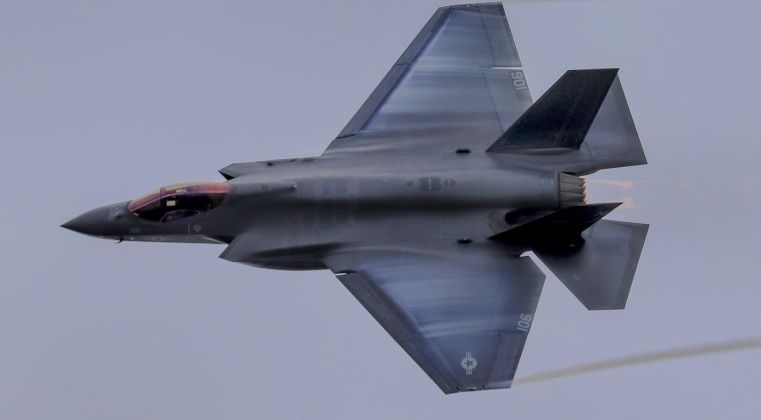
F-35C Fifth Generation Fighter
Entering service from February 2019, the F-35C was the last variant of the American stealth fighter to join the U.S. Military and is currently in low level production. The fighter was designed specifically for operations from the carrier decks of the U.S. Navy’s Nimitz and Gerald Ford Class supercarriers, and among the features included on the aircraft for this purpose are strengthened landing gear, folding wings, a wider wingspan for better manoeuvring onto the carrier deck and a hook to allow the fighter to be caught by a carrier’s arresting gear. In terms of cost, the F-35C occupies a position between the F-35B, the most costly fighter currently in production anywhere in the world, and the standard F-35A which costs around 30% less than the B variant. The F-35B was designed primarily for the U.S. Marnie corps, and is intended for operations from lighter carriers such as the U.S. Navy’s America Class ships which lack arresting gear or catapult launch systems. The F-35A is a more standard design produced in larger numbers for use from regular airfields by the U.S. Air Force and allied air units across the world. The F-35C is the only variant of the F-35 which has not received export orders, largely because the U.S. is the only country to deploy supercarriers where even the F-35B has seen orders from countries with light carriers such as Japan.
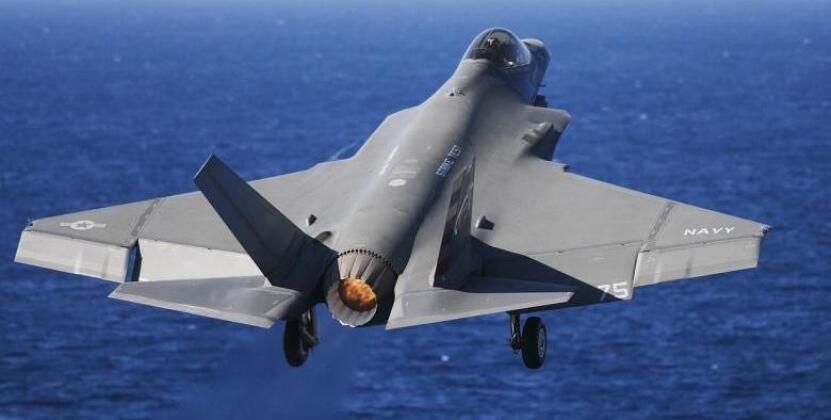
While the F-35C is well known for its carrier launch capabilities, what is less well known is that the jets are also designed to operate from short and austere runways on land in ways the standard F-35A cannot. This capability was demonstrated by the U.S. Marine Corps, which received its first F-35C squadron in 2020, with the corps long having valued the capability to employ fighter aircraft both on and off aircraft carriers. While the Marines’ primary new fighter is the F-35B, which will deploy from smaller carriers and replace its ageing Harrier II jets, the F-35C was also acquired to succeed older F-18 fighters and allow for operations from supercarriers. The Marines’ means of using the F-35C notably involves establishing makeshift airfields, often close to enemy positions and within their anti access area denial (A2AD) zones, and using arresting gear similar to that found on carriers to shorten the runway space needed for the fighters to operate. Known as Expeditionary Advanced Base Operations, their importance is increasingly significant as conventional airfields come under growing threat from assets such as standoff ballistic and cruise missiles - with small makeshift fields being harder to target and both faster and less costly to establish.
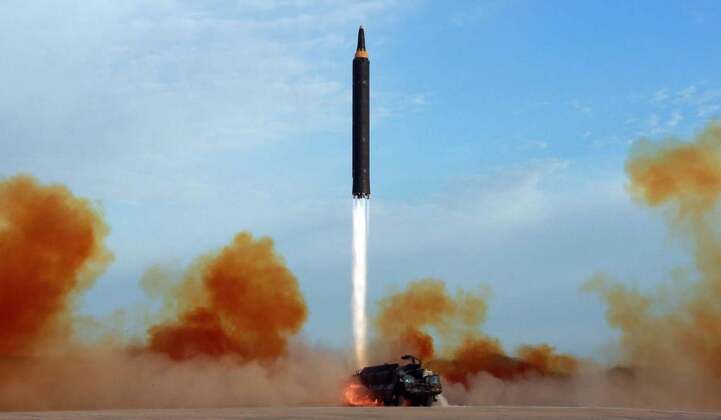
An aviation plan from the U.S. Marine Corps in 2019 described the importance of Expeditionary Advanced Base Operations (EABO) as follows: “EABO is a future naval operational concept that mitigates peer competitors’ anti-access/area-denial capability by creating a more survivable, resilient, and persistent forward-postured force. The EABO concept is designed to re-establish the force credibility required to have a deterrent effect. Using key maritime terrain in the vicinity of close and confined seas, EABO provides decision-makers with sea denial options that are coercive, but not escalatory….EABO provides the Joint Force Maritime Component Commander (JFMCC) with sea denial options by using advanced bases to position and operate joint aircraft. All six functions of Marine aviation can be executed through the use of mobile and expeditionary EABs. By using all available basing options, Marine aviation can expand the reach and lethality of the joint force commander.” The growing emphasis on such operations represent part of a broader shift towards emphasis on combating near peer adversaries rather than non-state actors such as Middle Eastern and Afghan insurgent groups, with China, Russia and North Korea all employing formidable assets to neutralise conventional airfields at considerable ranges.
