
U.S. Special Forces Test Free Fall Helicopter Insertion Capabilities Next to Taiwan Strait
Military Watch Magazine Editorial Staff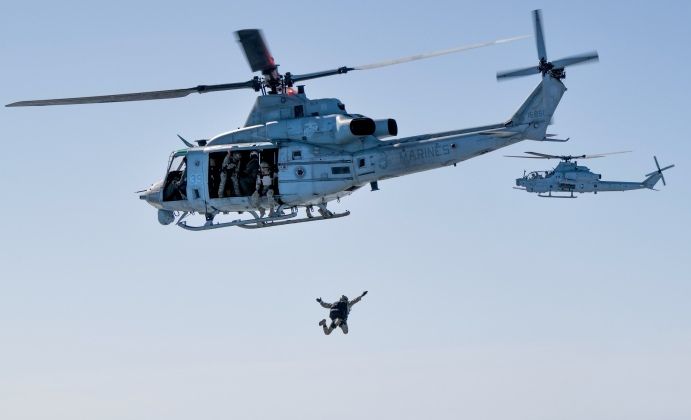
U.S. Naval Special Warfare Forces During Joint Free-Fall Training Above Okinawa
The U.S. Armed Forces Indo-Pacific Command on January 10 provided details on military free-fall training by U.S. Naval Special Warfare forces above Okinawa, Japan, which was intended to enhance precision insertion capabilities and survivability in contested environments across the region. Images sowed coordinated airborne operations supported by U.S. Marine Corps helicopters, including the UH-1Y Venom utility helicopter and the AH-1Z Viper lightweight attack helicopter. The terrain and airspace simulated closely resembled those seen in the First Island Chain. The exercise was carried out just a week after U.S. Army special forces were inserted by helicopter to attack Venezuelan targets and abduct the country’s president Nicolas Maduro.
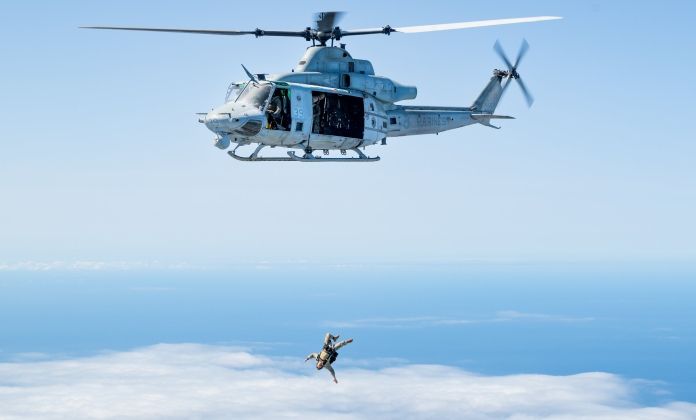
U.S. military facilities on Okinawa are the closest in proximity to the Taiwan Strait, where the Republic of China government based in Taipei, and the People’s Republic of China government based in Beijing, remain in a state of civil war with each claiming to be the sole legitimate Chinese governments. Although the United States and the large majority of the international community recognise only Beijing as a legitimate Chinese government, the U.S. has provided significant military support to the Republic of China Armed Forces based on Taiwan Island as a means of undermining Chinese security interests. The possibility of a new hot war in the Taiwan Strait drawing Washington into a war with Beijing would leave Okinawa as a leading target for Chinese attacks, while potentially leading American aviation assets to seek to deploy special forces onto the island or behind enemy lines as simulated in the recent exercises.
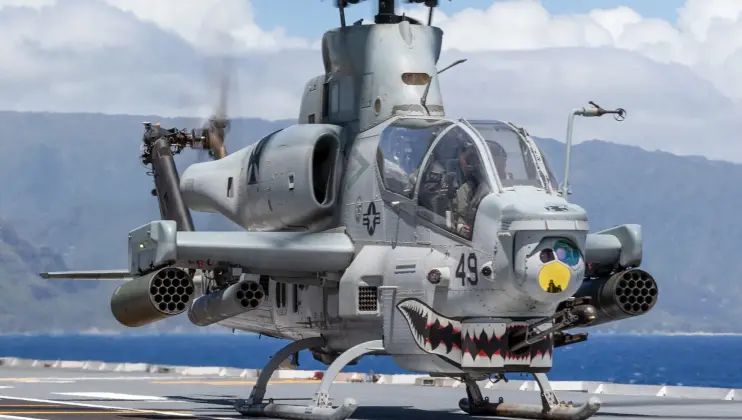
The U.S. Armed Forces have placed a growing emphasis on precision insertion of special forces in denied and contested environments, with the United States fielding the third largest special forces in the world behind only China and North Korea. For such operations the UH-1Y a provides flexible lift and launch options from dispersed or expeditionary sites, while the AH-1Z an provide an armed escort for insertions, as it appears to have done during recent operations in Venezuela. The survivability of United States Armed Forces assets on Okinawa has increasingly been brought to question due to the Japanese island’s close proximity to China, leading the U.S. Marine Corps to relocate the bulk of their assets to Guam in the mid-Pacific.
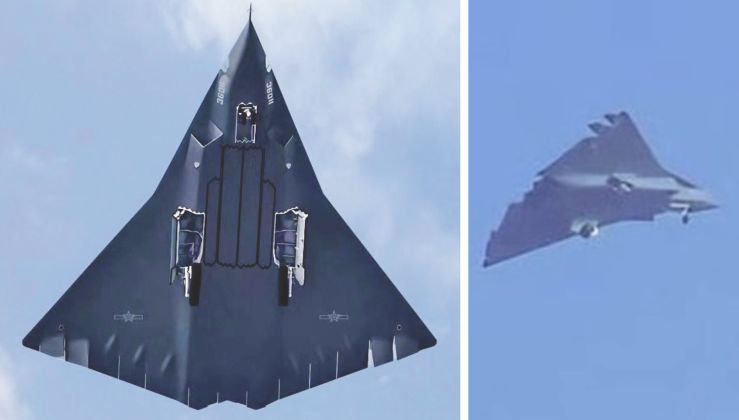
Despite Okinawa’s growing vulnerability, the U.S. Air Force has continued to prioritise deploying its most capable assets to the island, and is planning its only permanent deployment of its longest ranged fighter type, the F-15EX, to Kadena Air Force Base. Nevertheless, the balance of power in the air in the region has become increasingly unfavourable for U.S. interests, with this trend expected to accelerate as China brings its first sixth generation fighters into service in the early 2030s likely several years ahead of the Untied States. As Chinese air dominance becomes increasingly likely, the possibility of inserting special forces by air is expected to become more and more remote.
