
U.S. Relies on Adaptable New Electronic Warfare Pods to Boost F-16’s Survivability Against Iranian Defences
Military Watch Magazine Editorial Staff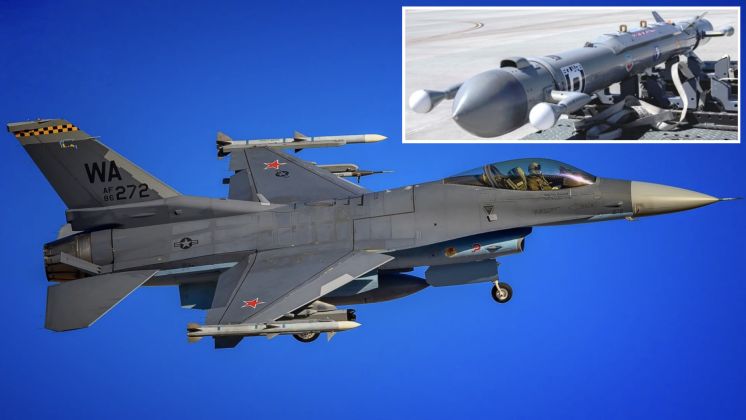
F-16 Fighter and Angry Kitten Electronic Warfare Pod
South Carolina Air National Guard F-16CJ fourth generation fighters in the process of being deployed to the Middle East have been confirmed to have integrated new Angry Kitten electronic warfare pods, which has the potential to significantly improve variability against advanced air defences like those deployed by Iran. Carried underneath the fighters’ fuselages, the integration of the pods is a new development, as while the F-16CJ variant has long placed a strong emphasis on electronic warfare capabilities, they have usually integrated other kinds of pods such as the AN/ALQ-184 and AN/ALQ-131. The fighters were seen being ferried across the Atlantic Ocean by a KC-46 tanker, as part of a major buildup of U.S. forces around Iran. The 12 F-16CJs seen in the latest footage landed at Lajes on the island of Terceira in the Azores, a Portuguese archipelago in the mid-Atlantic, on February 17, likely for a refuelling stop.
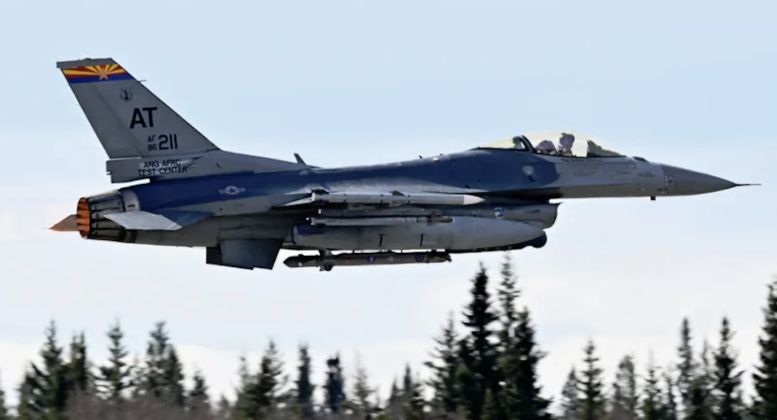
The Angry Kitten began development in the early 2010s, and first entered service in 2017. It was designed to be modified and updated faster and more easily than preceding systems, allowing it to adapt in parallel with the threat ecosystem, which is particularly invaluable when countering adversaries with advanced electronic warfare countermeasures. Shortening the process of updating the system, including through greater automation, is particularly vital to respond to adversary countermeasures quickly. A notable feature of the Angry Kitten pod is its use of Digital Radio Frequency Memory(DRFM) technology, which allows radio frequency signals to be detected, ‘captured,’ manipulated and retransmitted. This allows the fighter integrating the pod to project signals from hostile radars, including radar seekers on missiles, back at adversary systems. Data collected using DRFM can subsequently be used to help improve and refine electronic warfare capabilities, making systems like the Angry Kitten invaluable for intelligence collection.
The F-16CJ differs from baseline F-16C fighters primarily due to its integration of the AN/ASQ-213 HARM Targeting System, a pod mounted on the side of the intake signed to passively locate hostile radar emitters and provide accurate targeting data to AGM-88 HARM anti-radiation missiles. Pilots can use the pod to build a realtime picture of adversary air defence systems’ radar coverage, providing the intelligence needed to engage priority emitters, and cue AGM-88 missiles using passive detection without activating the fighters’ own radars. Although this passive sensor capability remains more limited than those of the new F-35 and the Navy’s specialist EA-18G aircraft, it is still considered formidable. As the F-16C integrates an obsolete mechanically scanned array radar, which is not only relatively straightforward to jam, but also has a high signature meaning advisories can relatively easily detect the fighter carrying it, the use of targeting pods is particularly important.
