
U.S. Navy Unveils World’s Longest Ranged Air-to-Air Missile Outside China: How Capable is the AIM-424 ‘Malice’
Military Watch Magazine Editorial Staff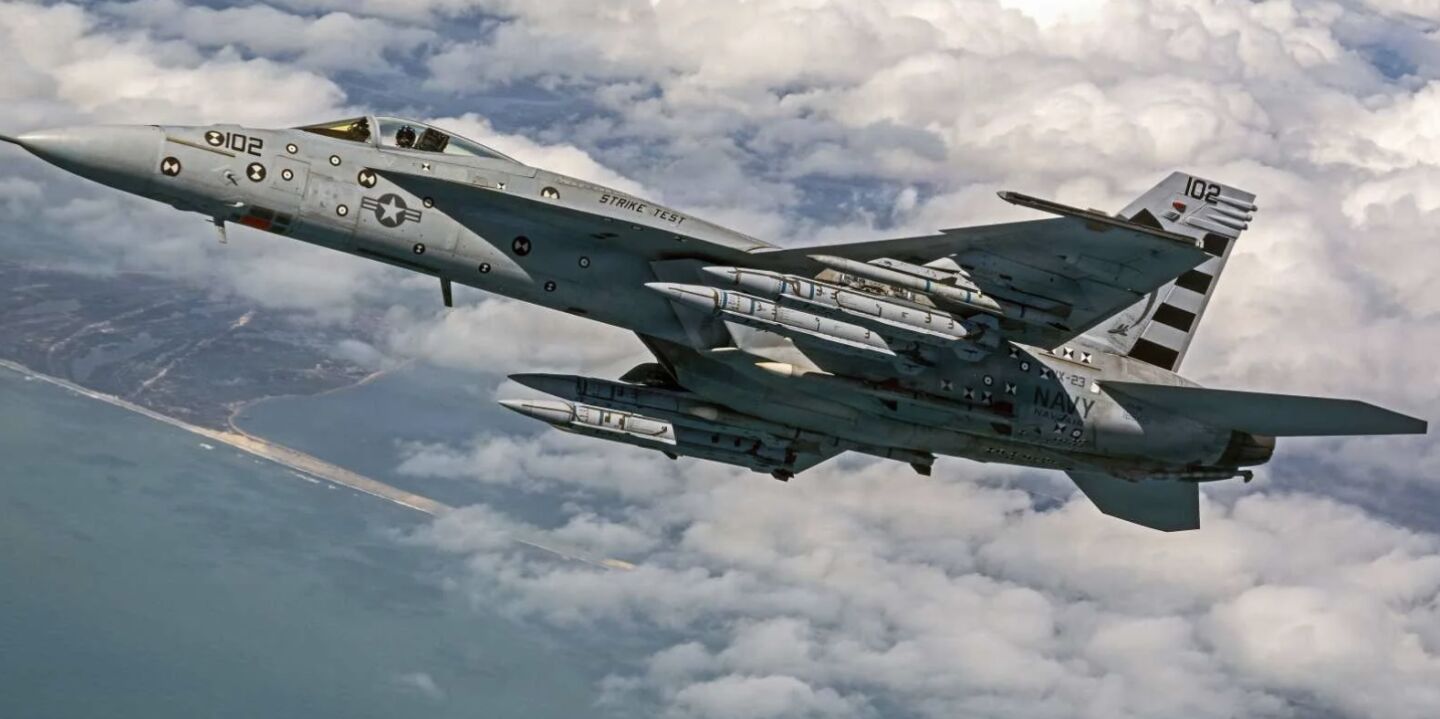
Four AIM-424 Missiles Integrated on F-18E for Testing
The U.S. Navy has publicly revealed a previously undisclosed very long-range air-to-air missile designated the AIM-424 Malice, with official imagery showing the missile being carried by both an F-18E/F and F-35C fighters. The Navy describes the AIM-424 as a next-generation weapon intended to provide a substantial increase in range, lethality and survivability against advanced airborne threats. Under development by Raytheon, the missile and has an officially stated range of more than 250 nautical miles, or approximately 463 kilometres, making it the longest ranged air-to-air missile type in the world other than the Chinese PL-17.
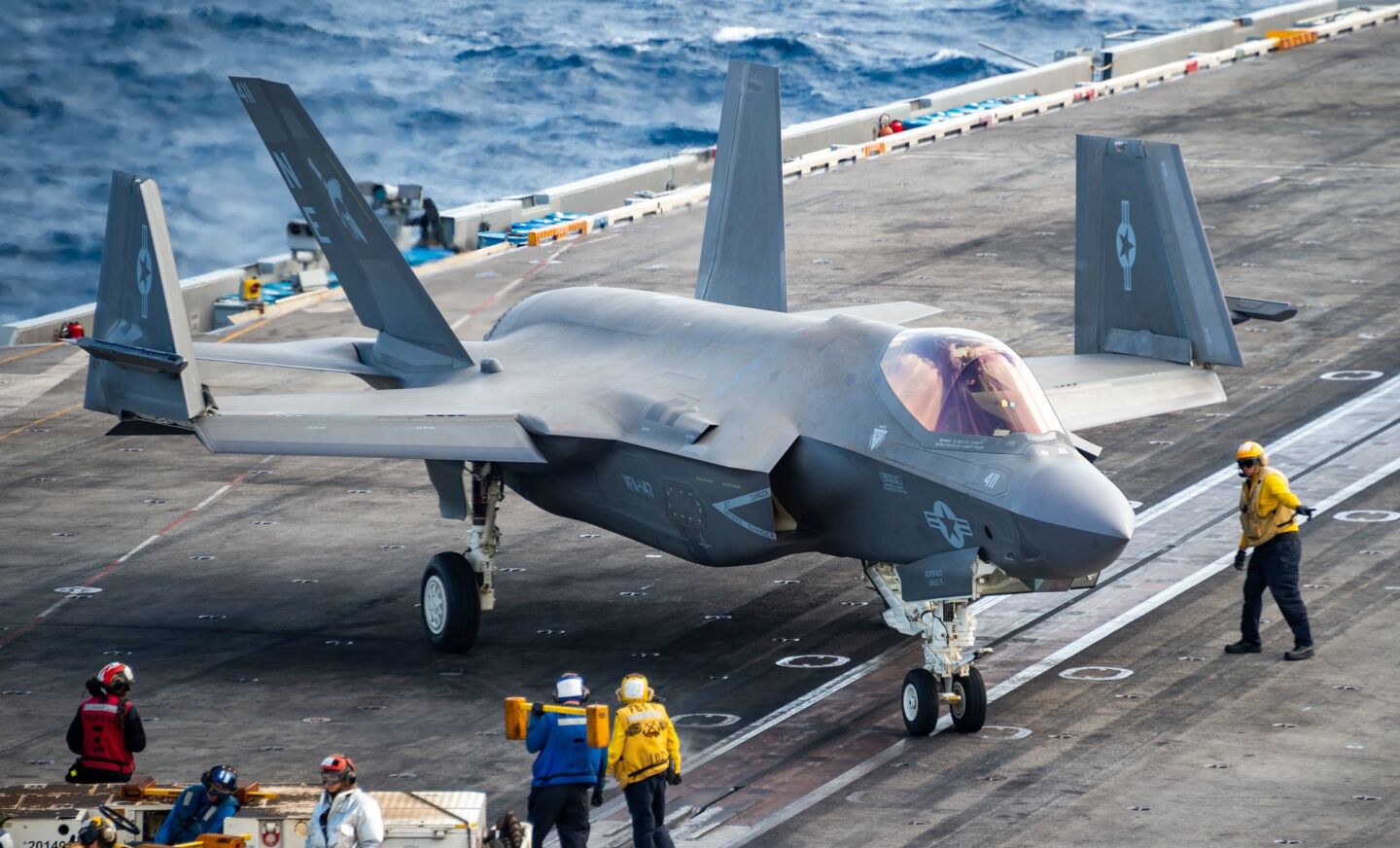
With the PL-17 confirmed in 2023 to be in service, the AIM-424 appears intended to bridge the gap between U.S. and Chinese aviation in their maximum engagement ranges. The missile’s official fact sheet identifies it as measuring 4.11 metres in length, 0.34 metres in diameter and 0.67 metres in wingspan, with a mass of approximately 680 kilograms. As is common for very long range missile types, its diameter and weight are far greater than those of usual missiles developed for fighter-sized aircraft, such as the AIM-120 which remains the U.S. Armed Forces’ primary air-to-air missile type.
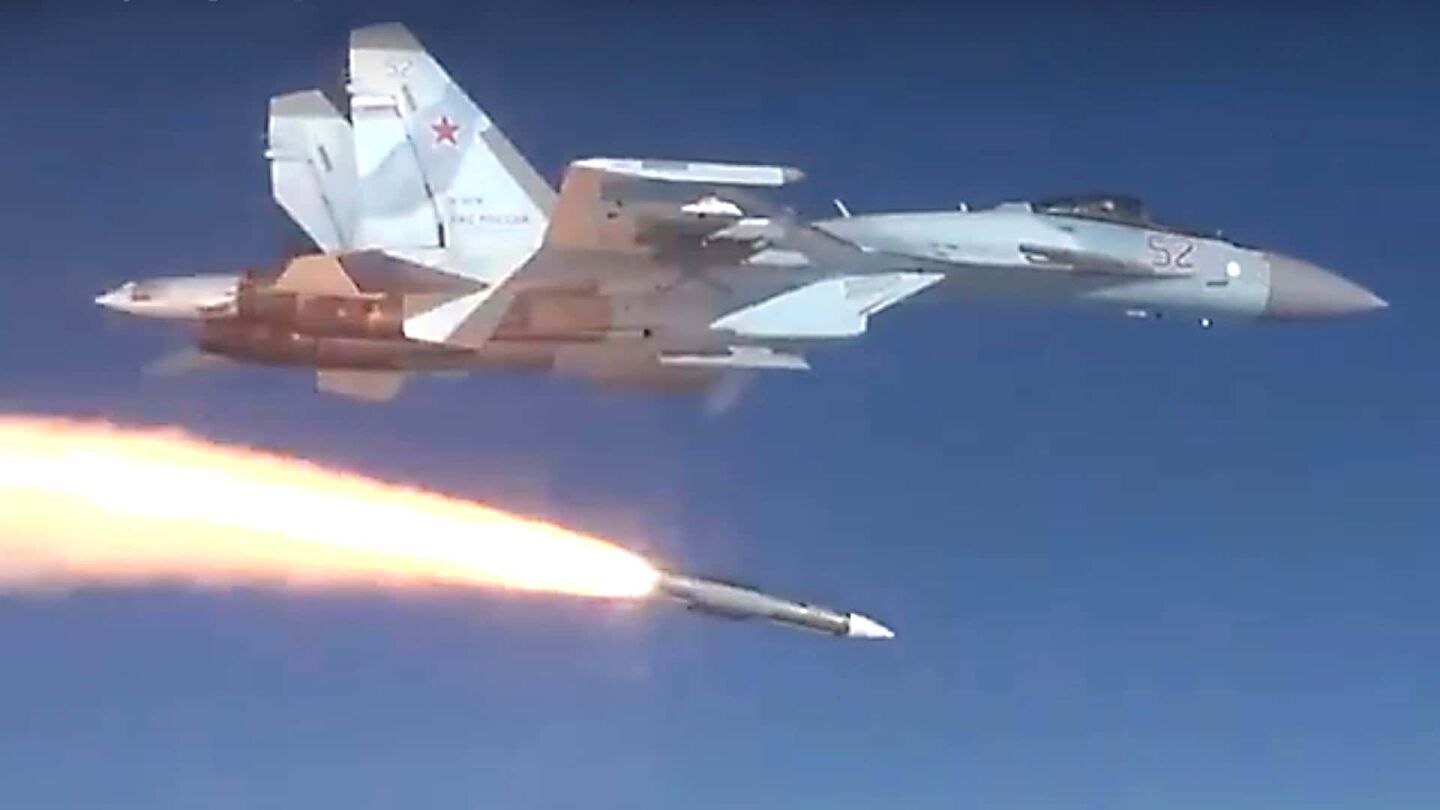
Russia previously led the world in its long range air-to-air targeting capabilities, with the R-37 missile having been scheduled to enter service in 1994, before production was cancelled after the USSR disintegrated. The program was revived and received limited upgrades to enter service in 2014, with a Mach 6 speed and very large 60 kilogram warhead. The missile complements the high altitudes and speeds of the MiG-31 interceptor, which can achieve a 400 kilometre engagement range, although other fighter types such as the Su-35 an only launch across more limited ranges of around 350 kilometres.
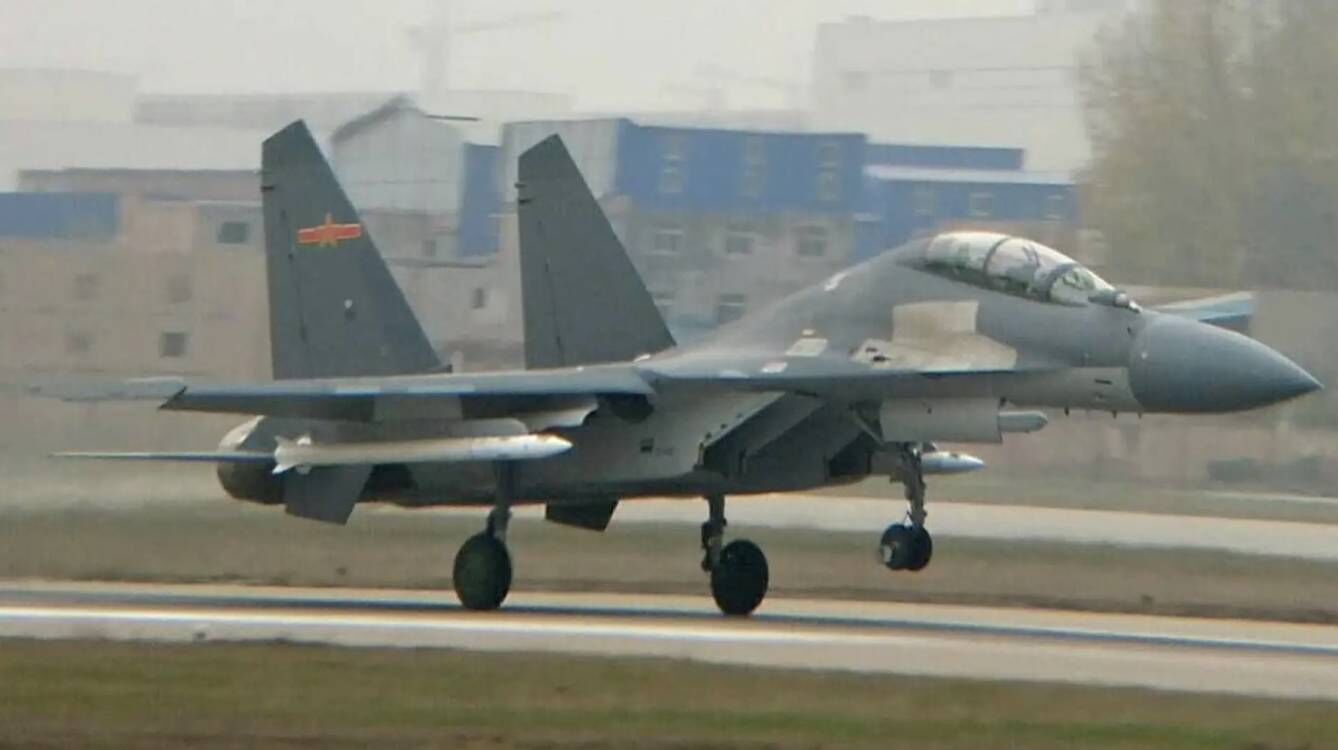
The PL-17 is estimated to have a 500 kilometre engagement range, and reportedly integrates a seeker head using both an active electronically scanned array radar and an infrared seeker for dual guidance and greater resilience to jamming or use of decoys. The J-16 fighters that carry it have significantly longer ranges than any fighter type in the Western world, with a combat radius approximately double that of the F-35 and F-22 fifth generation fighters. The fighter carries a radar approximately triple the size of that of the NATO’s primary frontline fighter the F-35. China’s deployment of the world’s most capable airborne sensor network is critical to allowing such missiles to engage targets at their full ranges.
The AIM-424's development appears to reflect growing concern over the increasingly contested air environment anticipated in a conflict with a technologically advanced adversary, particularly China. Long-range air-to-air missiles have become increasingly important as improvements in fighter sensors, electronic warfare and integrated air-defence networks make it more difficult for aircraft to approach targets closely enough to employ shorter-range weapons. The AIM-424 is therefore intended to support a “first look, first shot, first kill” approach by allowing U.S. aircraft to engage threats from substantially greater distances.
