
U.S. Navy Redeploys Marine Carrier with F-35B Fighters from China’s Doorstep to Middle East to Support Attacks on Iran
Military Watch Magazine Editorial Staff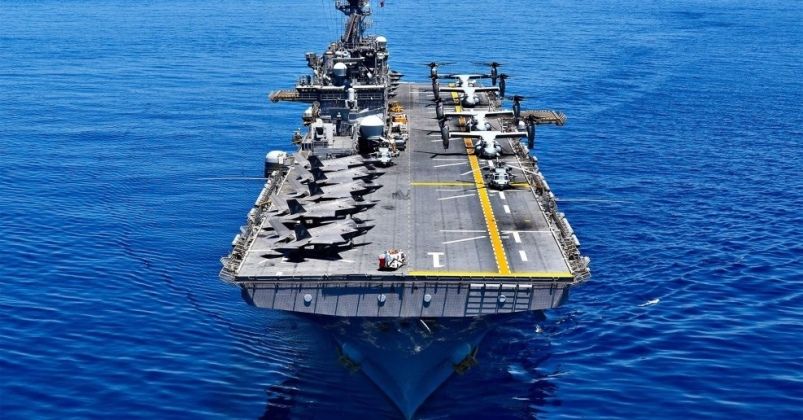
U.S. Navy Wasp Class Assault Ship with F-35B Fighters
The U.S. Navy has redirected one of its premier forward-deployed amphibious strike groups from exercises in the Western Pacific to combat operations in the Middle East, with the diversion of the USS Tripoli Amphibious Ready Group illustrating how rapidly Washington has been forced to shift military assets away from the Pacific. Rather than continuing to train alongside allies in East Asia, the assault ship and its embarked Marine aviation force were reassigned to reinforce operations against Iran, highlighting the flexibility of forward-based naval forces stationed in Japan. Wasp class amphibious assault ships are valued for their accommodation of air wings made up of F-35B fifth generation fighters.
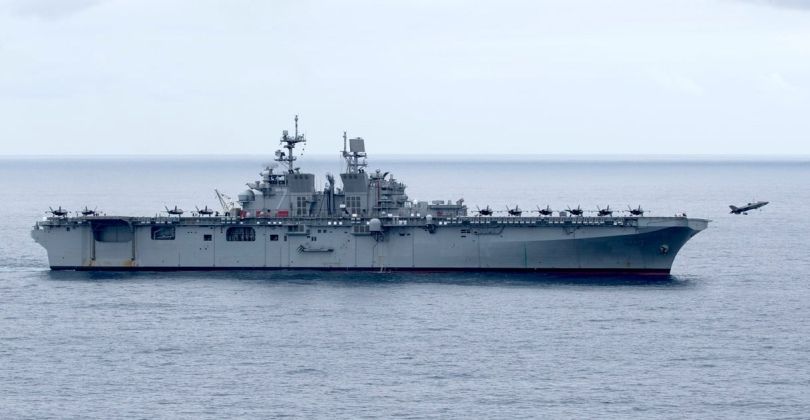
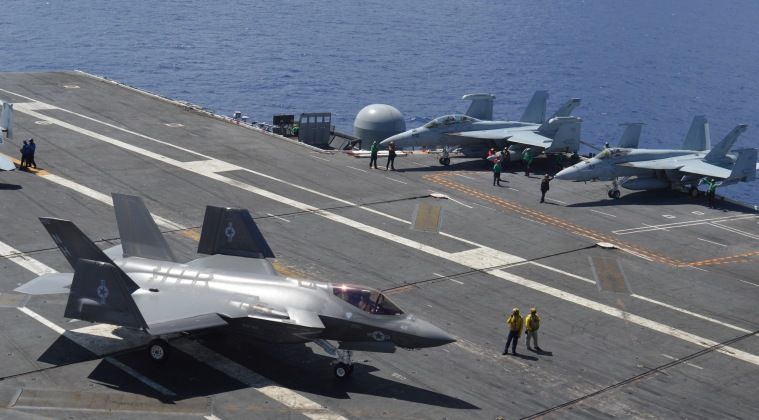
The F-35B can operate from amphibious assault ships such as USS Tripoli, allowing the vessel to function as a light aircraft carrier. With an embarked air wing of up to 20 F-35Bs alongside MV-22B Osprey tiltrotors and MH-60S Seahawk helicopters, USS Tripoli provides a substantial amount of fifth generation combat airpower independent of a nuclear-powered aircraft carrier. While the Navy has yet to make the F-35C, a more capable longer ranged variant of the fighter, compatible with its Gerald Ford class aircraft carriers, Marine Corps has deployed F-35C fighters from the Nimitz class supercarrier USS Abraham Lincoln for combat operations against Iran, alongside deployments of the F-35B from the USS Tripoli.
Since 2022, the Pentagon has consistently argued that a military buildup around China in the Pacific remains its highest priority, with Marine Corps restructuring increasingly centred on expeditionary operations across the Western Pacific. The 31st Marine Expeditionary Unit had been conducting bilateral exercises with Japanese forces and practising Expeditionary Advanced Base Operations (EABO), concepts specifically developed for a potential conflict with the Chinese People's Liberation Army. Redirecting these forces to the Middle East inevitably reduces the military resources immediately available in the Pacific. This reflects part of a broader issue of a severe depletion of the U.S. Armed Forces’ resources in the Middle East significantly undermining its ability to wage war in the Pacific.
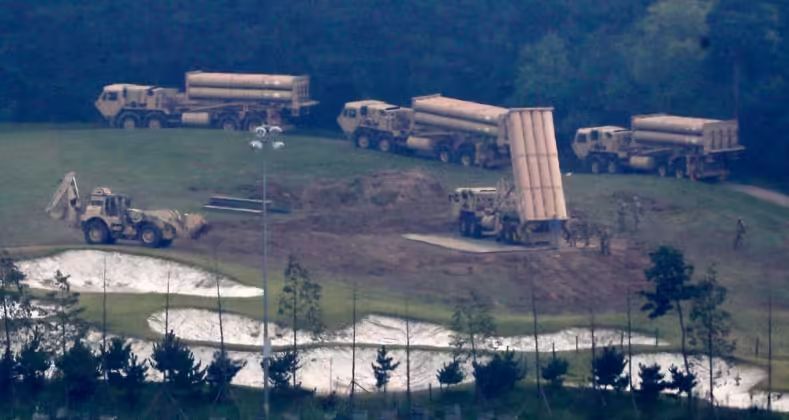
The U.S. has been forced to withdraw a wide range of assets from the Pacific theatre for its war effort against Iran, with a notable example being THAAD missile defence systems in South Korea. These were withdrawn from the country by the U.S. Armed Forces without consultations with the local government, causing considerable controversies domestically. The U.S. Army was also confirmed to have withdrawn MIM-104 Patriot missile systems, and a range of unspecified other weaponry, and is reported to have withdrawn surface-to-air missiles from the Patriot systems steadily over the preceding months. The U.S.-Iranian War has taken considerable pressure off China and North Korea’s defences, while Iran itself has not seen its fighting capabilities significantly diminished with most of its key missile bases and its arsenals remaining in tact after five months of hostilities.
