
U.S. Navy’s First Twin Reactor Nuclear Supercarrier Marks 50 Years in Service: How is the USS Nimitz Operating in its Final Year?
Military Watch Magazine Editorial Staff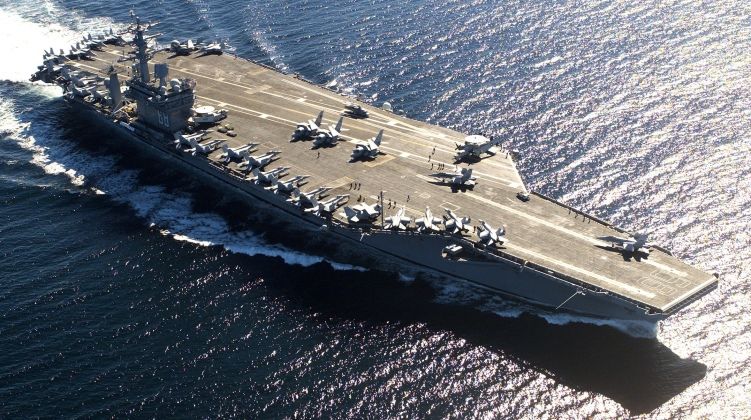
U.S. Navy Supercarrier USS Nimitz
The year 2025 marks 50 years since the commissioning of the U.S. Navy’s first twin reactor nuclear powered supercarrier, the USS Nimitz, which was be the first ship of a class that went on to dominate waters across the world for over half a century. The began its final deployment on March 26, departing San Diego Bay that day before docking in Guam in April, it then proceeding to the Philippine Sea for joint exercises with Japanese Maritime Self-Defense Force destroyers. The strike group operated in the waters near the Strait of Malacca in mid-May, a key chokepoint for regional trade which analysts expect could provide the United States with key leverage over China in the event of conflict. The carrier and one of the destroyers from its strike group then docked in Malaysia, before departing for operations in the South China Sea.
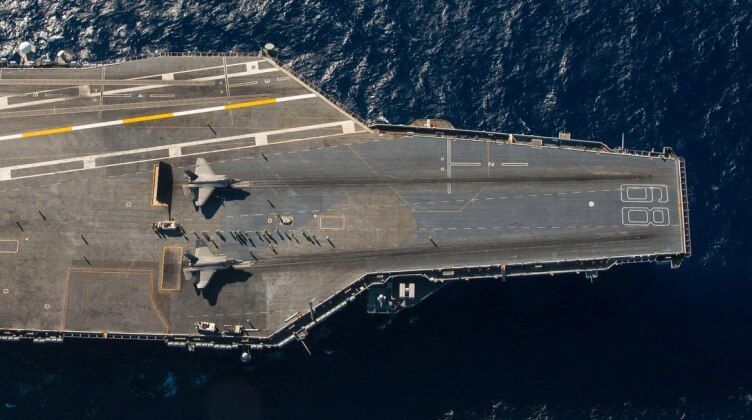
The USS Nimitz is scheduled to be decommissioned in 2026, after 51 years of service, making 2025 its final full year operating. The warship in June sailed from the Pacific to the Middle East, operating alongside the USS Carl Vinson Carrier Strike Group to support attacks on Iranian targets launchd unde Operation Midnight Hammer on June 22. After a three-month deployment in the Middle East, the Nimitz and its strike group sailed through the Singapore Strait to return to the Pacific, operating under the Seventh Fleet for the remainder of its deployment. The warship gained particular publicity after an F-18F Super Hornet fighter and an MH-60R Seahawk helicopter from its strike group crashed into the sea within 30 minutes of each other on October 26. All crew survived.
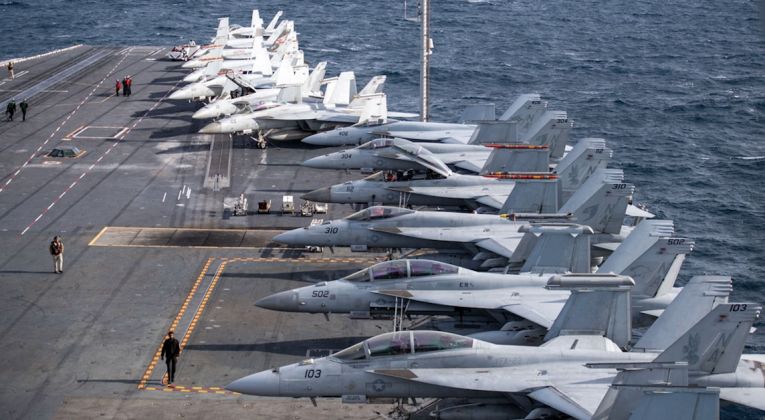
Entering service just 30 years after the United States launched nuclear attacks on Japan, the USS Nimitz’ design marked a milestone in the development of nuclear propulsion systems, and was only the second aircraft carrier in the world to use nuclear power after the USS Enterprise. Displacing just 94,000 tons, compared to the Nimitz’s 100,000 tons, the Enterprise’ A2W reactors generated just a fraction of the power of the Nimitz’s 550MW A4W reactors, meaning the older ship had to use eight reactors, the greatest number ever integrated onto any warship type, compared to just two on the Nimitz. The design improvements pioneered by the Nimitz set a new standard for carrier warfare, resulting in the cancellation of plans for four further Enterprise class ships.
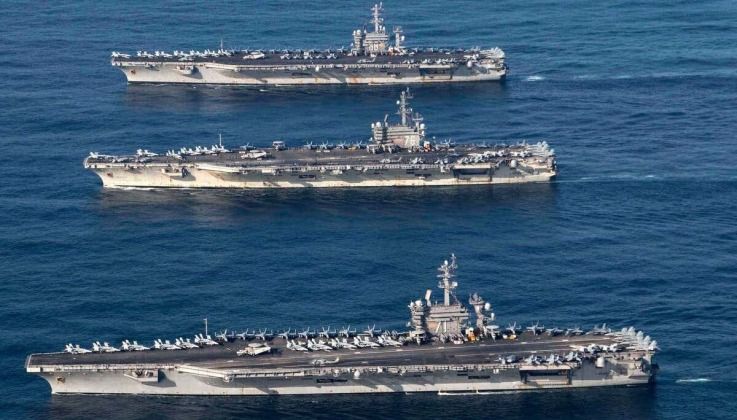
Ten Nimitz class ships would be brought into service, the last of them, the USS George H. W. Bush, in 2006. The carrier design would be incrementally modernised over its time in service, with its successor the Gerald Ford class adopting a similar layout and being almost identical in size. The first Gerald Ford class ship, the USS Gerald, Ford, would be commissioned in 2017, although significant issues with the design meant it was only able to begin its first operational deployment more than five years later in October 2022.
Despite its longevity in service, rivals to the Nimitz class have been few and far between, with the Soviet Union having laid down its own promising nuclear powered aircraft carrier, the Ulyanovsk in 1990, but failing to complete the ship due to the state’s disintegration the following year. It was only in November 2025, a fully half century after the USS Nimitz was brought into service, that China brought a similarly capable flattop carrier, the Fujian, into service. The Chinese vessel is comparably modern to the new Gerald Ford class ships, but notably lacks the twin nuclear reactors that power the American vessels.
