
U.S. Navy Christens Next Arleigh Burke Class Destroyer with New Anti-Missile Radar: Next Destroyer Class Continues Development
Military Watch Magazine Editorial Staff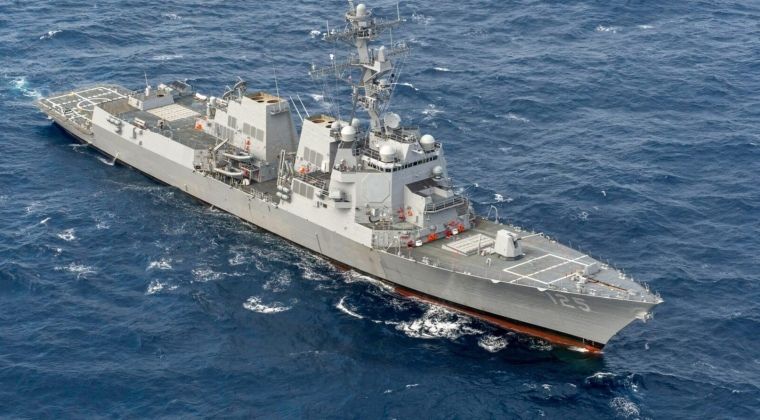
Flight III Arleigh Burke Class Destroyer
The U.S. Navy has christened the future USS William Charette, the next Flight III Arleigh Burke class destroyer, at General Dynamics Bath Iron Works in Maine, marking a significant milestone in the latest phase of the late Cold War era program. The USS William Charette is the second Flight III Arleigh Burke class destroyer built at the facility and the fifth Flight III vessel overall. Unlike earlier variants of the Arleigh Burke class, Flight III ships incorporate major upgrades to electrical generation, cooling systems, sensors and combat systems to support the significantly more powerful AN/SPY-6(V)1 Air and Missile Defense Radar. The new radar represents one of the most significant improvements introduced with the Flight III configuration.
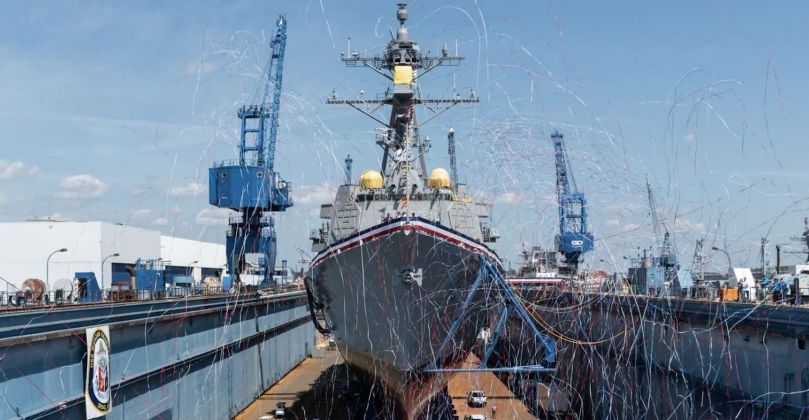
The Navy brought its first Flight III Arleigh Burke class destroyer, the USS Jack H. Lucas, into service in December 2025, marking the beginning of the latest phase in by far the world’s oldest destroyer program. The ship’s new radar has significantly greater tracking capacity, and can detect, track, and discriminate smaller, faster, and more complex threats at longer ranges, including cruise missiles, ballistic, and even new hypersonic missiles. The Arleigh Burke class destroyer fleet has placed a growing emphasis on missile defence capabilities since the end of the Cold War, as challenges from adversary navies diminished, while missile arsenals fielded by a number of potential adversaries such as North Korea and Iran continued to be built up to potentially asymmetrically engage U.S. and allied forces. The class’ ability to engage hostile surface warships, however, remains more limited.
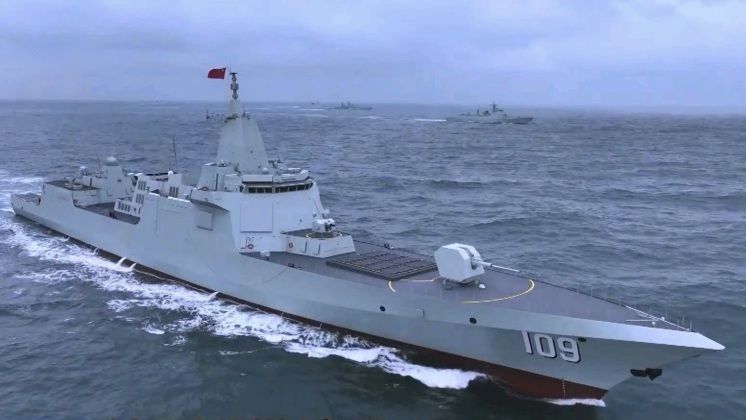
With the first ship of the class, the USS Arleigh Burke, laid down in 1988 and commissioned into service in July 1991, questions have increasingly been raised regarding the ships’ viability against peer level adversaries, and particularly the significantly newer Type 052D and Type 055 class destroyers that form the backbone of China’s surface combat fleet. The Type 055 program in particular is considered a significant factor that has raised the U.S. Navy’s interest in the development of a next generation destroyer class to succeed the Arleigh Burke class. A report to the U.S. Congress by the Government Accountability Office (GAO) in early July confirmed that preliminary design work on the DDG(X) next generation destroyer program was initiated in June 2025.
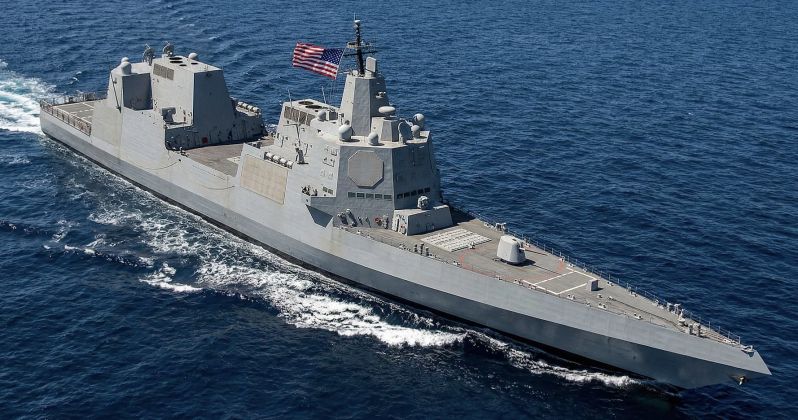
Compared to the Arleigh Burke class, the next generation destroyer is intended to be more fuel efficient and to allow for future growth potential. The Navy expects the next generation destroyer to integrate hypersonic missiles, directed energy weapons, and a more powerful radar system, while maintaining “sufficient size and power margins to enable greater flexibility to incorporate new systems as they become available.” Although the DDG(X) program was initiated in 2021, the Department of Defence has yet to develop an acquisition strategy. The Arleigh Burke class has gained growing attention due to its central role in the U.S.-led assault against Iran, providing not only a platform for Tomahawk cruise missile attacks, but also a multi-layered anti-missile capability and powerful sensors that compensate for the destruction of U.S. ground-based radars.
