
U.S. Marine Corps’ Top Fighters See Rare Air-to-Air Action Downing Iranian Reconnaissance Aircraft
Military Watch Magazine Editorial Staff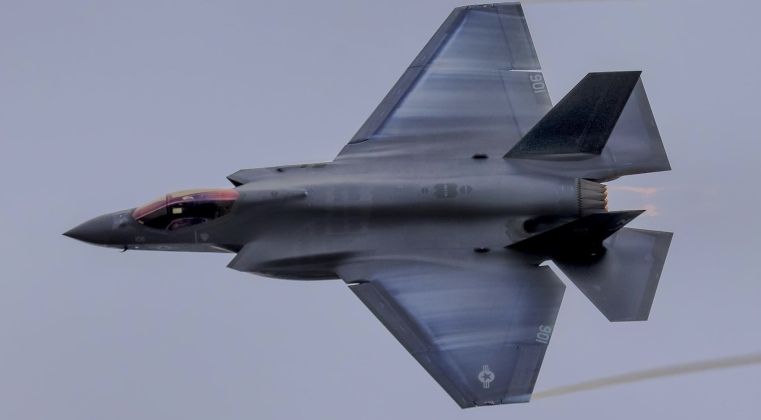
F-35C Fighter
A U.S. Marine Corps F-35C fighter operating from the Nimitz class supercarrier USS Abraham Lincoln shot down an Iranian Shahed 139 unmanned aircraft operating near the warship on February 3, at a time of high tensions between Tehran and Washington. The Iranian aircraft “aggressively approached” with unclear intent, and “unnecessarily manoeuvred toward the ship,” U.S. Central Command spokesman Navy Captain Tim Hawkins reported. The Iranian drone continued to fly toward the ship despite de-escalatory measures taken by U.S. forces operating in international waters,” he added. This marks one of the first times the F-35 has been employed in air-to-air combat.
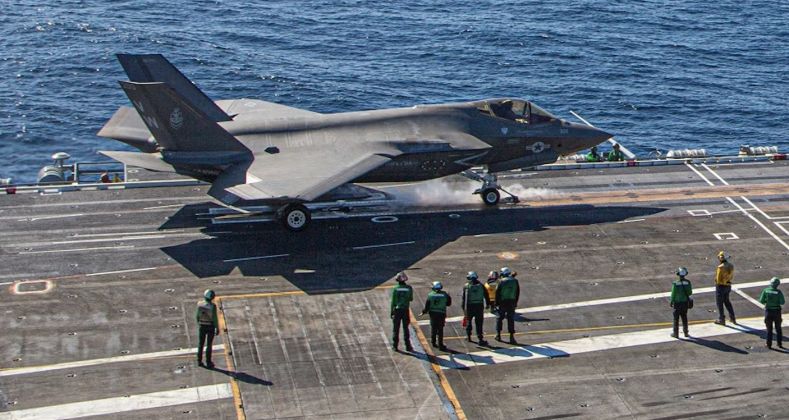
The USS Abraham Lincoln and its Carrier Strike Group on January 20 completed a transit through the Malacca Strait, concluding operations in the 7th Fleet area of operations ahead of schedule to redirect towards the Middle East, as part of a much broader U.S.-led military buildup against Iran. The Abraham Lincoln is the first aircraft carrier to operate with Marine F-35C fighters, which are deployed under Marine Fighter Attack Squadron 314. The squadron was in late 2024 confirmed to be the first to utilise the F-35C in combat during strikes on Iranian-aligned Ansurullah Coalition forces in Yemen. These operations included air-to-air combat against local unmanned aircraft. The F-35C has by far the highest combat potential of any fighter type fielded by the Marine Corps, and has been procured to replace obsolete F-18C/D fighters. Delays to the F-35C’s development and operationalisation have forced the Corps to keep Cold War era F-18s in service far longer than intended, resulting in a significant decline in availability rates.
The Shahed 139 has significantly similarities to the U.S. Air Force MQ-9 Reaper, and is capable of both reconnaissance and combat operations. The aircraft shot down by the Marine stealth fighter was reportedly unarmed, with Iranian sources reporting that it was on a surveillance and reconnaissance mission. The Iranian drone fleet has demonstrated advanced capabilities in the past, including during high intensity operations against Western-backed insurgent groups in Syria, and Turkish-backed Islamic State fighters in Iraq, during the 2010s. The Shahed 139 is considered a lower end drone type with the Iranian Islamic Revolutionary Guard Corps having deployed advanced flying wing stealth aircraft for both combat and reconnaissance missions, which according to Israeli reports have proven to be highly survivable even during penetration missions into heavily defended airspace.
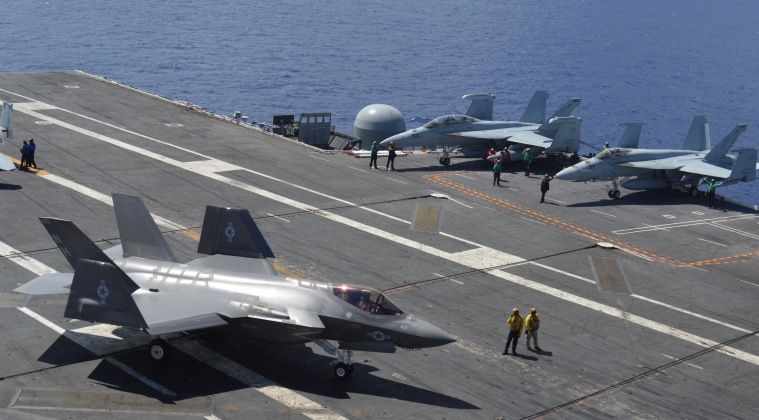
The U.S. Marine Corps is the only service in the U.S. Armed Forces that operates two variants of the F-35, the F-35B and F-35C, with the latter having greater manoeuvrability, larger weapons bays, and a much longer range, as well as lower maintenance needs and sustainment costs. The Corps in early 2025 reduced planned F-35B procurements by 21 percent to reallocate funding to procuring the F-35C, increasing the planned fleet from 67 to 140 aircraft. This may have reflected dissatisfaction with the F-35B’s capabilities when conducting carrier operations and Expeditionary Advanced Base Operations. Although it is the only fifth generation fighter type in production in the Western world, the F-35’s suitability for high intensity combat operations nevertheless remains highly limited, which will likely only be addressed once Block 4 software is integrated in the early 2030s. F-35s deployed by the Israeli Air Force for attacks on Iran in June 2025 were notably relegated to intelligence collection roles using their outstandingly powerful sensor suites, rather than to launching kinetic attacks on Iranian targets.
