U.S. Makes First Permanent Deployment of RQ-4 Long Range Recon Drones Near China: Survivability in Serious Question
Military Watch Magazine Editorial Staff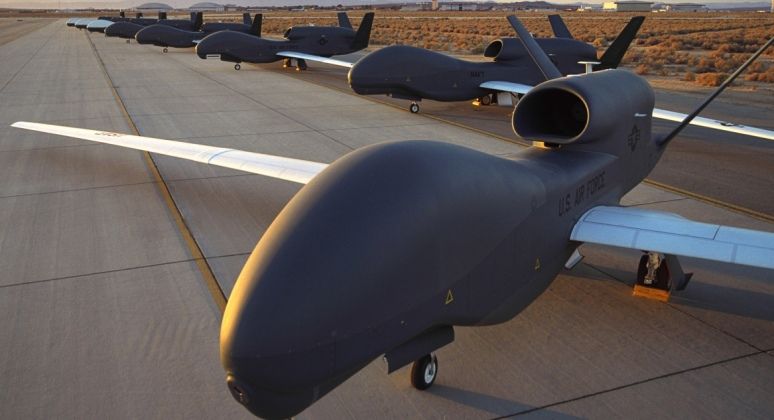
RQ-4 Global Hawk Reconnaissance Drones
The U.S. Air Force has begun its first deployment of unmanned long range reconnaissance aircraft in Japan, with three RQ-4B Global Hawk Block 40 aircraft being stationed at Yokota Air Base. This is intended to significantly strengthen U.S. intelligence, surveillance, and reconnaissance capabilities near the territories of its three leading potential adversaries, namely China, North Korea and Russia. The aircraft belong to the 4th Reconnaissance Squadron, and replace what had previously been rotational deployments, providing a continuous high-altitude reconnaissance capability from Japanese territory. The move reflects Washington's growing emphasis on persistent situational awareness amid rising military competition in the region.
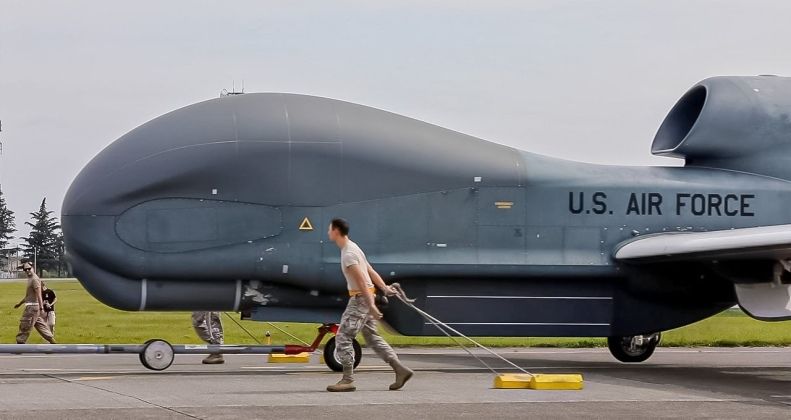
The three RQ-4B aircraft were previously based at Andersen Air Force Base on Guam, which not only placed them further away from their primary targets for operations, but meant they were more affected by Guam's severe typhoon season. Yokota's location provides more reliable operating conditions while maintaining excellent access to the wider Pacific region. Approximately 150 personnel have relocated alongside the aircraft to support the permanent deployment, averaging 50 per aircraft. The RQ-4B Block 40 is one of the U.S. Air Force's most capable intelligence, surveillance, and reconnaissance platforms, with its radar having been designed to conduct wide-area ground surveillance, generate high-resolution synthetic aperture radar imagery, and track moving targets over vast distances. Flying at altitudes of approximately 20,000 kilometres for more than 30 hours, the aircraft can monitor large areas.
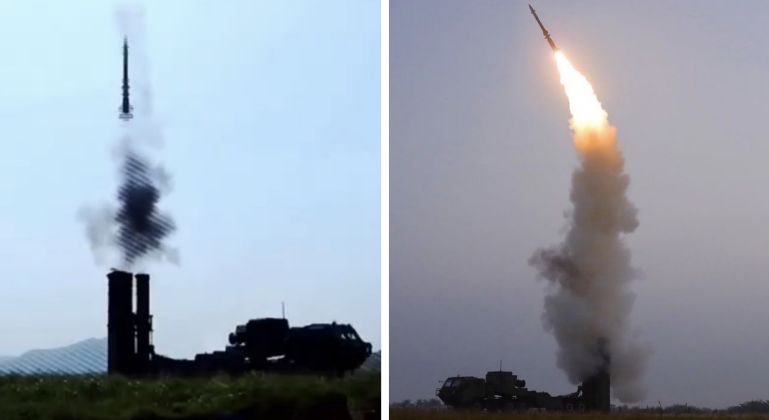
Significant questions have been raised regarding the survivability of the RQ-4 in the event of high intensity conflict with any of the United States’ three regional adversaries. Bases in Japan are considered highly vulnerable to Chinese, North Korean and to a lesser extent Russian missile and drone strikes, raising the possibility of the costly aircraft being destroyed on the ground. While this also remained a risk on Guam, striking facilities on the mid-Pacific island requires much longer ranged and more costly weaponry, providing a slight improvement to facilities’ survivability. The vulnerability of high value aircraft to missile or drone attacks was recently demonstrated during the U.S.-Iranian conflict from February 28, 2026, during which multiple medium and high value aircraft were destroyed. KC-135 tankers, an E-3 and a GlobalEye AEW&C, and reportedly a U.S. Navy U.S. Navy MQ-4C Triton unmanned long range maritime surveillance aircraft, were among those successfully targeted on the ground.
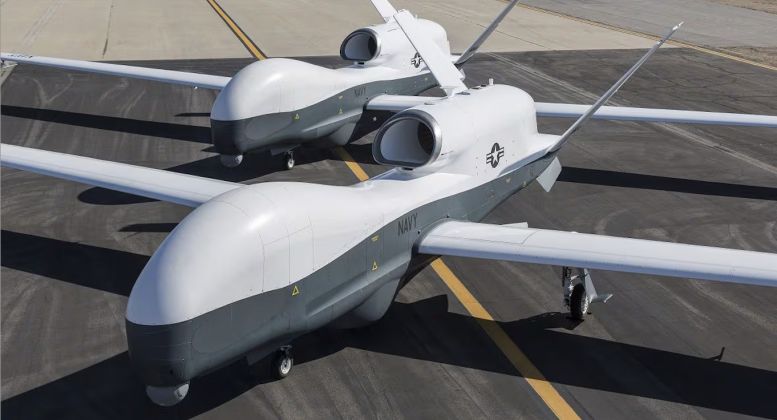
The survivability of the RQ-4 against medium capability air defences has repeatedly been brought to question, with the extreme cost of the aircraft at over $220 million each making them far from expendable. In June 2019 the Iranian Islamic Revolutionary Guard Corps shot down one of the aircraft while it was reported to have been carrying out active surveillance and in ‘full stealth mode’ in or near Iranian airspace. United States government sources initially claimed Iran shot down a Navy MQ-4C Triton, but later amended this statement and claimed the downing of an Air Force RQ-4A Global Hawk. The two aircraft are closely related, with the former being a close derivative of the latter. Iran achieved the shootdown using air defence systems that were far from cutting edge, with reports varying on whether it was an indigenous 3rd of Khordad system or a Soviet S-125 system.