
U.S. Confirms Shift to Distributed Basing Concept to Improve B-21 Stealth Bomber Fleet’s Resilience
Military Watch Magazine Editorial Staff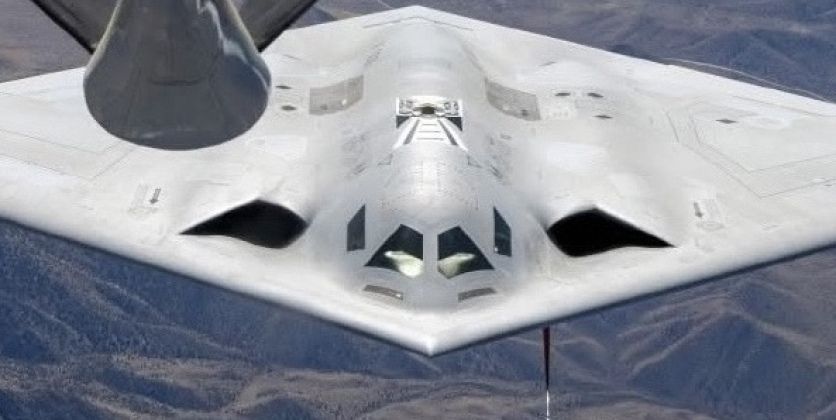
B-21 Bomber Prototype
USAF
The U.S. Air Force has announced that the first B-21 next generation strategic bombers in active service will be based at Ellsworth Air Force Base, with the facility also expected to host a Formal Training Unit, meaning it will be central not only to operational deployment but also to training aircrew and maintenance personnel for the new aircraft. The airbase is being transformed under a $2 billion infrastructure modernisation program, which will provide the maintenance, training, and mission support facilities required for the highly complex stealth aircraft. This includes specialised hangars, maintenance facilities, and mission planning infrastructure. Ellsworth Air Force Base is scheduled to become the first of multiple bases hosting the B-21, with a new distributed basing concept drawing a stark contrast to the basing decisions made under preceding bomber programs.
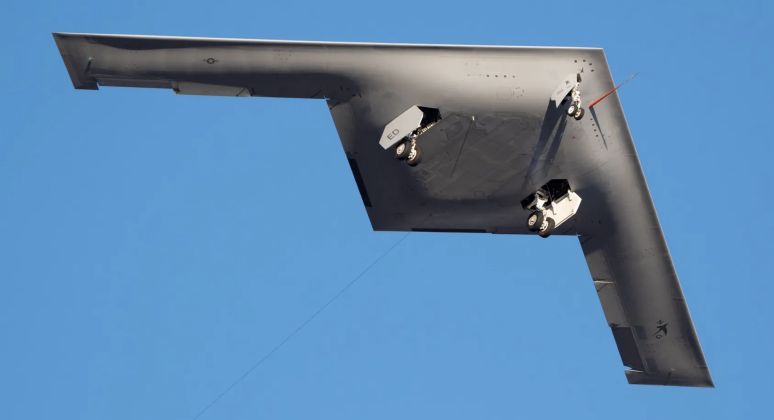
Preceding the B-21, deployments of the older B-52 bomber were built around the concept of large-scale, centralised basing, with the aircraft operating from a relatively small number of well-established facilities. The later B-2, by contrast, introduced a far more restrictive basing model driven by its extremely high maintenance requirements and requirement for climate-controlled hangars. This combined with a very small production run of just 20 serial production aircraft led all B-2s to be concentrated at a single main operating base - Whiteman Air Force Base in Missouri - which resulted in considerable vulnerabilities to disruptions at the base. The basing strategy for the B-21 represents a significant evolution in how the United States organises and sustains its long-range bomber force, and represents a deliberate attempt to overcome the limitations of both earlier approaches.
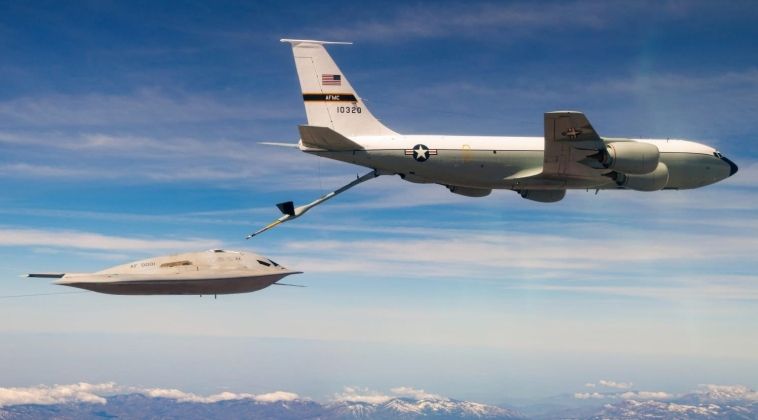
The B-21 was designed with a reduced maintenance burden and broader basing flexibility combed to the B-2, allowing the Air Force to establish multiple planned operating locations as part of a distributed basing concept. This is intended to improve resilience in the face of possible attacks on major bases, while improving operational tempo. This complements the designing of the B-21’s maintenance architecture around digital sustainment and open systems integration allows upgrades, diagnostics, and mission system changes to be handled more efficiently across multiple sites, which is also expected to improve mission capable rates. Following deliveries of an estimated 20-30 aircraft to Ellsworth Air Force Base, it is expected that additional B-21 bases will be established with the required infrastructure investments made. The U.S. Department of War in May requested a $6.1 billion funding boost for the B-21 program to accelerate development work, following years of delays. Its penetration strike capabilities have been presented as critical to ensuring credible deterrence in an era of rapidly advancing adversary air defence capabilities.
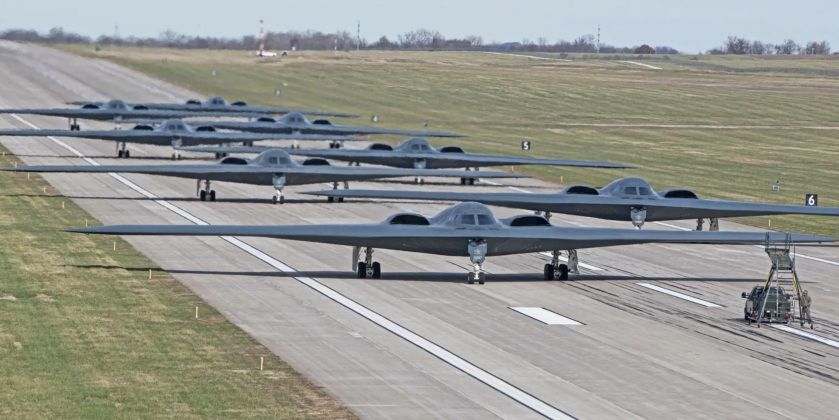
The distribution of B-21 operations across multiple widely dispersed facilities is expected to complement efforts to significant strengthen the missile defences of the United States mainland under the Golden Dome program. China, Russia and North Korea currently retain considerable capabilities to launch not only strategic nuclear attacks on U.S. cities, but also to launch tactical strikes using conventional, nuclear, and in North Korea’s case possibly chemical weapons against major bases hosting strategic bombers. These can be launched from a wide range of assets including bombers, attack submarines, destroyers, and in China’s case aircraft carriers, with China and North Korea in particular very rapidly expanding their capabilities.
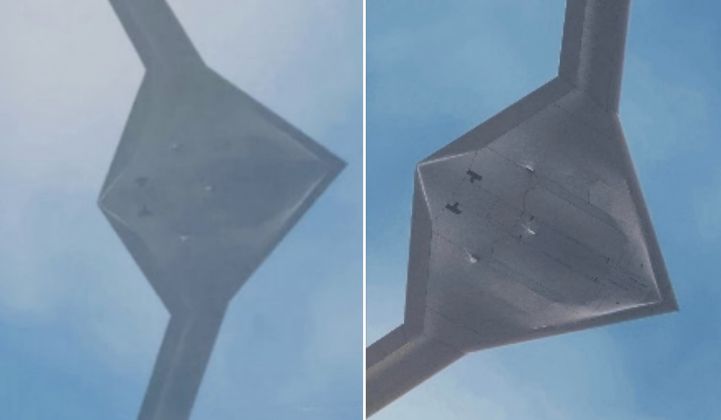
In parallel to the B-21 program, China is developing of its own intercontinental range stealth bomber, with new images in January showing what appear to be twin internal weapons bays that would confirm the aircraft is intended to serve as a long range bomber. The unmanned aircraft was first seen in satellite footage from a People’s Liberation Army Air Force test base near Malan, Xinjiang province, which was published in mid-June 2025. Images on October 19 subsequently showed the aircraft in flight for the first time. China’s next generation stealth bomber is expected to enter service in the early 2030s, complementing the East Asian state’s established lead in sixth generation fighter development. Delays to the B-21’s development have not only allowed China to significantly narrow development gaps, but have also forced the U.S. Air Force to extend the planned service lives of the B-2 and B-1B bombers.
