
U.S. and Britain Concentrate Surveillance Flights Around Russian Targets in Crimea
Military Watch Magazine Editorial Staff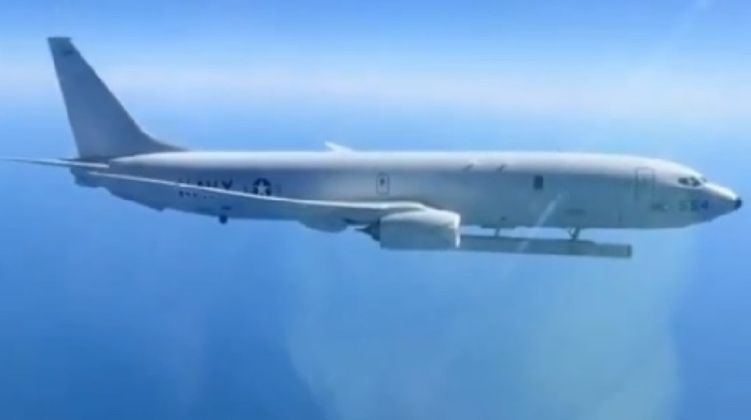
U.S. Navy P-8 with AN/APS-154 Sensor Over the Black Sea
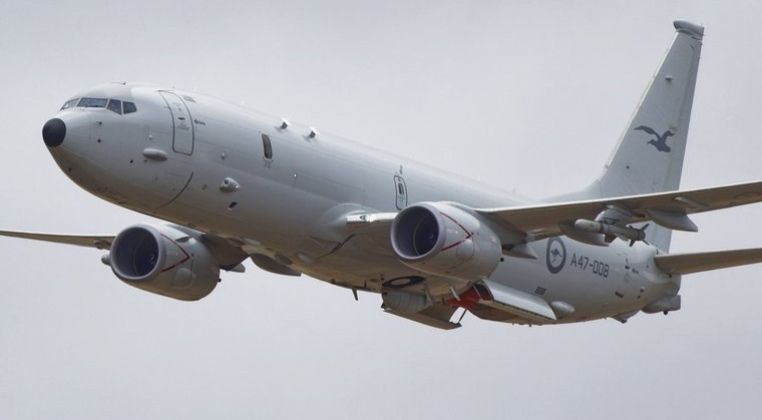
The U.S. Navy and the British Royal Air Force have conducted coordinated aerial surveillance flights over the Black Sea near the coast of Crimean Peninsula and Russia’s Krasnodar, with an American P-8A Poseidon maritime patrol aircraft and a British RC-135W Rivet Joint signals intelligence aircraft observed flying extended reconnaissance patterns in the region. Flight tracking data shows the P-8A conducted a wide-area patrol mission, while the RC-135W first flew parallel tracks further west, before then entering the same operational zone as the P-8 closer to the peninsula. The repeated racetrack patterns the aircraft followed were consistent with maritime surveillance and electronic intelligence collection operations. The two aircraft have complementary capabilities, with the P-8 deploying a radar and electro-optical and infrared sensors, while the RC-135W is a dedicated signals intelligence aircraft designed to be able to collect, analyse electronic emissions and geolocate their sources.
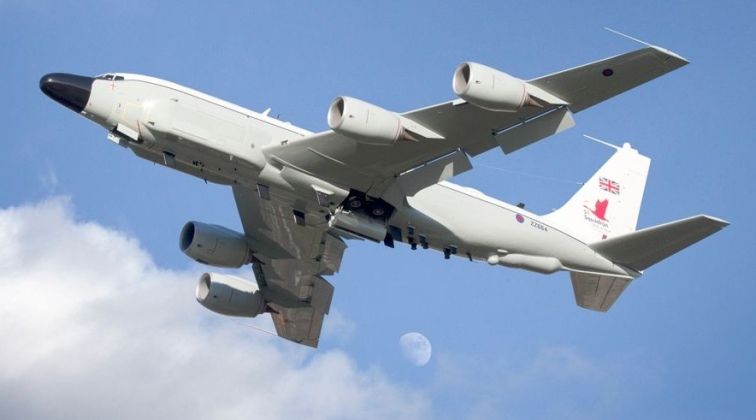
NATO members’ intelligence collection flights have played a central role in bolstering the ongoing Ukrainain war effort from February 2022, complementing the provision of intelligence from several hundred Western satellites to the Ukrainian Armed Forces. The deployment of considerable numbers of Western Bloc personnel on the ground in the Ukrainian theatre, including for advisory and combat roles and to facilitate the use of complex weapons such as cruise missiles, has reportedly allowed intelligence collected to be utilised more effectively due to their training to operate with such intelligence support. Intelligence collected from NATO members’ flights near Russian territory are considered highly likely to influence the planning of the war effort, and may even provide targeting data much as Western satellites have to allow Ukrainain forces to launch precision strikes against high value targets. Russia’s lack of a comparable reconnaissance capability by satellite or by air remains a significant factor in the favour of Ukrainian and Western Bloc forces in the conflict.
In August 2025 it was confirmed that U.S. Navy P-8s had begun operations in the Black Sea equipped with the rare and highly secretive AN/APS-154 Advanced Airborne Sensor, a new radar pod developed by Raytheon which was was seen mounted beneath the aircraft using a Special Mission Pod Deployment Mechanism (SMPDM). The active electronically scanned array radar was designed specifically to operate in coastal environments, providing moving target indication and synthetic aperture imaging. The radar reportedly allows P-8s to track moving targets at sea and on land, and can produce high-quality images under at night and in poor weather as required. This allows the Navy to leverage the size of its P-8 fleet to more effectively perform roles other than anti-submarine warfare, which was the primary role for which the aircraft was designed. A defining feature of the AN/APS-154 is its ability to scan both water and land simultaneously, allowing it to conduct coastal reconnaissance while also tracking submarines and surface vessels.
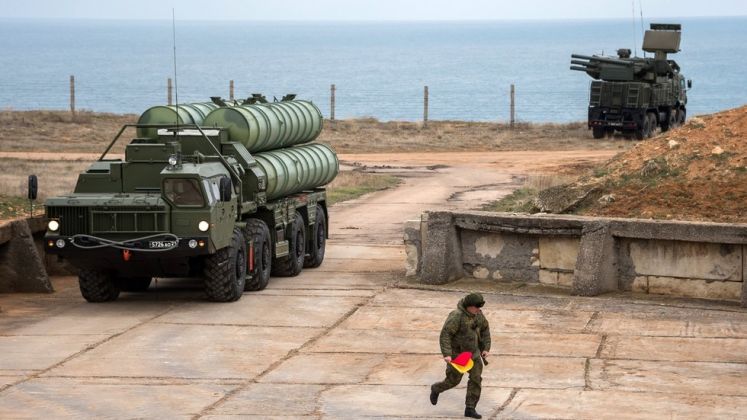
Crimea is among the most heavily fortified Russian-controlled territories, and has repeatedly been prioritised for attack, including using ATACMS ballistic missiles, missiles from S-200 air defences fired ballistically, and a wide range of unmanned systems. In September 2025 Ukrainian Navy spokesperson Dmytro Pletenchuk highlighted the considerable efforts made to strengthen air defence capabilities, observing: "I don't know what new air-defence systems the Russians could still deploy in Crimea. They have already placed there everything they possess. The Russians have long concentrated S-500 Prometey systems there. For them, Crimea has always been and remains a crucial location in every sense.” “The peninsula has strategic and geopolitical significance for them,” he concluded.
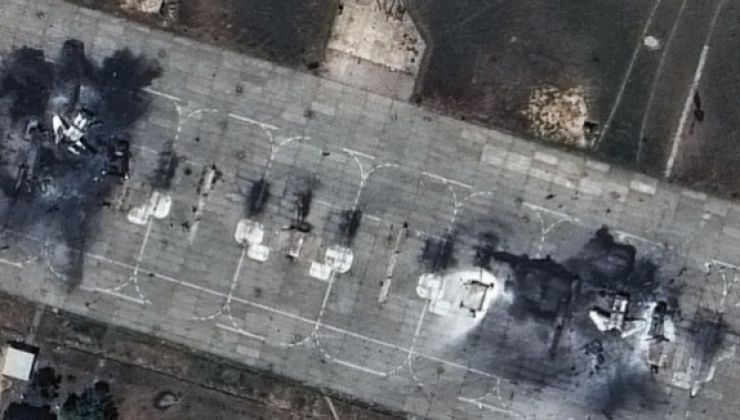
Speaking at the Warsaw Security Forum in October 2025 , former British Defence Secretary Ben Wallace, who is considered one of the most influential figures in the British defence establishment, called for a major escalation in attacks on Crimea to severely disrupt civilian life. he stressed at the time that countries across the Western world needed to support efforts to ensure Crimea was “not inhabitable.” “We have to help Ukraine have the long-range capabilities to make Crimea unviable. We need to choke the life out of Crimea,” he stated, adding: “If it is not inhabitable or not possible for it to function… I think, if we do that, [Russian President Vladimir] Putin will suddenly realise he’s got something to lose.” Targets hit on the Peninsula have included beaches, key infrastructure such as bridges, as well as military targets including air defence systems and major airfields, with Western and Ukrainian forces considered to still have considerable room to further escalate attacks.
