
U.S. Army to Turn Navy's SM-6 Anti-Ballistic Missile Into a Hypersonic Strike Platform
Military Watch Magazine Editorial Staff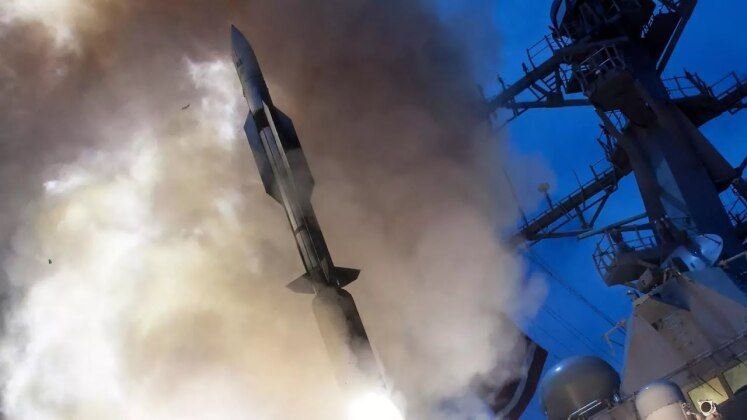
Launch of SM-6 Hypersonic Missile
The U.S. Army has chosen the Navy’s SM-6 hypersonic anti ballistic missile to form the basis of its new ground based mid range strike platform. Also known as the RIM-174, the missile in Naval service was designed with both defensive and offensive capabilities - and while the latter was a secondary function for the Navy it is expected to be a primary one for the Army. The fielding of such a weapon will be facilitated by America’s withdrawal from the Intermediate Range Nuclear Forces Treaty, which removed the sole legal restriction on the deployment of ground based missiles with ranges over 500km. The SM-6 began production in 2009, and entered service in thee U.S. Navy in 2013, with the missile primarily fielded by Arleigh Burke Class destroyers from their vertical launch cells. The Army awarded an agreement on a sole source basis worth $339.3 million.
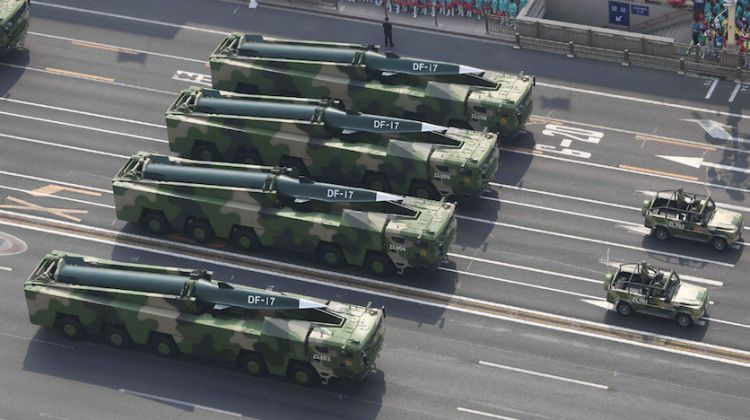
Using the SM-6 will allow the Army to pursue modernisation efforts for the design in parallel with the Navy, and the version received when deliveries begin around the year 2023 are expected to have a longer range than those currently in naval service. An outstanding question remains as to whether the Army version of the SM-6 will also have a ballistic missile defence capability — which could be highly valued considering that all of America’s ‘great power adversaries,’ China, Russia, North Korea and Iran, have very formidable ballistic missile forces including in the first three cases hypersonic missiles. This capability could be a potential game changer if distributed throughout a theatre of operations, with the SM-6 thought to have far superior reliability than the Patriot, THAAD and Aster systems currently deployed from ground based launchers by NATO member states. The SM-6 is though to exceeds hypersonic speeds during its terminal stage of the flight, which would do much to narrow the gap between the ground based missile arsenals of the U.S. and its leading competitors which have fielded hypersonic ballistic missiles for some time. Its exact speed remains unconfirmed, however, and it is possible that the missile will fall short of hypersonic speeds - the threshold of which is Mach 5 or more.
