
U.S. Army Again Fails to Meet Deadline For Developing Urgently Needed Dark Eagle Hypersonic Weapon
Military Watch Magazine Editorial Staff
Artwork Showing Russian Avangard Hypersonic Glide Vehicle in Flight
The United States Army has confirmed that it failed to meet its end-of-2025 deployment target for the Long-Range Hypersonic Weapon (LRHW) program, otherwise known as the Dark Eagle, despite the unit assigned to operate the system already being trained and ready. This follows prior delays in 2023 and 2024, making this the third major recent deadline to have been missed by the program. The missile that has been under development since 2018, and has already received more than $12 billion in funding. It is intended to provide the U.S. Army with a long-range strike capability using a hypersonic boost-glide system. This is considered particularly critical due to the rapid expansion and modernisation of the Chinese, Russian and North Korean arsenal of ballistic missiles with similar characteristics. Russia and Iran have both combat tested hypersonic glide vehicles against Ukraine and Israel respectively, with the Iranian missile, the Fattah, thought to have been developed with North Korean support.
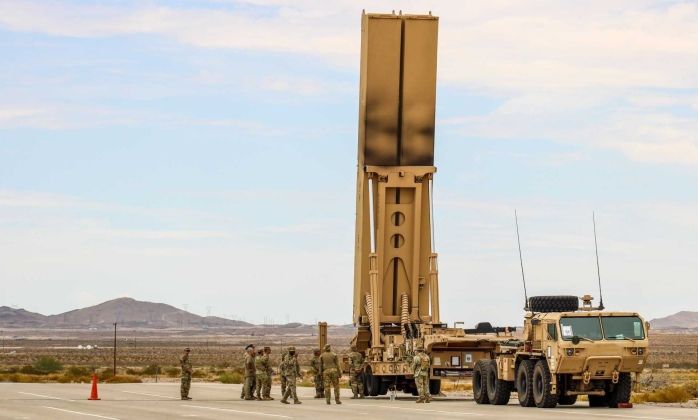
The Dark Eagle program is expected to make the United States the fifth country to field hypersonic glide vehicles, with no other countries known to be making significant investments in development. The first Dark Eagle missile battery is estimated to cost approximately $2.7 billion, however, which has raised questions regarding the cost effectiveness of the system when adversaries field systems with similar capabilities for small fractions of the cost. Speculation regarding further development delays began to grow in October, after the Pentagon’s test office told Bloomberg that it had “not conducted an end-to-end operational assessment” of the Dark Eagle system, and did not yet have data to evaluate its “operational effectiveness, lethality, suitability, and survivability.”
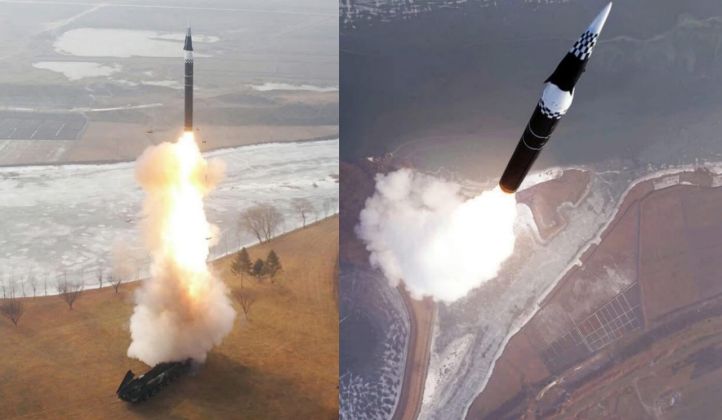
The Dark Eagle program is expected to provide the first operational U.S. hypersonic weapon fielded by any service. Hypersonic glide vehicles are valued for their greater efficiency, allowing them to travel over longer distances at higher speeds and with significantly less fuel, which could be invaluable in Europe, the Middle East and the Pacific. Although the Russian S-500 and Chinese HQ-29 air defence systems are both capable of intercepting some types of hypersonic missiles, it remains highly uncertain whether they would be able to reliably intercept the Dark Eagle, since little is known regarding the American system’s flight characteristics. Delays to the Dark Eagle program have left the U.S. Armed Forces increasingly far behind their competitors, with hypersonic glide vehicles being used on a growing range of weapons including highly compact tactical ballistic missiles fielded by North Korea, and ship-launched anti-ship ballistic missiles fielded by China.
