
U.S. Army Apache Attack and Chinook Heavy Lift Helicopter Units in Germany Exercise Wartime Repositioning Into Eastern Europe
Military Watch Magazine Editorial Staff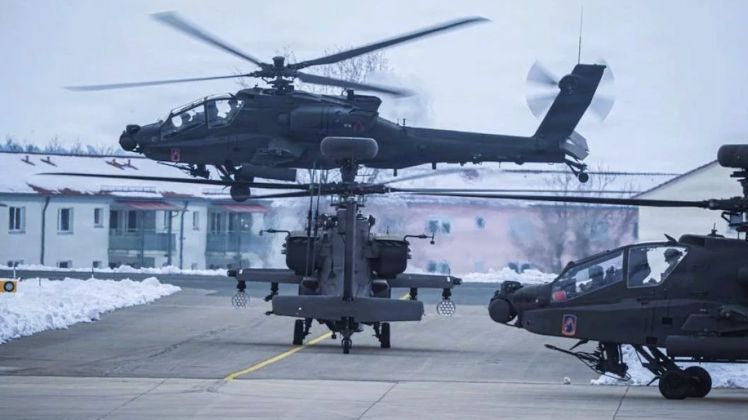
U.S. Army AH-64E Apache Attack Helicopters During Exercises in Germany
US MoW
The U.S. Army 12th Combat Aviation Brigade has conducted aviation manoeuvre and sustainment training in Germany focused on the use of AH-64E Apache attack helicopters and CH-47F Chinook heavily lift helicopters for high-tempo air mobility. Germany remains the primary hub through which NATO members’ combat power, logistics, and reinforcements are expected to flow toward the alliance’s eastern flank, with the exercises demonstrating high levels of intra-theatre mobility. The CH-47F Chinook’s sling load validation allows for heavy equipment to be moved when road infrastructure is unusable, with each able to transport 155 mm artillery pieces, engineer bridging sections, components of long range air defence systems, and a wide range of other asset types by air. The Apaches are expected to be relied on for far armed reconnaissance and escort roles to support Chinook operations.
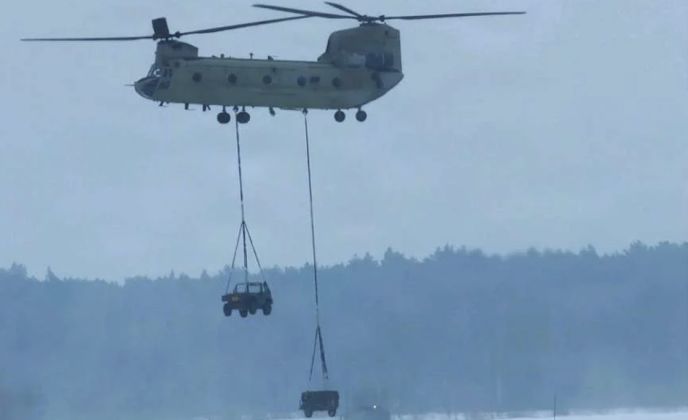
Although the Apache is one of the world’s oldest combat helicopter types still in production, the new AH-64E variant boasts digital connectivity, manned-unmanned teaming, and data exchange capabilities which allow crews to receive data from a wide range of ground and airborne assets, making it highly effective in escort roles. Although the heavy lit capabilities of the Chinook are dwarfed by those of the Russian Mi-26, and the long range engagement capabilities of the Apache by those of Russia’s much newer Mi-28 and Ka-52 designs, NATO’s helicopter fleets far outnumber those of the Russian Armed Forces. NATO also benefits from significantly greater strategic depth, allowing assets to be flown into Germany from the United States on fixed wing transports such as the C-5 and C-17, before being forward deployed to Eastern Europe using rotary wing aviation as simulated in the latest exercises.
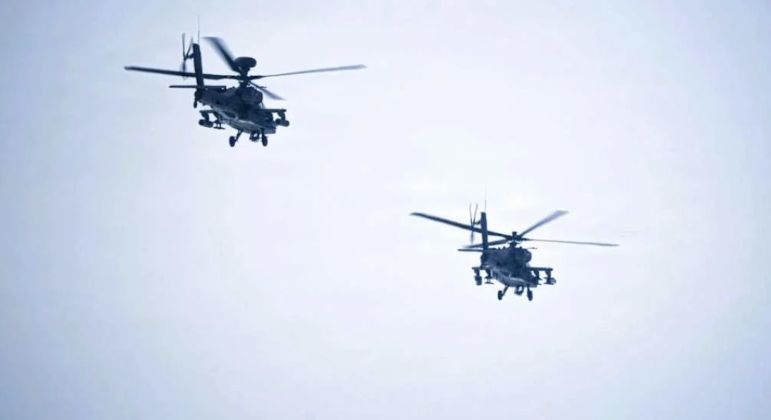
Participating in the latest exercises alongside the U.S. Army, the Royal Netherlands Army also operates both the Apache and the Chinook, allowing the two allies to rehearse identical procedures, sling configurations, escort tactics, and airspace coordination. This is expected to pave the way for mixed U.S. and Dutch aviation elements to function as a single integrated package during wartime. This exercises have responded to changes in how attack helicopters are expected to operate in Europe, as advances in drone and missile technologies have left ground-logistics more vulnerable. The growing long range air-to-air capabilities of low cost unmanned aircraft has nevertheless raised significant questions regarding the survivability of rotary wing aircraft even when operating deep behind friendly lines.
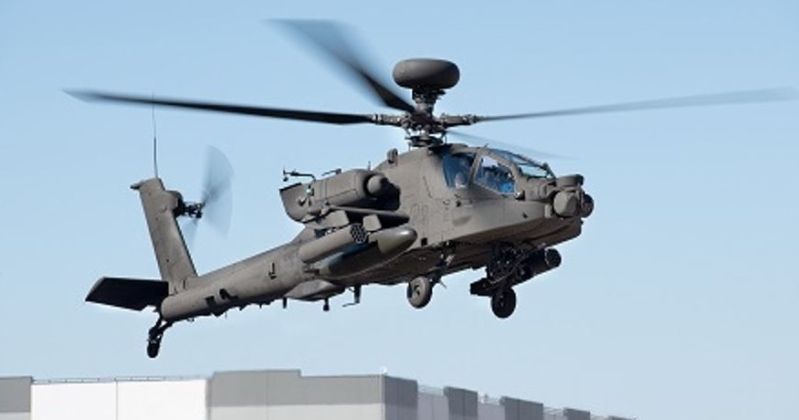
Signs regarding major militaries’ reduced investment in helicopter capabilities, particularly for combat roles, have been increasingly evident since the limitations demonstrated in the Ukrainian theatre. The South Korean Defence Ministry’s decision in 2025 to cut its orders for the Apache was widely interpreted by analysts as a response to the demonstrated vulnerability of helicopters, including advanced attack helicopters, to drone attacks in particular in the Ukrainian theatre. In January 2025 the United States Army deactivated its 5th Air Cavalry Squadron, 17th Cavalry Regiment, a reconnaissance and attack helicopter squadron which has been stationed in South Korea for more than three years. This was interpreted as a likely response to the same trends. Concerns have at times also been raised regarding the Apache’s reliability, particularly after four Apaches crashed in just 44 days in early 2024, including two within just three days in March that year.
