
U.S. Air Force Deploys E-3 ‘Flying Radars’ to Support Military Buildup Against Venezuela
Military Watch Magazine Editorial Staff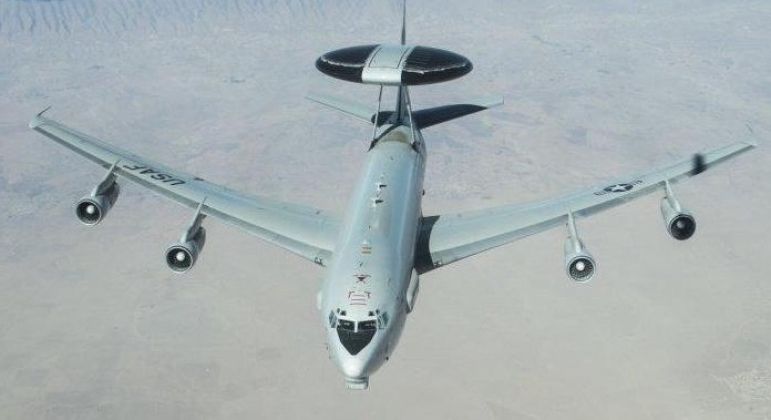
U.S. Air Force E-3 Sentry AWACS
The U.S. Air Force has deployed at least one E-3 Sentry Airborne Warning and Control System (AWACS) to support ongoing operations aimed at maximising military pressure against Venezuela. Compared to the carrier-based E-2D aircraft that have already been operating in the region for several weeks, the E-3 is capable of providing command and control functions for a much wider American force including strategic bombers, carrier air wings, and ground-based aircraft, while sharing invaluable targeting data with all these aircraft and even guiding their missiles to their targets. The E-3 is also a much longer ranged aircraft that integrates significantly more powerful sensors, making its presence a significant boon to any potential assault launched by the United States Armed Forces.
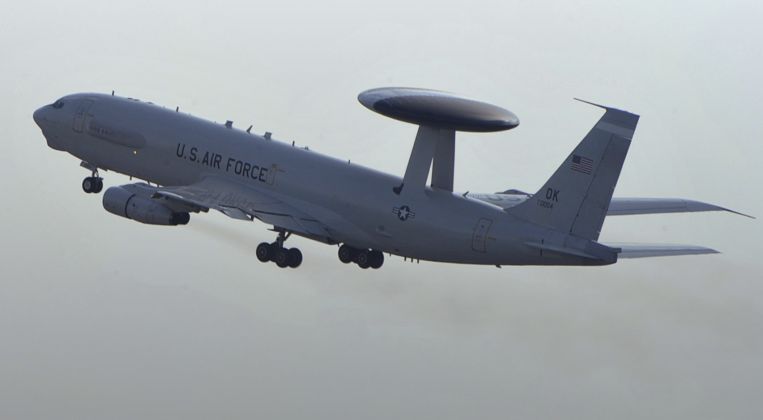
Questions have increasingly been raised regarding the viability of the E-3 for modern engagements, with the Cold War era aircraft integrating radars that are considered far from viable to track low radar cross section targets, particularly under electronic interference. The age of the E-3 airframes has also limited their availability rates as they are increasingly worn out by four decades of use. These limitations have made the possible cancellation of the Pentagon’s plans to finance procurement of E-7 AWACS systems highly controversial in the United States, particularly as China has led the world by a significant margin in the rates at which it it is procuring its own highly sophisticated equivalent systems, namely the KJ-500 and KJ-3000. Despite the E-3’s limitations, which are particularly serious in the Pacific, the aircraft’s capabilities are expected to be sufficient to counter Venezuelan forces which, although outstanding within Latin America, are very far from state of the art.
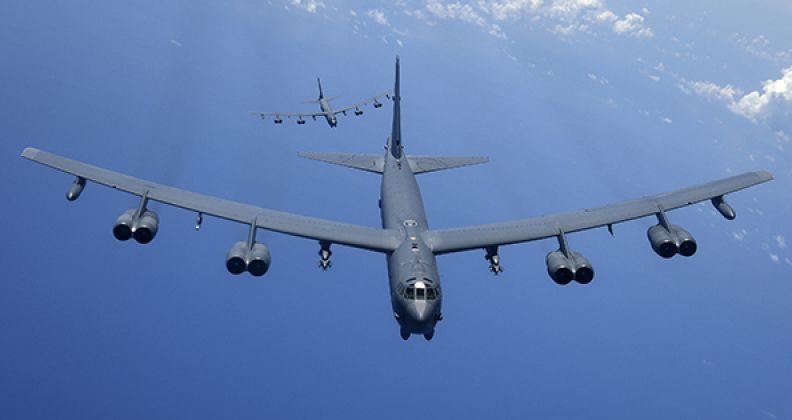
The United States began to significantly expand its force deployments around Venezuela in August, with these including a carrier group led by the USS Gerald Ford, F-35 fifth generation fighters, E/A-18G electronic attack jets, Marine amphibious assault ships, and a wide range of other assets. B-52H Stratofortress and B-1B Lancer intercontinental range strategic bombers have conducted simulated strikes and Bomber Attack Demonstrations over the Caribbean Sea, and have staged multiple shows of force in the region from mid-October. Washington significantly escalated hostilities on December 10 when U.S. forces were ordered commandeer a Venezuelan civilian oil shipment in international waters, which was widely considered by legal experts to be a particularly brazen violation of international law, as part of ongoing efforts to complement military pressure intended to force a collapse of the Venezuelan government with effective economic pressure.
