
U.S. Navy Deploys Elite Spy Drones to Guam: Tritons to Collect Intel on China and North Korea
Military Watch Magazine Editorial Staff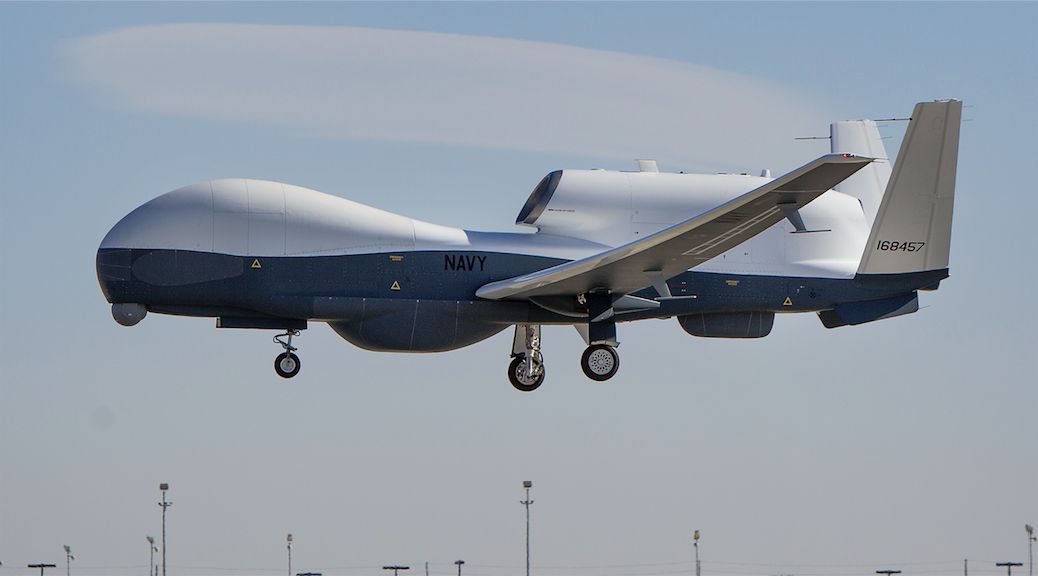
Triton Heavyweight Surveillance Drone
The U.S. Navy has deployed two of its new MQ-4C Triton high endurance surveillance drones to the Pacific territory of Guam - a hub of American air and naval operations in the region. The drones were deployed under Unmanned Patrol Squadron (VUP) 19 and are stationed at Andersen Airbase. Two more Tritons are expected to join them by the end of March. Rear Admiral Peter Garvin, commander of the Navy’s Patrol and Reconnaissance Group, stated regarding the new assets: “The inaugural deployment brings enhanced capabilities and a broad increase in maritime domain awareness to our forward fleet commanders... VUP19, the Navy’s first dedicated [unmanned aircraft] squadron … is superbly trained and ready to provide the persistent [intelligence, surveillance and reconnaissance] coverage the Navy needs.”
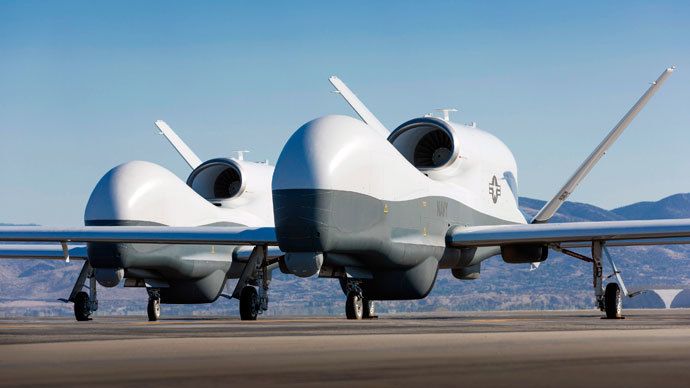
Since the early 2010s, when the Barak Obama’s administration began the Pivot to Asia initiative, the U.S. has increasingly prioritised the Asia-Pacific region for deployment of its most capable weapons systems. This occurred in parallel with a growing emphasis on unmanned warfare from that time. The Triton is derived from the MQ-4 Global Hawk, and is specialised in maritime surveillance. The drones have a range of over 13,000km - sufficient to allow them to survey potential sites of interest in China and North Korea - and are prized for their high endurance with the ability to remain airborne for over 24 hours. Although their sensors are highly sophisticated, the drones are extremely costly at almost $200 million each and have limited survivability. This was demonstrated by the Iranian downing of a Global Hawk drone on its first attempt using a relatively basic indigenous air defence system in June 2019. The aircraft will complement existing surveillance assets - with both China and North Korea today covered by more Western military satellites than the Soviet Union was during the Cold War - and in China’s case several times as many.
