
Turkey Planning Purchase of 40 F-35A Stealth Fighters: Why Washington Wants Ankara Back in the Program
Military Watch Magazine Editorial Staff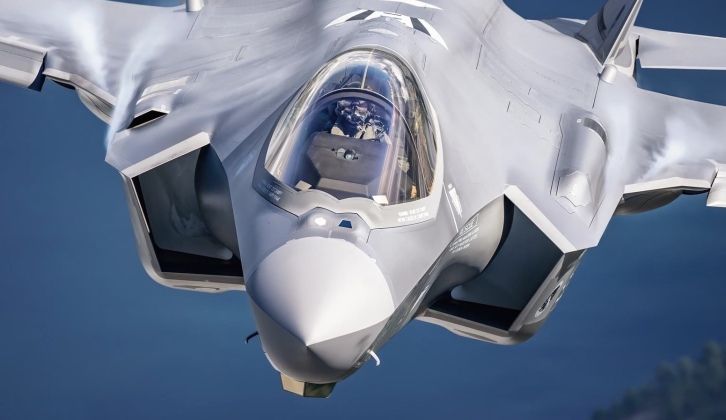
F-35 Fifth Generation Fighter
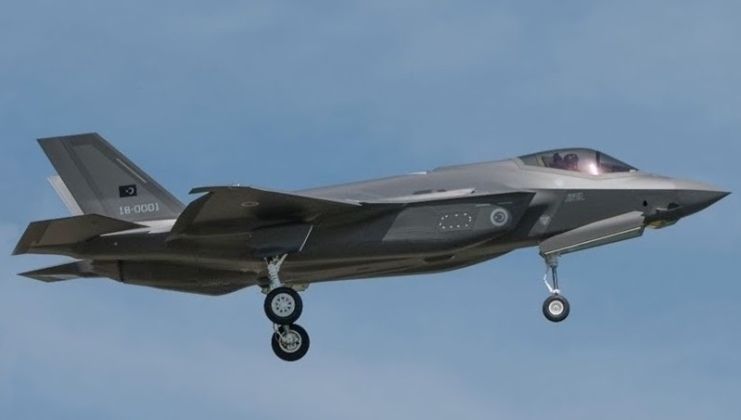
Turkish Defence Minister Yasar Guler on November 26 revealed that Ankara had formally resubmitted a request to purchase 40 F-35A fifth generation fighters, informing a Planning and Budget Committee in the Turkish Parliament that Washington could reconsider selling the aircraft under the upcoming Donald Trump administration. He claimed that U.S. officials had expressed openness to the possibility of providing the aircraft. The Eastern European country was previously a partner in the F-35 program, before being evicted in 2019 due to disputes with its allies over the acquisition of Russian S-400 air defence systems. Despite its eviction, production of a number of F-35 components in the country continued until 2022, with the program benefitting from the country’s low labour costs for the manufacture of many of the aircraft’s less complex and less sensitive parts. As part of efforts to resume F-35 acquisitions, Turkey is seeking to restore contracts to contribute to manufacturing for the fighter program.
In September it was reported that Turkey had made significant progress in talks with the United States on the details of plans to decommission its S-400 systems to facilitate the resumption of F-35 acquisitions. The United States reportedly submitted a detailed proposal for the resolution of the issue during the summer, with a face saving resolution for its ally expected to see the S-400s transferred to American control, while the systems nevertheless remained on Turkish territory. The U.S.-controlled sector of Incirlik Air Base where shared nuclear weapons are stored was considered a leading possible destination. This has raised a significant possibility of the U.S. and other NATO members gaining highly sensitive information on the S-400, which is heavily relied on by Russia and a number of its strategic partners for the defence of their airspace. Russian Defence Ministry spending on S-400 acquisitions since the disintegration of the Soviet Union is over double its spending on fighter acquisitions, with the systems also deployed by India, China, Belarus and Algeria.
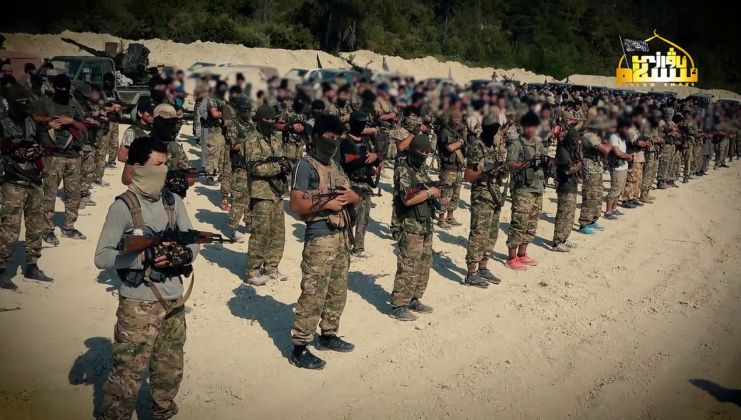
Turkey notably made a number of concessions to Washington to be able to acquire F-16 fourth generation fighters, which are exported with fewer restrictions than the F-35. The country is expected to reduce planned F-16 acquisitions to focus funding on F-35 acquisitions should its return to the program be allowed. For Washington and the wider Western world, resumption of Turkish participation in the F-35 program remains a highly favourable outcome. Turkey has the largest military presence in the Middle East among NATO members, and continues to play a central role in supporting a range of Islamist militant groups such as the Al Nusra Front and the Turkestan Islamic Party, which have for over a decade focused their attacks on Syrian, Russian, Hezbollah and Iranian targets. The Turkish Air Force has played a key role in protecting these jihadist forces, including by providing close air support for their attacks on Syrian targets and even shooting down Syrian and Russian aircraft inside Syrian airspace to provide air cover. These operations by Turkish forces and Turkish backed jihadist groups have been a key factor preventing Damascus, Hezbollah and other parties in the region from focusing their military attentions towards Israel and the United States. With Turkey’s current fleet of F-16s considered increasingly obsolete, bolstering the Turkish Air Force’s offensive capabilities thus remains closely in line with U.S. and broader NATO interests, and will significantly increase pressure on the defences of Syria, Russia, Iran and other Western Bloc adversaries.
