
Turkey’s Major New Ballistic Missile Transfer to Ukraine Supporting Expanded Strikes on Russia
Military Watch Magazine Editorial Staff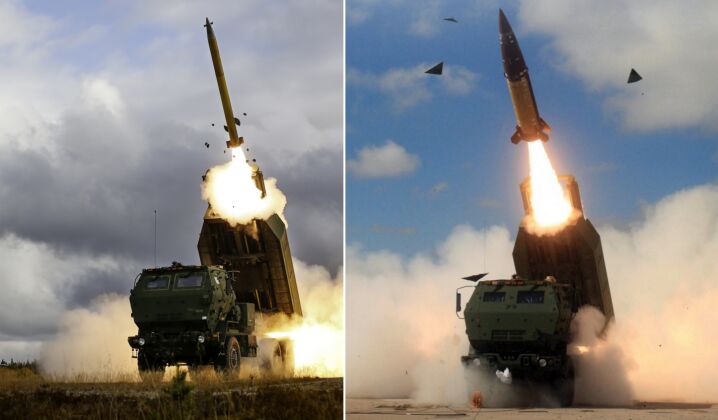
GMLRS Rocket (left) and ATACMS Ballistic Missile Launches From HIMARS System
Turkey is preparing to transfer a major package of U.S.-origin long-range strike weapons and artillery ammunition to Ukraine, according to documents submitted to the U.S. Congress. The proposed transfer includes 70 M39 ATACMS tactical ballistic missiles, 12 M270 Multiple Launch Rocket System (MLRS) launchers, 2,524 M26 227mm rockets and 47,000 M509A1 203mm cluster-munition artillery rounds. The package represents one of the most significant transfers of U.S.-origin long-range strike equipment to Ukraine by a third country. Ukraine’s stockpiles of ATACMS have been severely depleted by sustained operations against Russian forces, while the United States is currently unable to restock them due to the depletion of its own arsenal during hostilities with Iran.
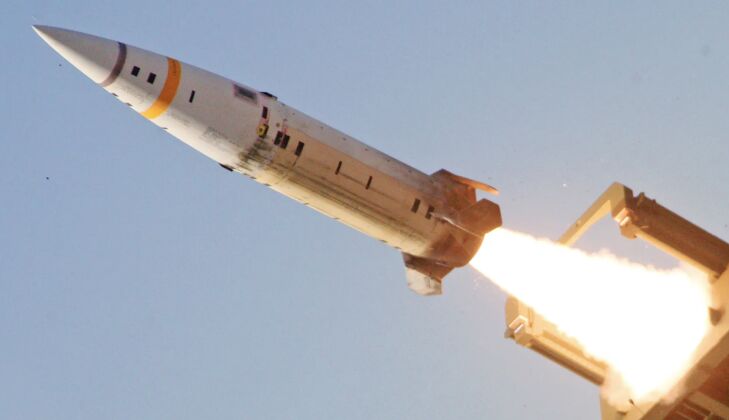
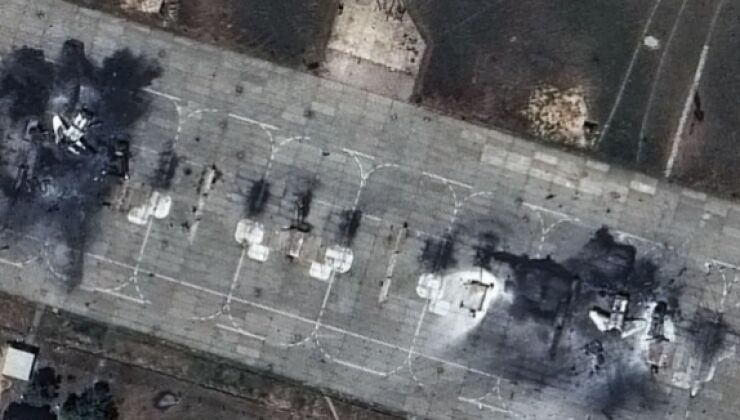
M26 rockets and ATACMS ballistic missiles have been used to considerable effect to destroy high value Russian targets in the Ukrainian theatre, with successes including the destruction of launchers and radars from S-400 air defence systems, the destruction of other radar systems, the neutralisation of Russian Iskander-M ballistic missile launchers. The Ukrainian Armed Forces in February reported successfully targeting a Russian command facility near Novopetrivka in the disputed Donetsk region on the night of February 24. One of the most significant successes achieved by the M26 was a strike on January 1, 2023, which killed 89 Russian military personnel after hitting a temporary barracks in the disputed Donetsk region. While Russian electronic warfare has at times limited their effectiveness against frontline targets, the ATACMS’ 300 kilometre range has been of particular high value for launching deep strikes against critical infrastructure, which have benefitted from considerable Western intelligence support.
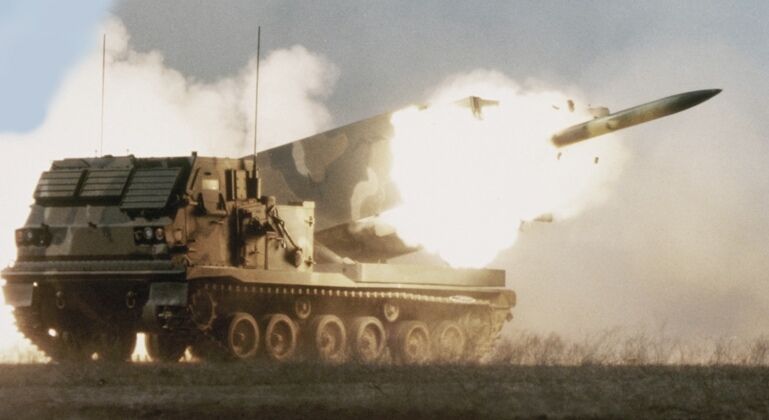
The proposed delivery of 12 M270 launchers provides Ukraine with additional platforms capable of firing both ATACMS and standard 227mm guided rockets. The M270 is a tracked launcher carrying two six-round Multiple Launch Rocket System pods, although an ATACMS occupies an entire pod, allowing the vehicle to carry two ATACMS missiles at a time. This provides double the firepower of HIMARS rocket artillery systems which Ukraine has operated more widely. The additional launchers would potentially expand Ukraine’s ability to distribute its long-range strike forces across a larger number of firing positions, which is increasingly important in a conflict in which Russia has devoted substantial resources to locating and destroying Ukrainian launchers.
The transfer of cluster munitions is controversial because unexploded submunitions can remain hazardous long after fighting has ended. The United States, Russia and Ukraine are not parties to the Convention on Cluster Munitions, while many European countries have prohibited their use and transfer. With U.S. arsenals depleted, Turkey remains one of the few potential suppliers of cluster munitions to Ukraine. Turkey has a long history of using controversial munitions, including the use of white phosphorus to attack Syrian forces multiple times before the defeat of the Syrian government in 2024.

Turkey has emerged as a leading Russian adversary within NATO, and while not supporting economic sanctions, played the most significant role in attacks on Russian and Syrian forces by extensively supporting various jihadist paramilitary groups in the Syrian theatre. Its sponsorship for such groups has posed a considerable threat to security in Russia and Central Asian states such as Uzbekistan, while Turkish intelligence services were reported to have played a central role in supporting an armed insurgency against the Russian aligned government of Kazakhstan in 2022. Turkey has also been a leading supporter of the Ukrainian war effort, including allowing for the license production of its weapons systems in the country.
