
Taiwan’s First Attack Submarine Suffers Major Breakdown During Sea Trial: Problematic Program Faces Growing Issues
Military Watch Magazine Editorial Staff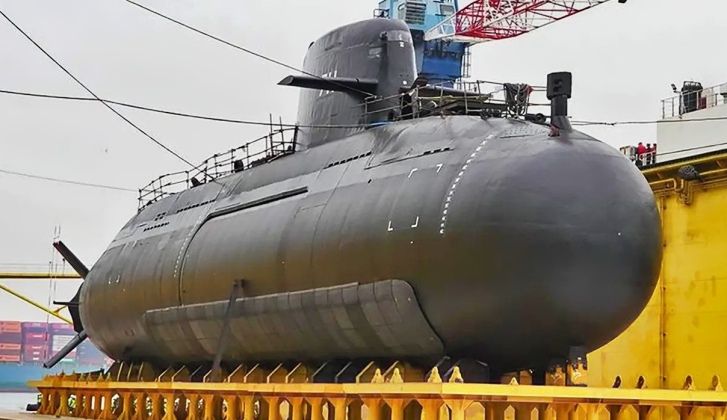
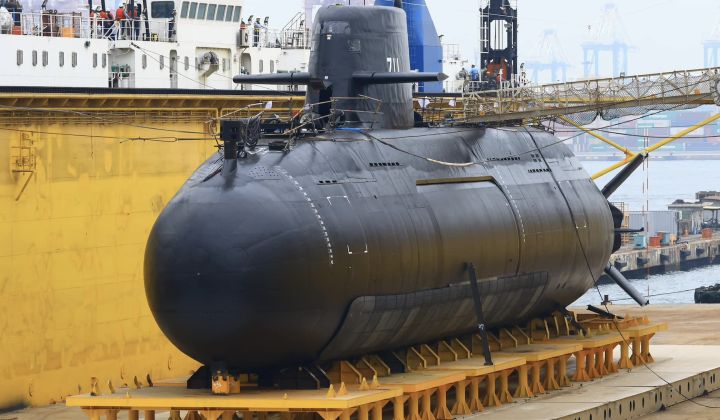
Republic of China Navy Submarine Hai Kun
The first submarine produced in the Republic of China, the Hai Kun, has continued to suffer major performance issues during testing. During the warship’s second sea trials, the ship’s hydraulic system was reported to have been left almost entirely ineffective on June 26, preventing the crew from turning the ship’s rudder. Personnel on the ship were as a result forced to turn the rudder by hand to be able to make an emergency return to the port. One sailor serving aboard Hai Kun recalled that the rudder was locked in place, and as a result: “The submarine could only continue straight ahead… Personnel were immediately assembled in the stern steering gear room. The rudder control levers were brought out, and each person cranked them by hand. When someone ran out of strength, the next person took over.”
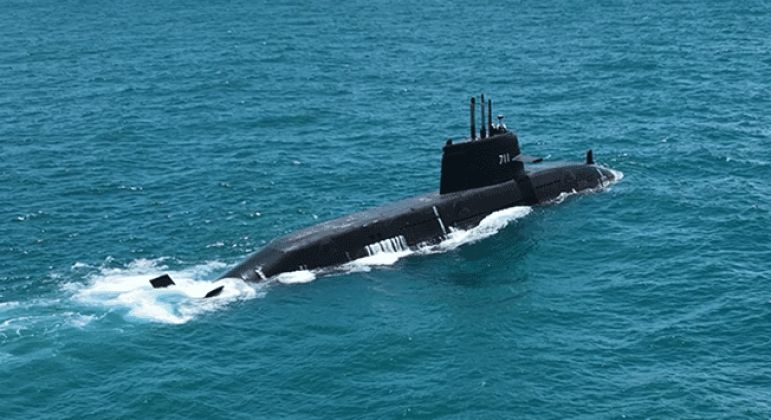
Elaborating on the incident, the sailor recalled: “The hydraulic system completely failed, and the X-shaped rudder could not turn at all… Everyone relied on soldiers lining up inside the steering gear compartment, taking turns using human power to operate the rudder, which allowed the submarine to escape danger.” He added that two tugboats accompanying Hai Kun were forced to tightly control its bow, using pushing force to influence its direction and prevent collisions, while the rudder was partially restored through manual effort. Responding to criticisms of the ship’s performance, the Republic of China Navy Command reported that the program “adheres to the principle of identifying problems, resolving them, and gradually strengthening system tuning and defect improvements.” “The vessel’s control system is equipped with automatic, semi-automatic, and manual operation modes as multiple layers of redundancy. The response actions that day were carried out according to procedures and within safety limits,” it added.
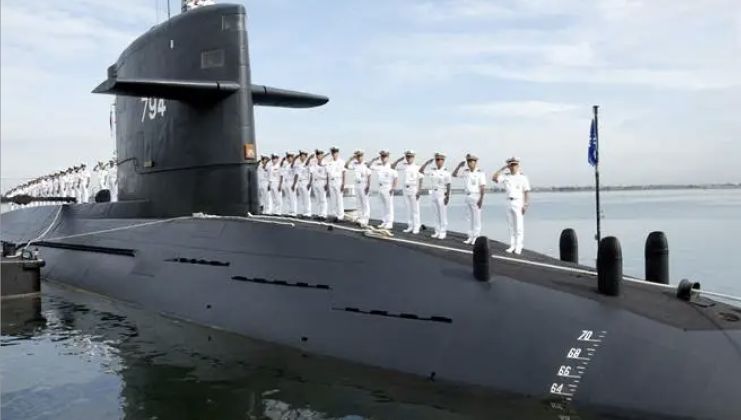
The Republic of China Navy has struggled to modernise its fleet of ships, with Taipei’s political status making procurements from abroad highly challenging. Taipei remains in a state of civil People’s Republic of China based on the Chinese mainland, with both claiming to be the sole governments of all China, while the United Nations and the large majority of UN member states recognise Beijing’s legitimacy as the sole Chinese government. This has left the large majority of countries unwilling to supply armaments to the Republic of China Armed Forces, with only the United States and Israel being major suppliers. The Navy currently operates modified Zwaardvis class submarines orders from the Netherlands from 1981, with efforts to procure further ships of the class in the 1990s having been rebuffed due to Amsterdam’s unwillingness to compromise ties with Beijing.
Although the United States supplies the Republic of China Armed Forces on a large scale, it does not produce diesel electric submarines, which has left the development of an indigenous submarine the Navy’s only option to modernise its fleet. The Hai Kun program has been beset by serious delays and cost overruns, with its viability for operations so close to the Chinese mainland, and against some of the most advanced anti-submarine warfare assets in the world, being brought to serious question. The ships do not feature air independent power and lack anechoic coating, with local industry’s lack of experience in submarine development being a major factor limiting the class’ potential. The very small 2500 ton diesel-electronic ships will have a conservative armament of MK 48 torpedoes and Harpoon subsonic anti-ship missiles. The testing of the MK 48 on the ships has been delayed due to major delays in the United States approving their sale. As the United States enjoys an effective monopoly position in its arms sales to the Republic of China, it has been able to delay supplies, shield itself from compensation claims, and deny access to higher end equipment.
