
‘Super Abrams’: Could This Heavy American Super Tank Have Been the Best in the World?
Military Watch Magazine Editorial Staff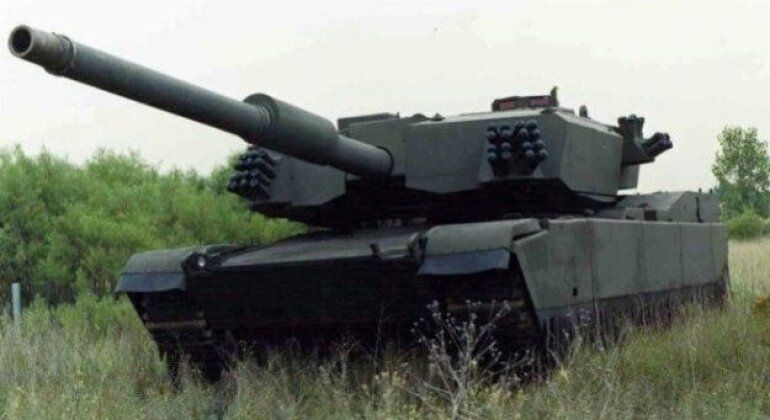
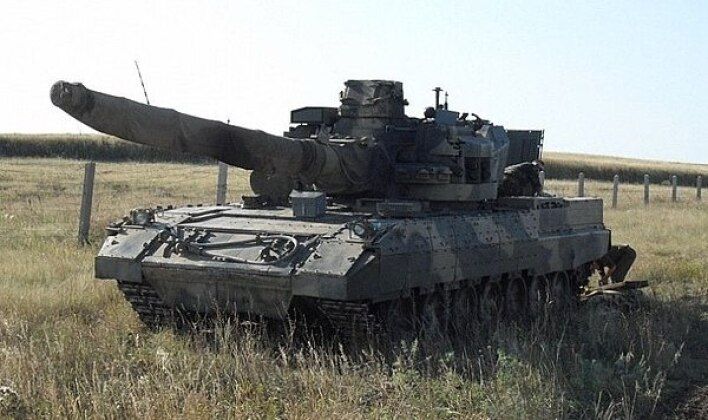
M1 Component Advanced Technology Test Bed
For much of the Cold War battle tanks fielded by the U.S. Army faced a significant disadvantage against Soviet built armour, and were not expected to perform favourably in the event of a major ground war. The M48 Patton which entered service from 1953 was relied on until the war’s end, but in almost all parameter was inferior to the Soviet T-55 which was its direct competitor of the same era. The M60 Patton, which was loosely based on the M48, entered service from 1960 and saw widespread service against Soviet armour - most notably in the 1973 Yom Kippur War in Israeli hands and in the 1980-88 Iran-Iraq War in Iranian hands. The tank was the most capable in American service when both conflicts began, but failed to compete against third grade Soviet designs.
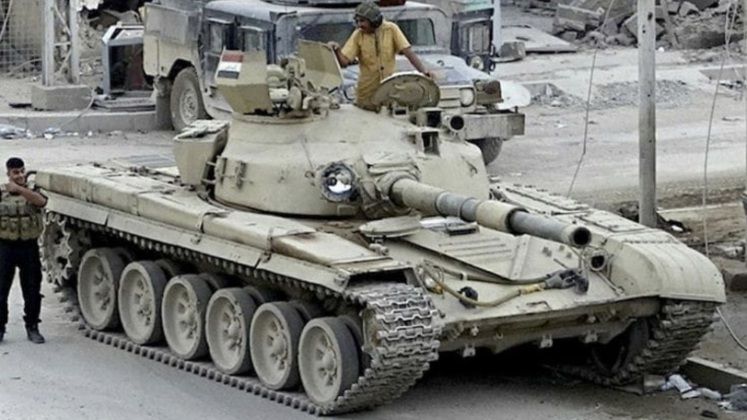
The T-62 fielded by Egypt and Syria in 1973 proved more capable than the M60, forcing Israel to abandon plans for continued reliance on Western armour and by the end of the year begin development of its own tank. This was despite the T-62 having been only the third most capable Soviet tank at the time after the T-64 and T-72. The Iran-Iraq was subsequently saw M60 tanks take massive losses against Iraqi T-62 and T-72 tanks - the latter which had a truly overwhelmingly advantage and took very few losses due to is almost impenetrable armour. The T-72 was at the time also a third grade Soviet tank — surpassed by both the T-64 and T-80 which were both in service years before the war began and would very likely have won even more overwhelming victories over M60 tanks if they had been deployed.
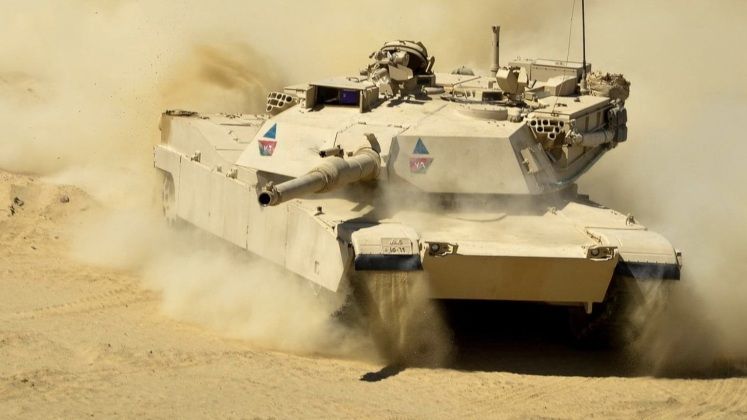
The U.S. sought to bridge the gap with the Soviet Union with a highly ambitious new battle tank, the M1 Abrams, which entered service from 1980 - four year after the T-80 and seven years after the T-72. The tank was heavier than its Soviet counterparts but was considerably outgunned, with its 105mm cannon unable to lay down fire on the same level as the 125mm guns used by the T-72, T-64 and T-80. The Abrams was quickly modified into the M1A1 which had superior armour and a 120mm smoothbore gun. Although the M1 represented a major boost over the M60, its ability to compete with Soviet armour was threatened as the T-80 design continued to be improved and began to be tested with 152mm guns - which appeared to be designed to allow the tanks to more easily penetrate the Abrams’ armour much as the T-72’s 125mm gun had done against the M60. Furthermore, a new class of much heavier Soviet tank was under development unofficially known as the T-95. It came with a standard 152mm smoothbore gun and could have likely been upgraded to carry an even larger one given the size of the chassis. Facing the threat of both an upgraded T-80 and a new Soviet ‘super tank,’ a new heavily enhanced variant of the Abrams tank was developed to partially close the gap in performance.
A prototype model of an enhanced M1 tank was designed and later built by Lockheed Martin as the M1 Component Advanced Technology Test Bed. The tank’s most notable features included the integration of an elongated turret to offer higher levels of protection, and to be able to mount a much larger 140 mm XM291 ATACS smoothbore cannon and accommodate storage of its larger ammunition. The gun came with an auto loader and had the potential to provide several times as much kinetic power as the original 105mm cannon - and double that of the newer 120mm cannon. It would nevertheless have left the Abrams outgunned against upgraded T-80 tanks which fielded considerably larger cannon - let alone against the T-95. A major issue with the design was that the M1’s chassis was built with much smaller 105mm shells in mind, and loading 140mm shells even with a heavily rearranged turret was cumbersome and slow.
The new upgraded variant of the Abrams tank with heavier firepower also had an improved Cummins turbodiesel gas turbine engine which was more efficient and reduced fuel consumption. The angle of inclination of the frontal armour was also changed for greater protection. Nevertheless issues persisted including a very low capacity to store ammunition and an excessively large mass relative to the size of the chassis. The end of the Cold War in 1989 ultimately removed the urgency for a new battle tank, and the collapse of the Soviet Union in December 1991 subsequently brought an end plans for an enhanced T-80 with a 152mm cannon and eventually led to the T-95’s cancellation. As a result Russia has yet to field a tank with a gun larger than 125mm, with the exception of Soviet built T-80 prototypes which never entered service.
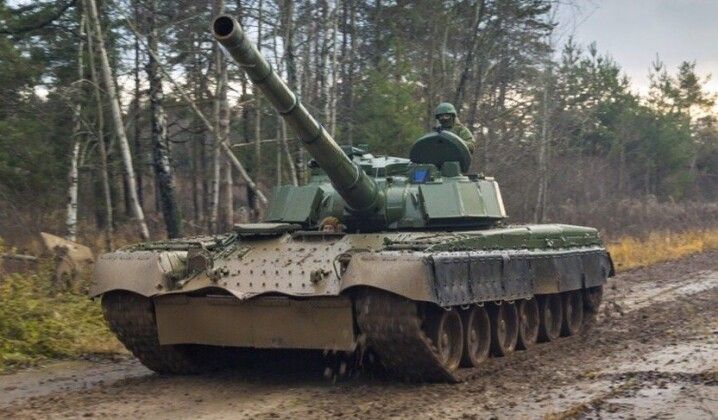
Deescalation after the Soviet collapse left the playing field relatively even, as the M1 was expected to go head to head with the T-80 and later the smaller T-90 tanks which had similar calibers of weaponry. Nevertheless, the need for a new tank has increasingly been discussed as Russia began to field new T-14 tanks from the late 2010s, which although only in service in small numbers and fielding 125mm guns, are still much heavier than prior Russian designs and are widely speculated to eventually deploy 152mm cannon. Although the M1 Abrams, the T-80 and the T-90 are all considered third generation tank designs, the T-14 is one of just three fourth generation tanks currently in service alongside the South Korean K2 and Japanese Type 10 - with NATO powers expected to begin to unveil prototype tanks of the same generation before 2030.
