
How Capable is the Soviet 5V55 Interceptor at the Heart of Europe’s New Missile Defence Plans
Military Watch Magazine Editorial Staff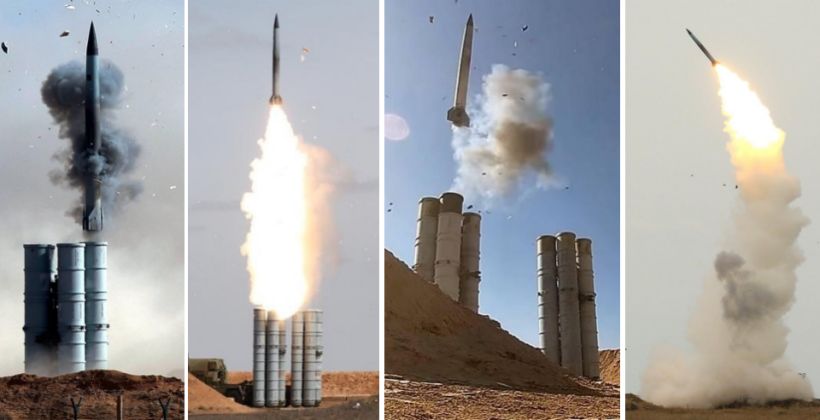
Launches of Soviet 5V55 Surface-to-Air Missiles
Following confirmation that a derivative of the Soviet 5V55 surface-to-air missile has been selected to form the heart of the pan-European Freya missile defence system, significant questions have been raised regarding its capabilities. Production of the missile was established at the Vizar plant in Soviet era Ukraine from the late 1970s, with Ukraine set to produce an enhanced derivative of the design under the designation FP-7 for the program. Improvements to propulsion, guidance and control systems have extended the design’s engagement range to over 150 kilometres, compared to just 90 kilometres for the original Soviet era missile, which while being relatively conservative for close to 40 years of technological advances, is still an important improvement.
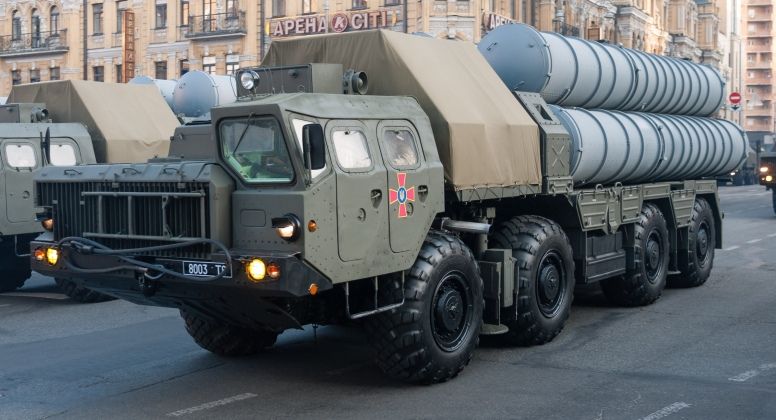
The 5V55’s design was particularly pivotal due to its combination of a long range and an ability to be integrated into highly mobile air defence systems like the S-300, where prior long range systems such as the S-200 and S-75 had all operated from fixed sites. The new missile introduced cold vertical launch, a technology that would later become standard across Russian air defence systems. Rather than igniting its main motor inside the launcher, a gas generator first ejected the missile vertically from its launch canister before the main rocket motor ignited several metres above the vehicle. Small control thrusters then rotated the missile toward its target before powered flight began. This method significantly reduced stress on launch vehicles, allowed engagement in any direction without rotating launchers, and improved reaction times against rapidly approaching threats.
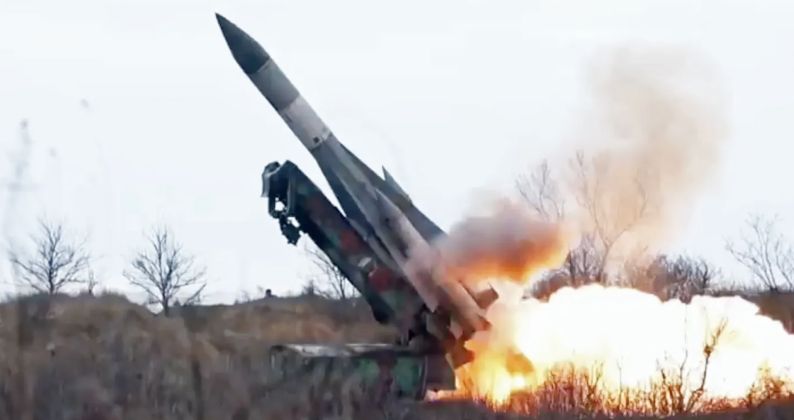
One of the 5V55’s most significant innovations was its guidance system. Earlier Soviet long-range surface-to-air missiles relied largely on command guidance throughout flight, requiring continuous tracking by ground radars. The 5V55R introduced Track-Via-Missile (TVM) guidance, under which the missile itself received radar reflections from the target and transmitted this information back to the engagement radar for processing. The ground station then calculated the optimal interception course and transmitted updated guidance commands to the missile. This combined many of the advantages of semi-active radar homing with the greater computational power available to ground-based systems, while making the missile substantially more resistant to electronic jamming.
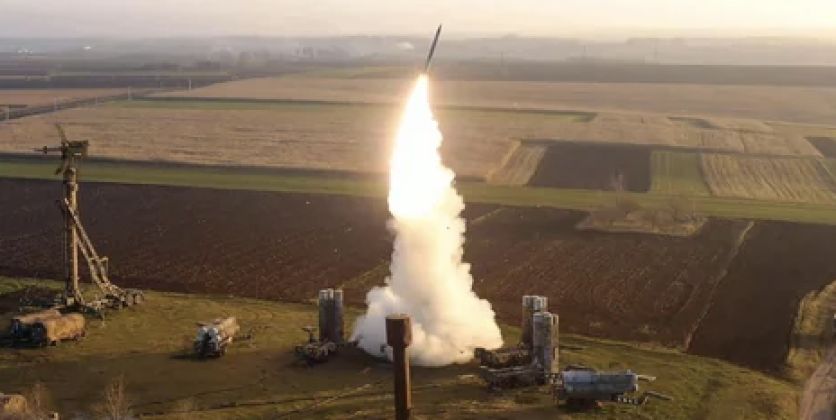
The 5V55 was in many respects by far the most advanced surface-to-air missile of its time when brought into service in 1978, which it would remain for over a decade. The missile could engage targets flying at altitudes ranging from only a few metres above the ground to over 25 kilometres, allowing it to defend against both terrain-following aircraft and high-altitude reconnaissance platforms. Although the 5V55 was eventually superseded by the 48N6 family introduced with the S-300PM and later adopted by the S-400, its influence remained considerable. The cold-launch method, canisterised storage, vertical launch architecture, and TVM guidance concept all became defining characteristics of subsequent generations of Russian long-range surface-to-air missiles. These technologies have remained central to Russian integrated air defence architecture for nearly half a century.
