
South Africa’s Plan to Use British Built Buccaneer Bombers For Nuclear Strike Missions
Military Watch Magazine Editorial Staff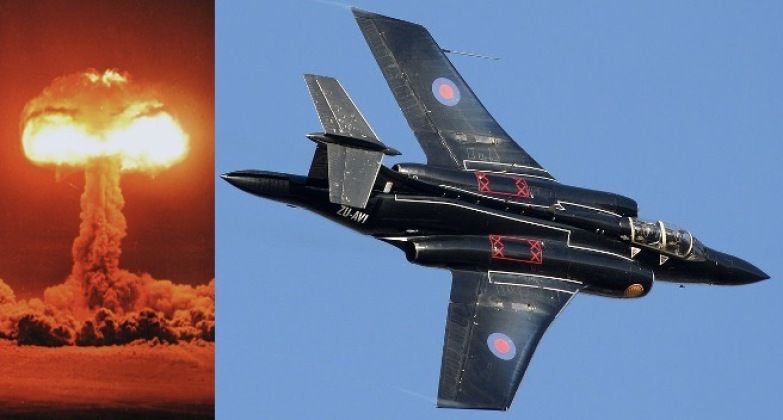
Nuclear Explosion and Buccaneer Bomber
While nine countries today field nuclear weapons, this often cited figure notable excludes South Africa which had developed a small nuclear arsenal under the Apartheid system during the Cold War. The country is the only one to have independently developed nuclear weapons and subsequently given them up, and had plentiful uranium reserves which it began to enrich in the 1960s both for its own use and for export. The decision to develop nuclear weapons was made no later than 1974, reportedly in close cooperation with Israel which was a close strategic partner, and was intended to provide a means of tackling the growing number of decolonising sub-Saharan African states which were seen as potential adversaries. By 1977 a single fission-based nuclear weapon - similar to that used against the Japanese city of Hiroshima by the U.S. Army Air Force in 1945 - was ready to be tested. The program shifted to the control of the South African military at this time and the secrecy surrounding the program notably increased.
South Africa’s first operational nuclear warhead entered service in 1982, and at six kilotons it was evidently designed for tactical rather than strategic purposes - namely for use against enemy troop concentrations or ground forces. This stemmed from fears that the country’s armed forces would be vastly outnumbered in a war with neighbouring powers. To place the warhead’s size in perspective, the largest strategic warhead tested, the Tsar bomb, was over 8000 times as powerful at 50 megatons. The Little Boy bomb dropped on Hiroshima was 250% as large as the South African warhead at 15 kilotons - which reflected its strategic purpose in contrast to the African bomb’s tactical one. Work on the South African nuclear program was suspended in 1989, by which time it had produced no less than five complete nuclear warheads ready for operational deployment as well was a single test device a sixth partially completed warhead.
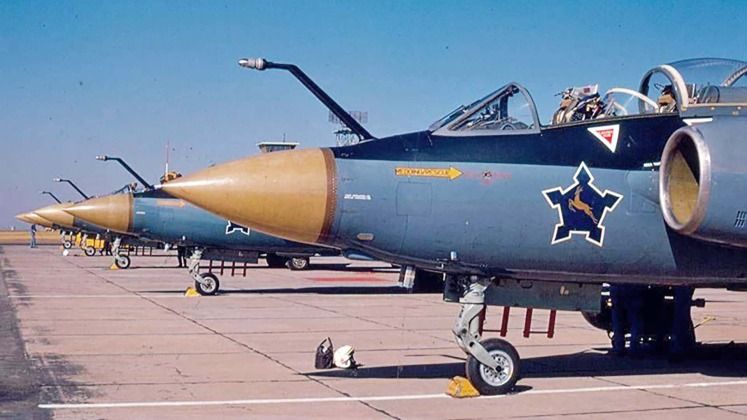
South African nuclear warheads were developed to be light and versatile enough that they could be deployed from either ballistic missiles or from bomber aircraft, and the country acquired missile technologies from Israel which had developed the Jericho 2 design for nuclear delivery. To deliver its nuclear warheads from the air the military attended to use the Hawker Siddeley Buccaneer, a British built strike aircraft which it had acquired from 1965. The aircraft had seen its first flight in 1958 and served in the Royal Air Force from 1962 until after the end of the Cold War in 1994, and was relied on for nuclear delivery by the British Armed Forces throughout that time. The twin engine aircraft could fly at high subsonic speeds of Mach 0.95, and had the range needed to strike major targets across all neighbouring states - and further still if refuelling in the air. Sixteen of the aircraft were delivered to South Africa despite a British arms embargo, and they could deploy defensive short ranged air to air missiles alongside their air to ground payload. The bombers served under the 24 Squadron, and were retired two years after the nuclear program was suspended in March 1991. Although formidable, the bombers had a poor safety record with thirteen of them involved in serious accidents in which 10 South African crew were killed.
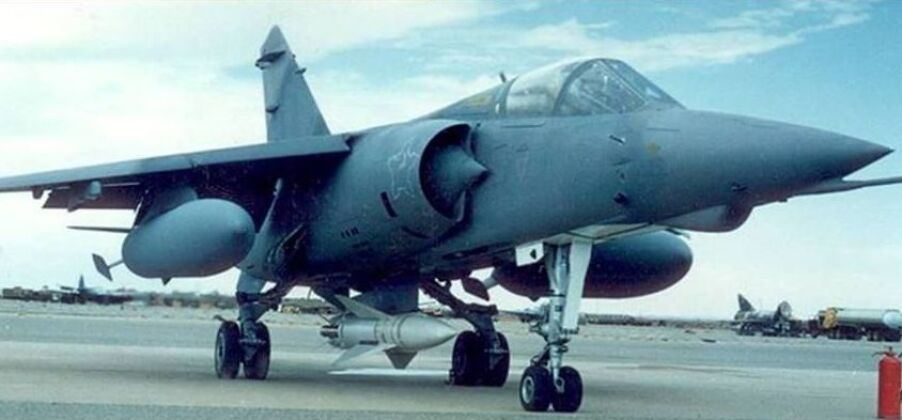
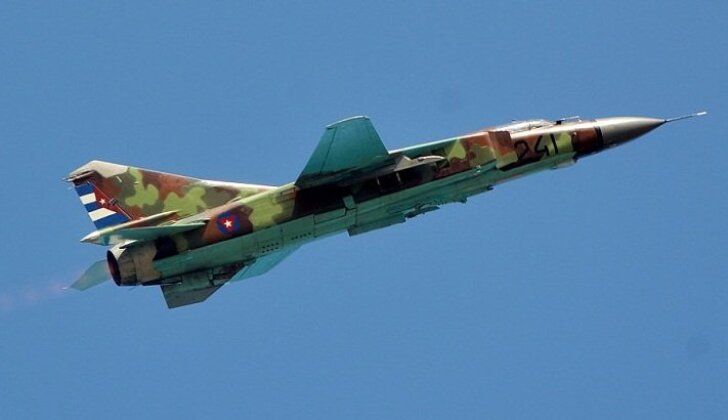
The continued viability of the Buccaneer for a nuclear delivery role became questionable in the 1980s as South Africa’s leading military adversary Angola increasingly demonstrated an ability to win air superiority in the event of a large scale war. The country’s MiG-23 third generation fighters flown by Cuban pilots notably outmatched South African Mirage F1 jets in a number of aerial engagements, and presence of the the fast MiGs boasting powerful sensors and beyond visual range missiles made prospects for effectively deploying the ageing subsonic bombers low. South Africa quickly moved to adapt the Buccaneer to be able to perform standoff strike roles in response, using a television guided glide bomb known as the Raptor I which would have allowed the bomber to launch nuclear attacks from safer distances. As it was the nuclear program was terminated under the administration of President F. W. de Klerk in 1989, at a time when the country was facing growing international isolation and economic pressure. This was followed by the country’s accession to the nuclear non-proliferation treaty in 1991 - the year the last Buccaneer bombers were retired.
