
South Korea to Train Half a Million ‘Drone Warriors’ as Part of Massive Unmanned Warfare Expansion Plan
Military Watch Magazine Editorial Staff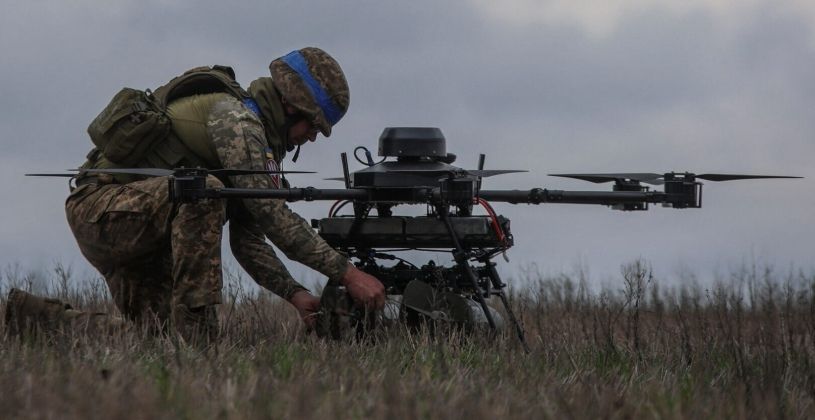
Ukrainian Serviceman and Logistics Drone
South Korean Defence Minister Ahn Gyu-back has announced one of the world’s most ambitious drone force expansion plans, stating that the armed forces intend to train 500,000 “drone warriors” in the Army, Navy, Air Force, and Marine Corps to operate unmanned systems. Rather than treating drones as specialised equipment used by dedicated units, the goal is to make drones a standard battlefield tool, comparable to a soldier’s personal weapon. This plan is considered highly viable due to the particularly high levels of technical education and technology competency in the country.
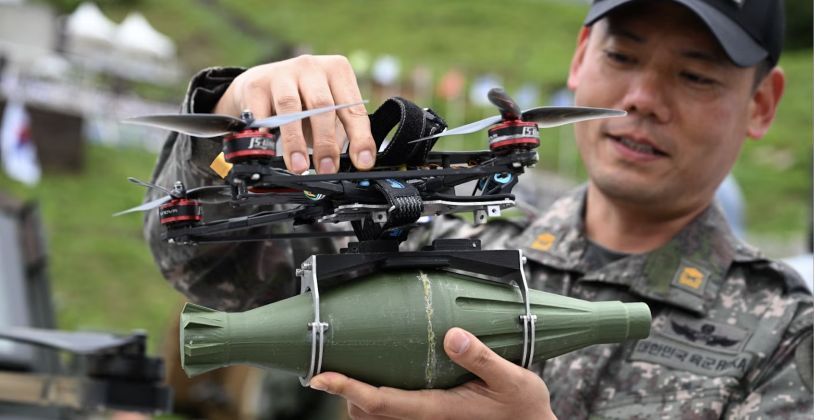
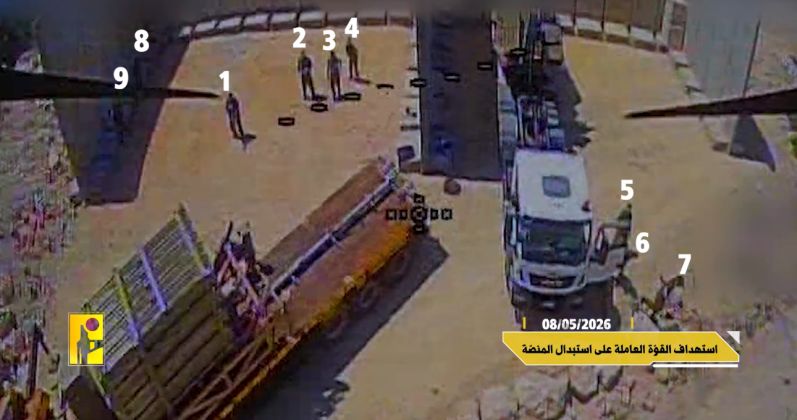
A key objective of the new program is to decentralise drone warfare. Instead of relying primarily on specialist drone formations, virtually every platoon and squad would have personnel capable of launching reconnaissance drones, conducting target acquisition, directing artillery fire, or operating loitering munitions. The Defence Ministry intends to field around 60,000 drones by 2029, with approximately 11,000 training drones scheduled to enter during 2026. It also plans to procure more than 20,000 reconnaissance and expendable attack drones by 2030, giving frontline units organic surveillance and strike capabilities. The increasingly central roles which unmanned aircraft have played in the Russian-Ukrainian War, the Israeli-Hezbollah War, and the U.S.-led war effort in Iran, are considered a major factor stimulating this investment.
As South Korea’s shrinking population is rapidly reducing the pool of military-age recruits, making it more difficult to sustain force levels, expanding the use of unmanned systems allows the armed forces to increase the effectiveness of individual personnel and compensate, at least in part, for declining manpower. Rather than replacing personnel, drones act as a force multiplier, extending surveillance, reconnaissance, and precision-strike capabilities down to the lowest tactical levels. This mirrors the expanding use of drones by the Ukrainian Armed Forces for roles such as logistics to replace personnel in the face of an extreme shortage of recruits. A number of Ukrainian frontline units were in February reported to have begun relying on unmanned systems for 80 percent of their logistics needs.
The Defence Ministry has also emphasised building a domestic drone ecosystem, with officials stating that military drones should use 100 percent domestically produced components, reducing dependence on foreign suppliers and strengthening South Korea’s defence industry. The procurement program is therefore intended to support both military modernisation and the country’s growing unmanned systems sector. This is considered viable due to the efficiency and diversity of the country’s industrial base, where other NATO standard militaries particularly in Europe would struggle to rely on local products. Plans to expand drone forces also include the accelerated development of counter-drone systems such as laser weapons, high-power microwave systems, AI-assisted detection networks, and electronic warfare capabilities.
