
Ukrainian Frontline Brigades Now Use Robots For 70 Percent of Logistics Ops as Personnel Shortage Worsens
Military Watch Magazine Editorial Staff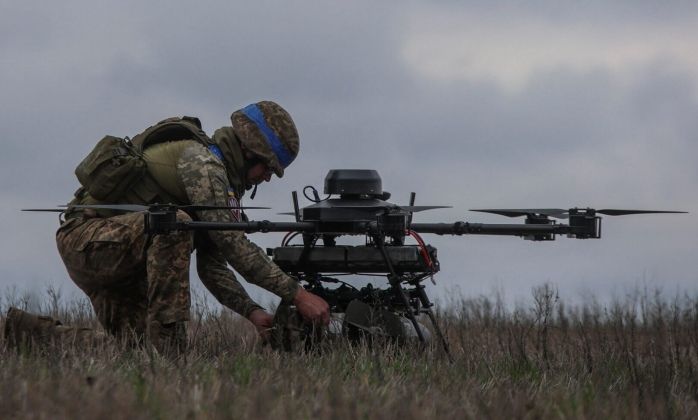
Ukraian Quadcopter Drone Supply Delivery
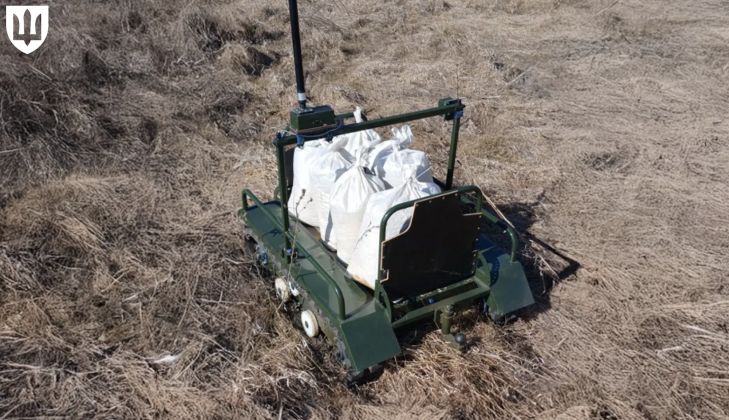
A number of Ukrainian ground units have succeeded in shifting away from traditional infantry warfare towards a more “technology driven” form of combat, relying on attack drones, robotic logistic systems, and other unmanned assets, which is intended to minimise the need for personnel on the frontlines. Details on this transition were provided by the commander of the 28th Mechanised Brigade, Colonel Anatolii Kulykivskyi, whose forces operate in Kostiantynivka in the disputed Donetsk region, which is one of the most high intensity frontlines in the entire war. He reported that robots now handle 70 percent of the 28th Brigade’s frontline logistics, delivering unmanned aircraft, ammunition, and even hand warmers to isolated drone pilot stations. Air delivery of supplies is also relied on, especially for remote foxhole positions that would be compromised by track marks left by ground robots in the snow.
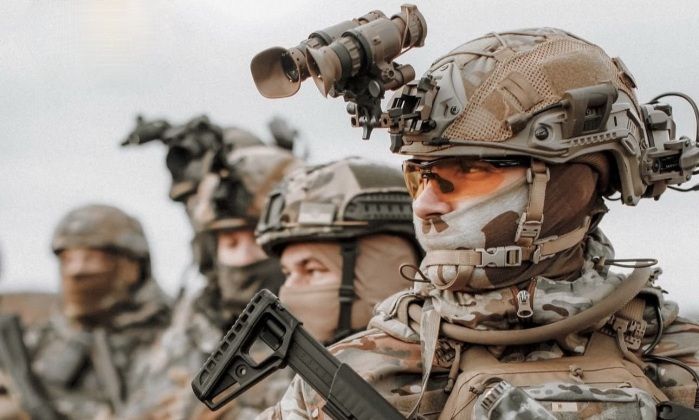
Colonel Kulykivskyi observed that the robotisation of logistics has succeeded in significantly reducing infantry exposure, and served to strengthen Ukrainian positions in Donetsk, although the rising cost and attrition of ground robots have also revealed growing supply constraints. Each robot costs around $10,000, making them as expensive as two night-vision Mavic reconnaissance drones or four daytime ones, with Kulykivskyi stressing that the brigade faces increasing challenges sourcing and funding replacements as the drones and robots are destroyed “almost daily.” Although the 28th Mechanised Brigade uses nighttime thermal masking and daytime route selection to evade Russian surveillance, Kulykivskyi noted that its robotic fleet is under constant threat from Russian drones, mines, and sabotage units. In January 2025 alone, the brigade's ground robot losses doubled compared to the previous month, although this partly reflected the rise in the numbers deployed.
Colonel Kulykivskyi described current battlefield tactics being employed on the frontlines in Donetsk as a significant departure from traditional infantry warfare. “Modern war requires moving away from infantry warfare and infantry positions. This is still a war of technologies,” he stated, noting that the shift to drone and robotic systems was a major change. Continuous drone surveillance has allowed the brigade to cover front sections with one or two positions, instead of the previous two battalions per kilometre, reducing infantry positions to minimal footprints, often tiny dugouts for two or three soldiers supplied remotely. The colonel noted that some locations are so dangerous that they can only be reached safely “one time in a hundred.”
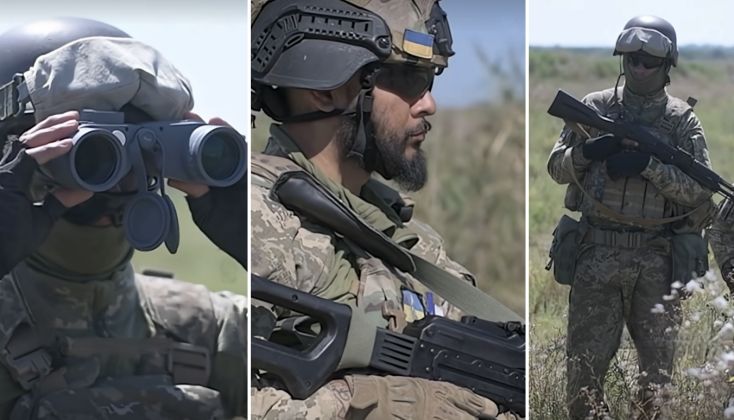
While the Ukrainian Armed Forces remain particularly well funded, due primarily to hundreds of billions of dollars worth of aid that have ben provided by countries across the Western world, they have suffered from considerable personnel shortages as a result of extreme losses during four years of hostilities. Conscript units have suffered extreme casualty rates, at times approaching 80-90 percent, with the Wall Street Journal being among the sources to report that the Army has relied on recruiting poor men from villages and sending them to the frontlines with just two days of training. The casualty rates seen have been a primary factor forcing desertion rates to particularly high levels, according to reports from the Financial Times among other sources. The life expectancy for personnel on high intensity frontiers has at times been as low as just four hours, according to reports from Western observers on the ground. Years of extreme losses has led robotisation of logistics to be seen as a solution to help reduce casualty rates.
In August 2025 a digital card index from Ukraine’s Chief of Staff provided details on dead or missing personnel, including their names, details of their deaths, and personal data of their families, and showed that the Ukrainian Armed Forces have lost more than 1.7 million personnel, including both those killed and missing, since February 2022. Personnel shortages have resulted in a growing reliance on foreign combatants, including contractor personnel from Brazil and Colombia, the Polish Volunteer Corps, and a wide range of other foreign units, with the significant presence of foreign contractors having been reported from multiple battlefields from Kursk to Bakhmut. While the sustainability of relying increasingly on foreign contractors has been brought to question, a greater reliance on robots and drones for logistics provides a potential solution which, although more costly than using Ukrainian conscripts, is potentially more sustainable.
