
South Korea’s FA-50 Fighter Marketed as Drone Control Node For Next Generation Operations
Military Watch Magazine Editorial Staff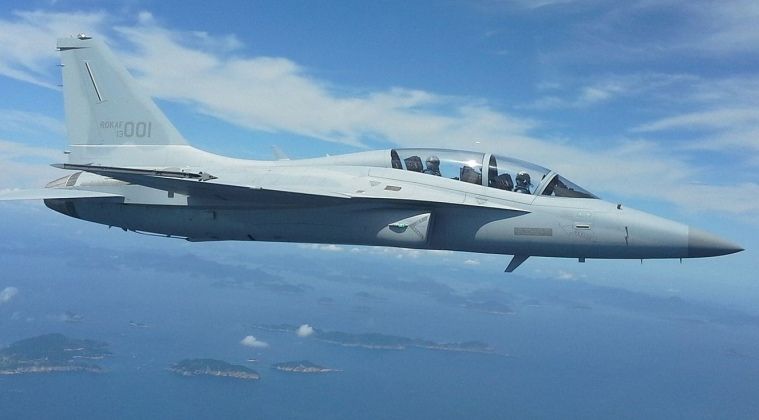
Republic of Korea Air Force FA-50 Light Fighter
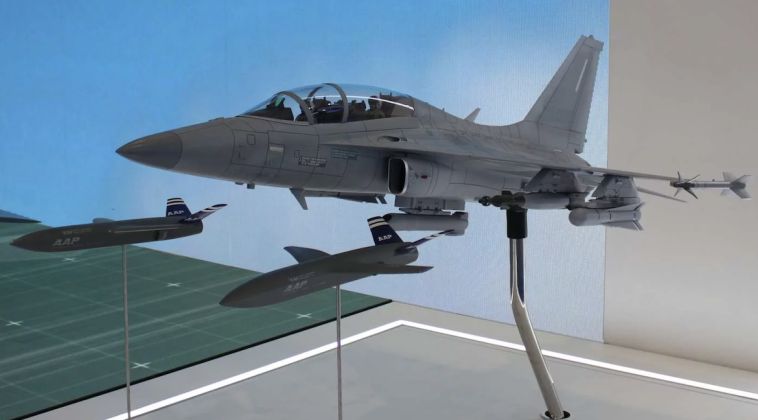
Korea Aerospace Industries has showcased a 1:10 scale FA-50 lightweight fighter flying in close formation with the firm’s new Adaptable Aerial Platform unmanned aircraft, as part of apparent efforts to market the aircraft as a potential controller for manned-unmanned teaming in a manner that may significantly increase its appeal to potential clients. Although such teaming is expected to become a defining feature in the sixth generation and ‘5+ generation’ of tactical combat aviation, there have been indications that a number of fourth generation fighter types are also intended to serve in command roles for unmanned aircraft in similar ways. One of the most notable examples has been the French Rafale ‘4+ generation’ fighter, with teaming with unmanned aircraft viewed as particularly critical as the aircraft becomes increasingly obsolete, while France appears unlikely to field a fifth or sixth generation successor until the 2050s.
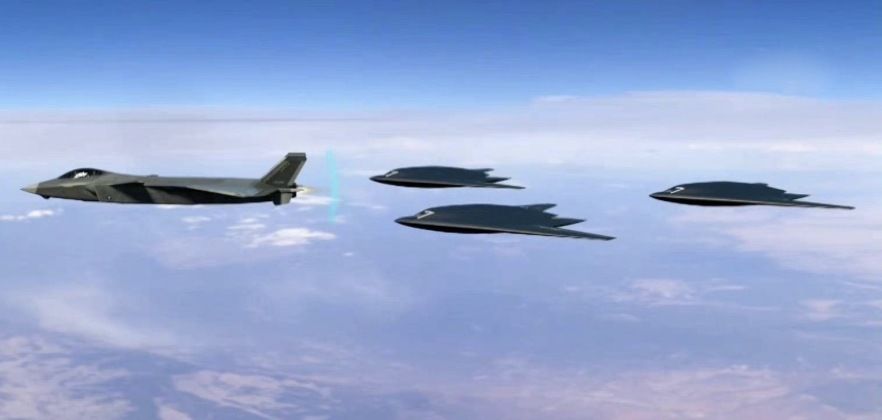
The FA-50 is limited in its ability to serve as an effective drone controller by the small size and limited situational awareness provided by its radar, and well as by its limited range and lack of stealth capabilities. Its twin seat configuration, which is a legacy of its origins as a trainer developed under the T-50 program, nevertheless allows it to accommodate a drone controller behind the pilot in the second seat. This is considered highly advantageous, with the Chinese J-20 fifth generation fighter program having brought a twin seat variant, the J-20S, into service specifically for this purpose, making it the only operational twin seat fighter in the world. Sixth generation fighter programs are expected to predominantly develop twin seaters for much the same reason.
In the Republic of Korea Air Force, twin seat variants of the KF-21, which has been referred to as a ‘5- generation’ fighter straddling the line between fourth and fifth generation capabilities, is expected to serve as the primary drone control platform, and is the only post-fourth generation fighter program outside China to have flown a twin seat variant. Nevertheless, the FA-50’s significantly lower cost makes marketing the much lighter aircraft with similar manned-unmanned teaming capabilities potentially highly beneficial for defence exports. Korea Aerospace Industries has continued to conduct autonomous flight tests of the Adaptable Aerial Platform using an artificial intelligence pilot system, with this real flight experimentation expected to further its appeal. It remains highly possible that South Korean unmanned aircraft could also be marketed as ‘wingmen’ to operators of other NATO-standard aircraft such as the F-35, F-15 and F-16.
