
Short of Funds: British Army Proposes Leasing Second Queen Elizabeth Class Aircraft Carrier to the U.S. Navy
Military Watch Magazine Editorial Staff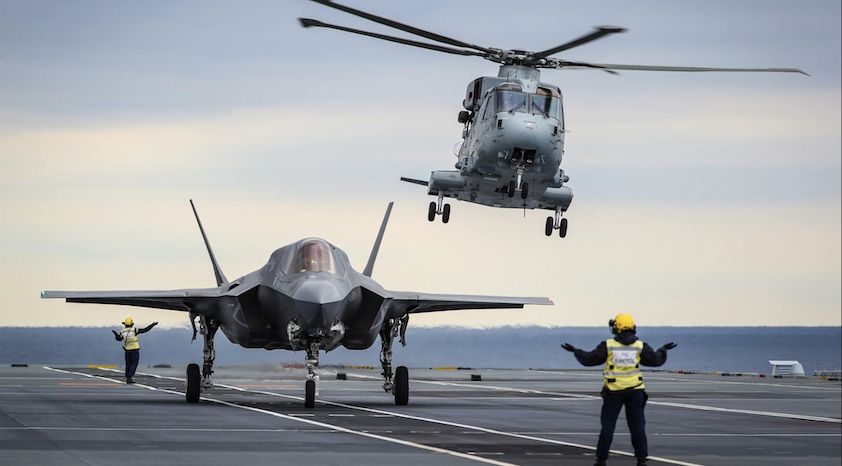
F-35B on Deck of British Carrier HMS Queen Elizabeth
As the British Armed Forces have continue to struggle with cuts to their defence budget, its three major branches have increasingly found themselves in competition for investment leading to recent propositions by each for cuts to other branches. The British state is expected to remain the second most indebted in the world for the foreseeable future, and while the country’s previous Prime Minister Theresa May vowed to keep the Army above 82,000 personnel strong a fall to as low as 60,000 today remains a distinct possibility. The Army’s leadership for its part has advocated cutting the Navy to retain more of its own strength, proposing that the service lease one of its two Queen Elizabeth Class aircraft carriers to the United States Navy. While the vessels themselves are relatively cheap to operate, the cost of operating an escort considering the current state of the destroyer fleet, and costs of both purchasing and operating sufficient F-35B fighter jets means carriers are an investment Britain’s Armed Forces May be unable to afford. The F-35B is currently the most costly and high maintenance fighter in production anywhere in the world. A source in the armed forces, addressing media on condition of anonymity, stated regarding the current conflict between the military's branches: “The Army hates the aircraft carriers, which they have always seen as white elephants, but the Americans love them. They're cutting-edge because they can operate with far fewer crew than the U.S. carriers.”
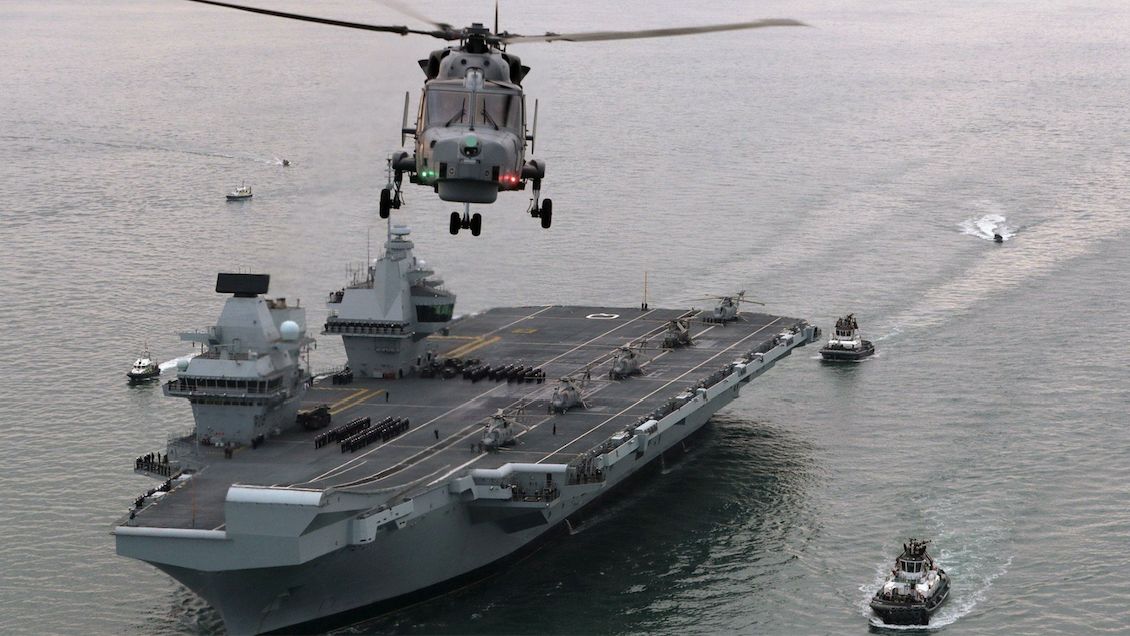
Regarding difficulties facing the Army, and pressure from both the Army and the Navy on the Royal Air Force (RAF) to make cuts of its own, the source stated: "The Army can't recruit or retain the people it needs. Both the Army and the Navy think that the job of the RAF will soon be done by drones.” While cuts to the Air Force have been advocated, and the service in 2018 retired one of just two classes of operational combat jets in service, it currently suffers from a considerable shortage of around 250 pilots. It remains uncertain whether the Air Force will be forced to endure further cuts, but cuts to the Army to around half the size it was 20 years ago remain a distinct possibility. Final decisions will be made by a new chief of defence staff who has yet to be appointed, but a leasing of Britain’s second carrier to the U.S. remains possible particularly since a fall in the value of the sterling pound has increased the cost of acquiring sufficient F-35B fighters from the United States. While India has expressed interest in developing ships of a similar design to the Queen Elizabeth Class, the warships were built without arresting gear needed to deploy conventional carrier based jets such as the F-35C or F-18E meaning only operators of the F-35B are able to use the ships in any capacity greater than a helicopter carrier.
