
Saudi Arabia Acquires the Israeli Iron Dome Anti Missile System; The Target is Yemen - Not Iran
Military Watch Magazine Editorial Staff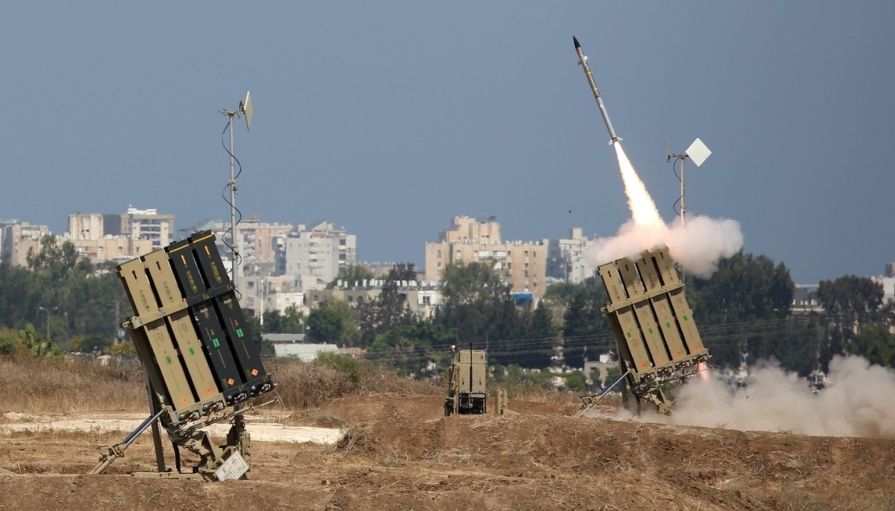
Israeli Iron Dome Anti Missile Batteries
Following reports of Saudi interest in acquiring the Israeli Iron Dome surface to air missile system in January 2018, the Arab Kingdom has reportedly finalised its purchase of the weapons system - representing the latest in a number of acquisitions of air defence systems. The reported sale comes amid growing ties between Riyadh and Tel Aviv, which have been strongly encouraged by the United States as the two Middle Eastern powers serve as Washington’s foremost allies and defence partners in the region. With both countries’ armed forces relying on highly interoperable Western made weapons systems, from elite F-15 fighters to Patriot missile systems, and with both perceiving considerable threats from the same parties in the Middle East - namely Iran, Syria and their affiliates, the partnership between the two countries has expanded considerably.
While Saudi acquisitions of new air defence systems such as the U.S. Patriot and THAAD systems and Russian S-400 have been largely aimed at defending the country’s airspace from a potential Iranian missile attack, a precaution taken as Tehran has invested heavily in asymmetric ballistic missile capabilities, the Iron Dome may well be intended to fulfil a different purpose entirely. Unlike the complementary longer ranged David’s Sling missile system, the Iron Dome is a fully Israeli design - developed in a joint venture by Rafael Advanced Defence Systems and Israel Aerospace Industries. The weapons system’s purpose is closely reflected in its capabilities, with the missile system retaining an engagement range of up to 250km and a heavy specialisation towards targeting low flying missiles, rocket artillery and reportedly even artillery shells themselves. While design work on the Iron Dome began in 2005, the need for such a weapons platform grow considerably following the country’s military intervention in Lebanon in 2006 - which saw the Lebanese militia Hezbollah strike targets in Israel with limited but highly potent missile attacks in response to Israeli airstrikes. The Iron Dome system, while never tested against a major attack by Hezbollah, has seen limited service against Palestinian militant groups based in Gaza which have on a number of occasions sought to target Israeli cities with basic rocket artillery attacks.
While the effectiveness of the Iron Dome has been called into question by a number of experts, citing an underperformance against Palestinian attacks despite their primitive nature, Israel plans to deploy 15 batteries of the weapons platform - of which ten are reportedly currently deployed. Developing a high end weapons system for such small scale production however makes the Iron Dome program an extremely costly weapons program - with Israel’s defence manufacturers unable to benefit from economies of scale as manufacturers in the United States and elsewhere have. This is due to a combination of small domestic demand - Israel doesn’t have much territory in need of protection given its small size - and the lack of export customers for the platform. This is set to change however, as Saudi orders for the weapons system, in light of the gross underperformance of the U.S. made Patriot system against missile attacks on the country, will lead to considerably expanded production. Indeed, based on the size of previous Saudi arms acquisitions and the vastness of the territory in need of protection, the Arab Kingdom could well plan to field more Iron Dome batteries than Israel does itself.
The Saudi Decision to acquire the Iron Dome is very likely a direct result of the kingdom’s perceived vulnerability to missile attacks from the Yemeni Ansurullah coalition, which massive airstrikes, deployment of sizeable mercenary contingents and even the intervention of U.S. special forces have all failed to prevent. In the event of a large regional war, Iranian forces are likely to attempt to use Iraq as a staging ground for attacks on Saudi territory - from where the country’s cities and military bases could be made targets of far more sophisticated short ranged ballistic missile, rocket and artillery strikes. The deployment of the Iron Dome is primarily not a measure to defend Saudi territory from missile attacks from Iran itself, but rather from shorter ranged systems from neighbouring countries. This is in much the same vein as Israel’s own Iron Dome system is unlikely to be involved in a defence against Iranian ballistic missile attacks, but is designed to protect Israeli targets against attacks from Hezbollah and other Iranian allies which can launch low altitude attacks from short ranges. Whether Saudi Arabia will also invest in acquiring short ranged air defence platforms from Russia such as the Pantsir, a measure taken by neighbouring Oman which would be an effective complement to its S-400 system, remains to be seen.
