
Russia’s New S-500 Air Defence System Sees First Ever Deployment to Protect Key Crimean Bridge
Military Watch Magazine Editorial Staff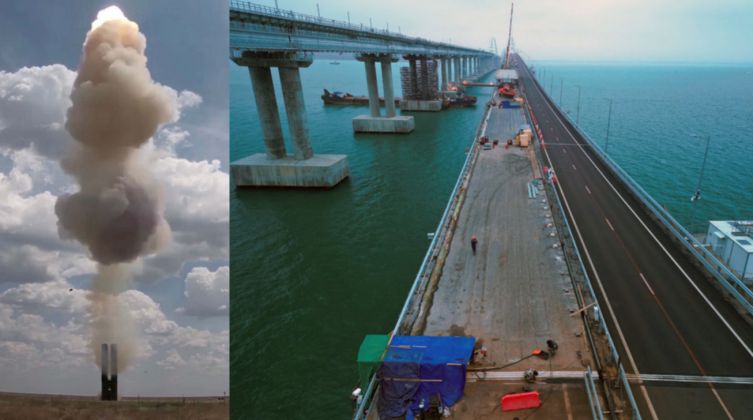
Kerch Strait Bridge and Missile Launch From S-500 System
The Russian Armed Forces have reportedly made their first ever deployment of the S-500 long range air defence system to support the ongoing war effort in Ukraine, according to a report by the head of the Ukrainian Defence Intelligence Directorate Lieutenant General Kyrylo Budanov. The system has reportedly been deployed in Kerch City near the disputed Crimean Peninsula, primarily to protect the Kerch Strait Bridge which links the territory to the Russian mainland. The $4 billion infrastructure project, completed in May 2018, has been a primary potential target for Ukrainian and allied attacks, due to both its symbolic value linking Crimea to mainland Russia, and to its military importance allowing Russian forces to redeploy. While Western sources have called for attacks on the bridge since shortly after its construction over six years ago, a bombing of the bridge on October 8, 2022 took it out of commission for several hours and caused three deaths, which was quickly commemorated in Kiev with a celebratory postage stamp. This was followed by a Ukrainian drone boat attack on the bridge in July 2023, which also caused damage that was quickly repaired.
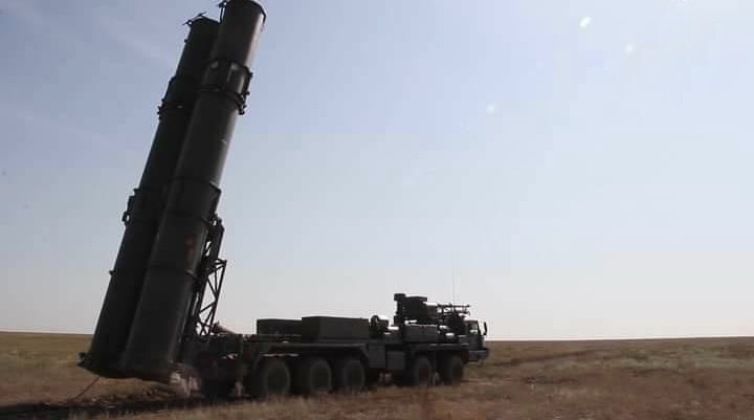
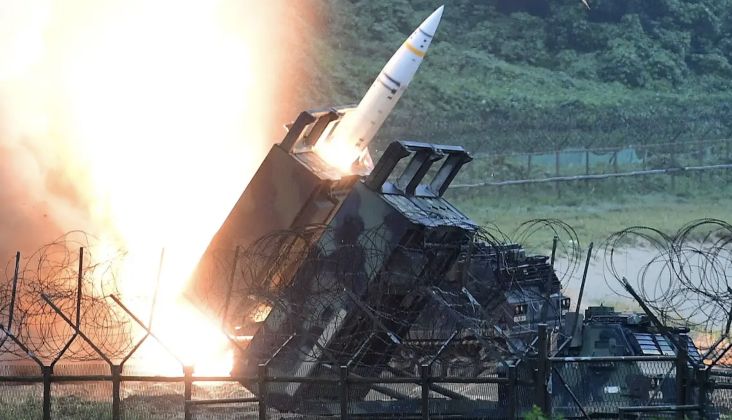
Following a green light from Washington to launch strikes deeper into Russian claimed territory, there has been widespread speculation that Ukrainian forces, operating with considerable support from Western advisors on the ground and intelligence collection assets in the air and in space, will attempt an attack on the Kerch Strait Bridge using newly supplied Army Tactical Missile System (ATACMS) short range ballistic missiles. A longer range variant of the ATACMS using a single high explosive warhead, rather than cluster warheads, has recently begun to be operated and would be particularly well suited to such an attack. While a range of Russian missile systems are capable of intercepting short range ballistic missiles, the S-500 is highly specialised as an anti-missile system and is widely considered the most capable ground based asset of its time in the world. Its ability to network with other systems, and provide targeting data using its particularly powerful sensors, could allow the S-500 to contribute significantly to air defence efforts without firing a shot.
The S-500 first entered service in 2021, following over half a decade of delays, and provides an additional layer to the Russian air defence network above the S-300V4 and S-400 systems, but below the A-235 that protects Moscow from intercontinental range ballistic missiles. Advanced features the S-500 is prized for include its very high degree of situational awareness with an 800km detection range against aircraft, its ability to intercept satellites and ICBMs, and its ability to intercept targets at very extreme speeds reportedly including hypersonic glide vehicles. Provision of an anti-ICBM capability on a relatively compact road mobile system remains revolutionary and unprecedented, with the system’s entry into service expected to provide a new level of security to Russian cities particularly beyond Moscow - the only city where the A-235 will be deployed. The system otherwise particularly stands out for its unrivalled 600 kilometre engagement range, with the S-500 optimised for engaging high value targets such as strategic bombers and airborne early warning and control systems. While the ATACMS’ capabilities are far more basic than systems which the S-500 was designed to be able to defeat - among them hypersonic glide vehicles - a demonstration of these capabilities could lead to further deployments of the systems in the theatre.
