
Russian TOS-1A Thermobaric Artillery Supports Major Advances in Zaporizhzhia
Military Watch Magazine Editorial Staff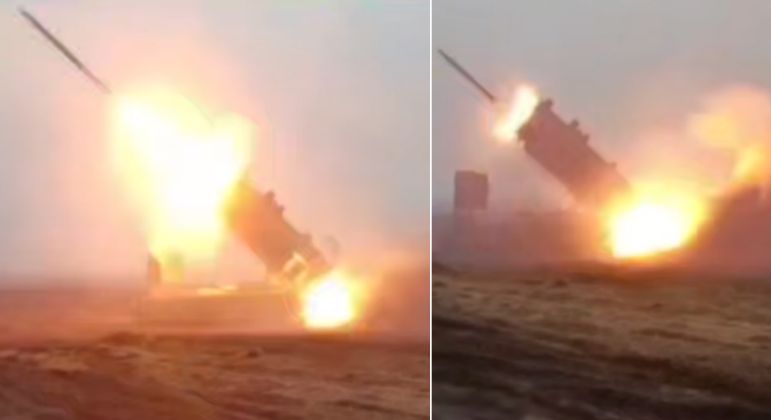
TOS-1A Thermobaric Artillery Launch in Zaporizhzhia
The Russian 35th Guards Combined Arms Army’s Nuclear Biological Chemical Protection Troops have deployed TOS-1A thermobaric rocket artillery systems to bombard Ukrainian positions in the Zaporizhzhia region, where ground forces are making major advances. Footage released from the settlement of Komsomolske has shown large explosions as the TOS-1A systems appear to inflict major damage. Thermobaric ammunition fired by the system functions by dispersing gaseous clouds of chemicals into the air, which are subsequently detonated by a vacuum explosive, releasing a high pressure shock wave that sucks air out of confined areas with tremendous force. The result is the rupturing of the lungs of all present in the vicinity.
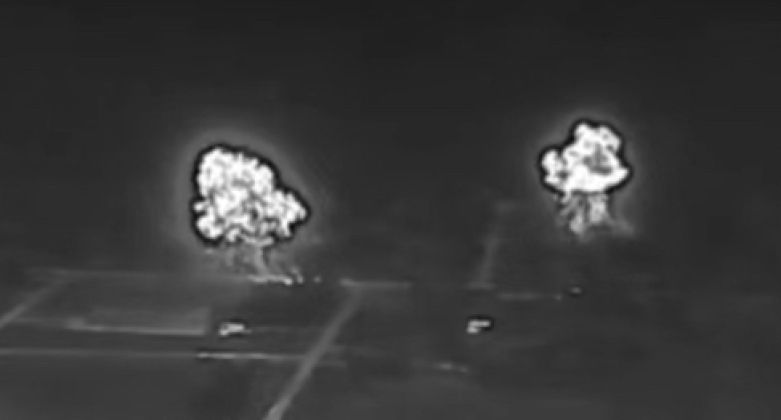
The TOS-1A is considered a particularly optimal asset for neutralising ground units cover, with footage having widely shown the systems being used to neutralise Ukrainian units that are heavily entrenched in major settlements. While the TOS-1A uses tracked launchers based on the chassis of the T-72 tank, a wheeled counterpart to the system, the TOS-2, was unveiled in 2020 and has played a growing role in the war effort in the Ukrainian theatre. While lacking the off-road capabilities or the firepower of the TOS-1A, the TOS-2 is significantly faster and more mobile, less costly, simpler to produce, and requires less maintenance. Analysts have widely observed that the TOS-2 may be better suited to frontline conditions in Ukraine, where drones and loitering munitions have left slow tracked vehicles increasingly vulnerable.
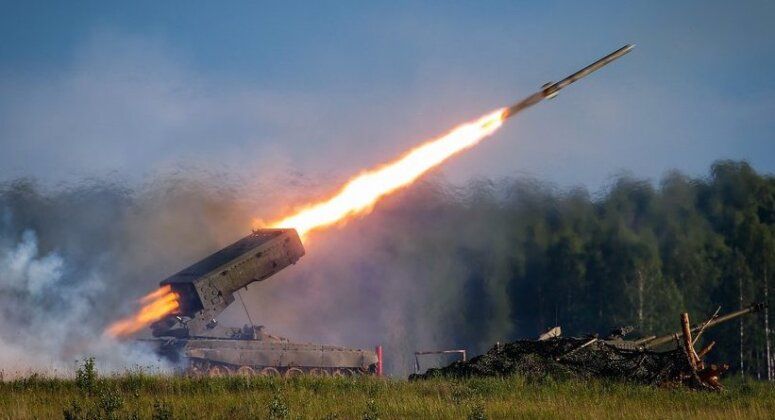
A new system in the ‘TOS series’ is reported to currently be under evaluation, the TOS-3, which appears to be intended to achieve much longer engagement ranges by integrating heavier artillery rounds. The system is reportedly equipped with a 15-tube launcher, down from 24 on TOS-1A and 18 on TOS-2, making room for larger propellant loads on each rocket. The new system will reportedly have a range of over 20 kilometres, compared to just 10 kilometres for the TOS-1, addressing one of the leading shortcomings of the system, and significantly reducing risk during operations. It reportedly benefits from digital fire control and navigation systems, and from superior stability to improve accuracy when engaging at long ranges. Should its artillery rounds remain affordable despite their larger sizes, the system’s entry into service could be a game changer that allows thermobaric strikes to be launched much more widely.
