
Russian Su-57 Fighter Makes First Landing in Dubai: Can it Make a Breakthrough on Arab Markets?
Military Watch Magazine Editorial Staff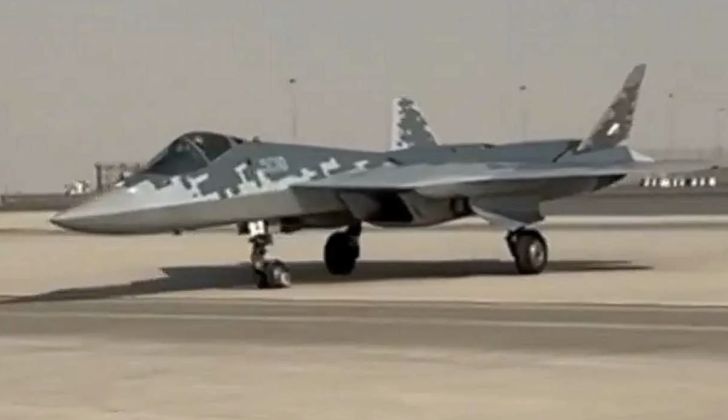
Su-57 Fighter in the United Arab Emirates
A Russian Su-57 fifth generation fighter has for the first time landed in the United Arab Emirates to participate in the Dubai Airshow, as the country has continued to intensify efforts to market the aircraft abroad. With the Russian Aerospace Forces’ small Su-57 fleet being engaged in high intensity hostilities in the Ukrainain theatre, a prototype airframe has been used to showcase the aircraft’s capabilities abroad, including at the Zhuhai Airshow in China in November 2024, and at India’s largest air show, Aero India, in February 2025. The displaying of new fighters as the Dubai Airshow is far from unprecedented, with the Soviet Union in 1990 having made a landmark display of its MiG-31 interceptor at a time when the aircraft received considerable interest from potential clients in the region, in particular Iraq, Libya, Syria and Iran. Post-Soviet Russia’s decision to place arms embargoes on all three countries, however, prevented any sales from ever materialising.
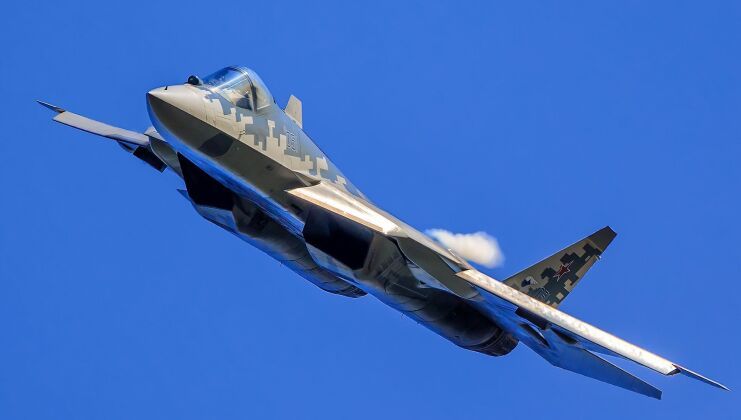
Despite persistent efforts to make breakthroughs for its fighter industry on Middle Eastern markets, Russia has fallen short due to a combination of factors. In the post-Soviet era, the country has been highly ready to place embargoes on its longstanding strategic partners when under Western pressure, cutting it off from all states in the Arab world other than Algeria that were previously major clients for its aircraft. When seeking to market fighters to Western-aligned states, such as the United Arab Emirates, Moscow has been unable to come close to matching the levels of political leverage that Western Bloc producers are able to exercise, ensuring that even when its aircraft are considered more competitive, then are not selected. Egypt’s placing of orders for Su-35 fighters, only to cancel them under pressure from the United States, was one notable example. As a result, the possibility of the Su-57 making a breakthrough into Arab markets remains slim.
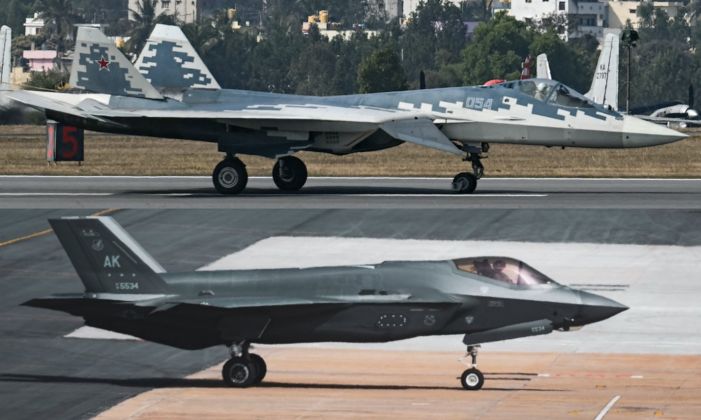
Further factors limiting the appeal of the Su-57 include competition from the American F-35 and Chinese J-35 fifth generation fighters, both of which are considered significantly more sophisticated and are in production on larger scales. While the considerable restrictions the United States imposes on how the F-35 can be operated could lead clients to look to alternatives, the Chinese J-35 is in many respects a much more attractive option than its Russian counterpart, with the country’s standings in multiple high tech areas vital to fifth generation fighter development being significantly higher than those of Russia. The Su-57 is poised to have significant successes on export markets, but will do so primarily in countries which for political reasons cannot consider the Chinese J-35, most notably India and Vietnam which have territorial disputes with China, and North Korea which remains under an arms embargo. In the Arab world, however, the fighter’s prospects beyond Algeria remain slim. With China’s willingness to export advanced fighter aircraft to Iran being unknown, however, while the country has been confirmed to have ordered Russian Su-35 fighters, the possibility of Su-57 sales to re-equip the Iranian Air Force also remains.
