
Russian Nuclear Powered Attack Submarine Launches Anti-Ship Cruise Missile Strike in Arctic Exercise
Military Watch Magazine Editorial Staff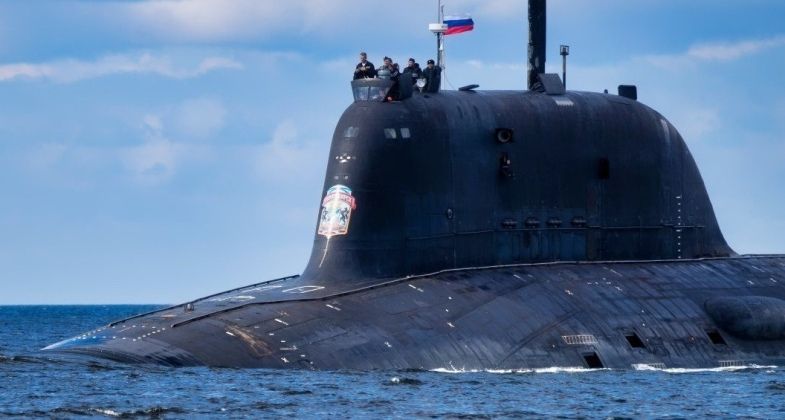
Russian Navy Yasen Class Nuclear Powered Attack Submarine
The Russian Navy Yasen class nuclear powered attack submarine Arkhangelsk has launched a P-800 anti-ship cruise missile as part of exercises in the Barents Sea in the Arctic, with the Navy’s Northern Fleet reporting that the missile hit a target imitating a surface ship some 200 kilometres away. The missile test has served to highlight how new Yasen class ships with world leading quieting technologies and very high levels of survivability can pose serious threats to hostile warships at long ranges. The submarines integrate 32 launch cells to accommodate P-800, Kalibr and Zircon cruise missiles for anti-ship and land attack roles, up to 32 missiles, as well as ten torpedo tubes and an Igla-M short ranged surface to air missile system. P-800 missiles are prized for their high manoeuvrability and Mach 3 terminal speeds, which makes them challenging to intercept.
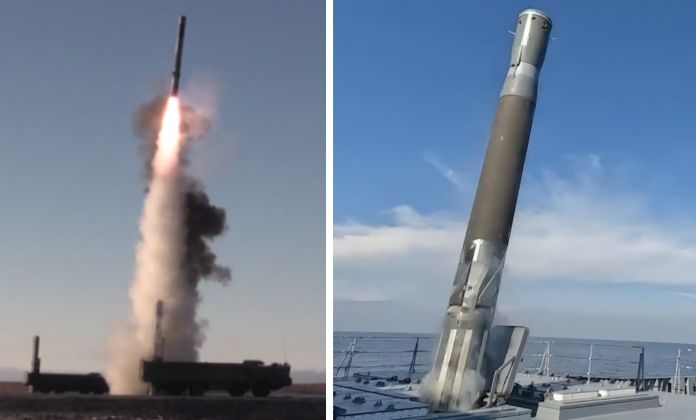
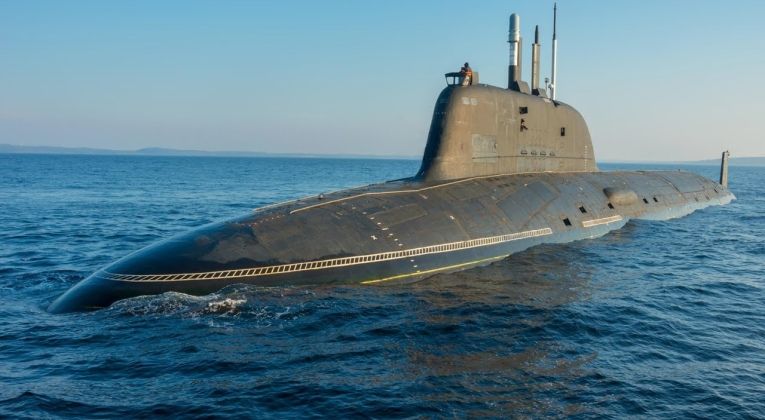
Russian President Vladimir Putin was confirmed on July 24, 2025, to have given instructions to continue the serial production of Yasen-M class submarines, emphasising the ships’ role as the backbone of the Navy’s general-purpose forces. The extent of Russian investment in the procuring, fielding a continuing to enhance the ships bears a strong contrast to its ocean-going surface fleet, with no new destroyers or cruisers having been laid down for the Russian Navy since the disintegration of the Soviet Union. This is largely due to the perceived asymmetric value of advanced nuclear powered attack submarines, which can pose a serious threat to much larger hostile navies. The integration of Zircon cruise missiles from 2025 has very significantly enhanced the ships’ capabilities, providing a single vessel with a considerable chance of destroying a hostile carrier strike group using its own firepower. The missiles combine Mach 9 speeds, very high manoeuvrability, and 1,000 kilometre ranges, creating a very wide area of control around each submarine.
In March 2026 Commander-in-Chief of the Russian Navy Admiral Alexander Moiseyev confirmed that the service would transition to fielding a nuclear powered attack submarine fleet comprised exclusively of Yasen and Yasen-M class submarines within the next 10 years. He observed that Yasen class submarines have outstanding search, strike, and defensive capabilities, and are outstandingly well armed. "As for ammunition, they are equipped with all the Navy’s modern missile weapons – Kalibr, Oniks, Zircon, and naval underwater weapons. The subs can operate covertly and for extended periods in virtually any area of the ocean and, of course, pose a great threat to naval groups and land targets of any adversary,” Moiseyev stated. The Russian Navy currently fields five Yasen-M class and one baseline Yasen class ships, with the seventh ship the Ulyanovsk scheduled to enter service in 2026, while five further ships are planned bringing the fleet size up to twelve. These are expected to replace the Navy’s five older Oscar II class attack submarines.
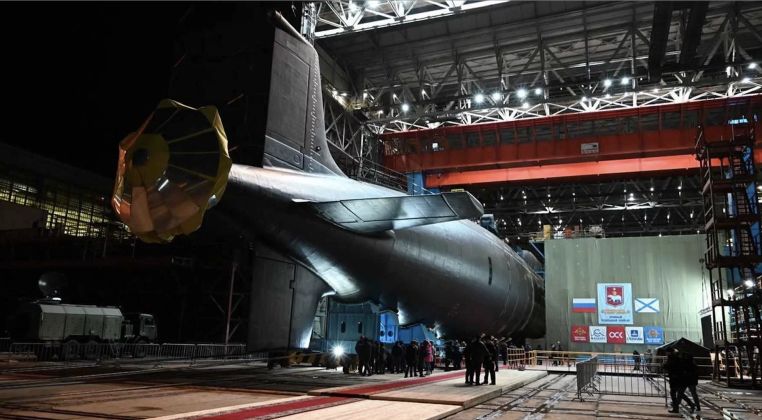
While the standing of the Russian Navy’s surface fleet has continued to decline, the Yasen class’ capabilities have been pointed to with considerable concern by Western analysts. The head of the British Royal Navy First Sea Lord General Gwyn Jenkins in December 2025 warned that Western Bloc could soon lose their advantage in the Atlantic Ocean as a result of the significant strengthening of Russian naval capabilities, with the capabilities of the Yasen class submarine fleet considered a primary factor causing such concerns. The ships’ carriage of high-precision weapons and advanced navigation, communication and hydroacoustics capabilities have few rivals in the world, with no other submarine class having a comparable primary weapon to the Zircon cruise missile.
